

Quick Answer: The long lifespans in Genesis likely stem from a combination of near-perfect early genetics, a radically different pre-flood environment, and a divine decree limiting human age due to sin.
Introduction
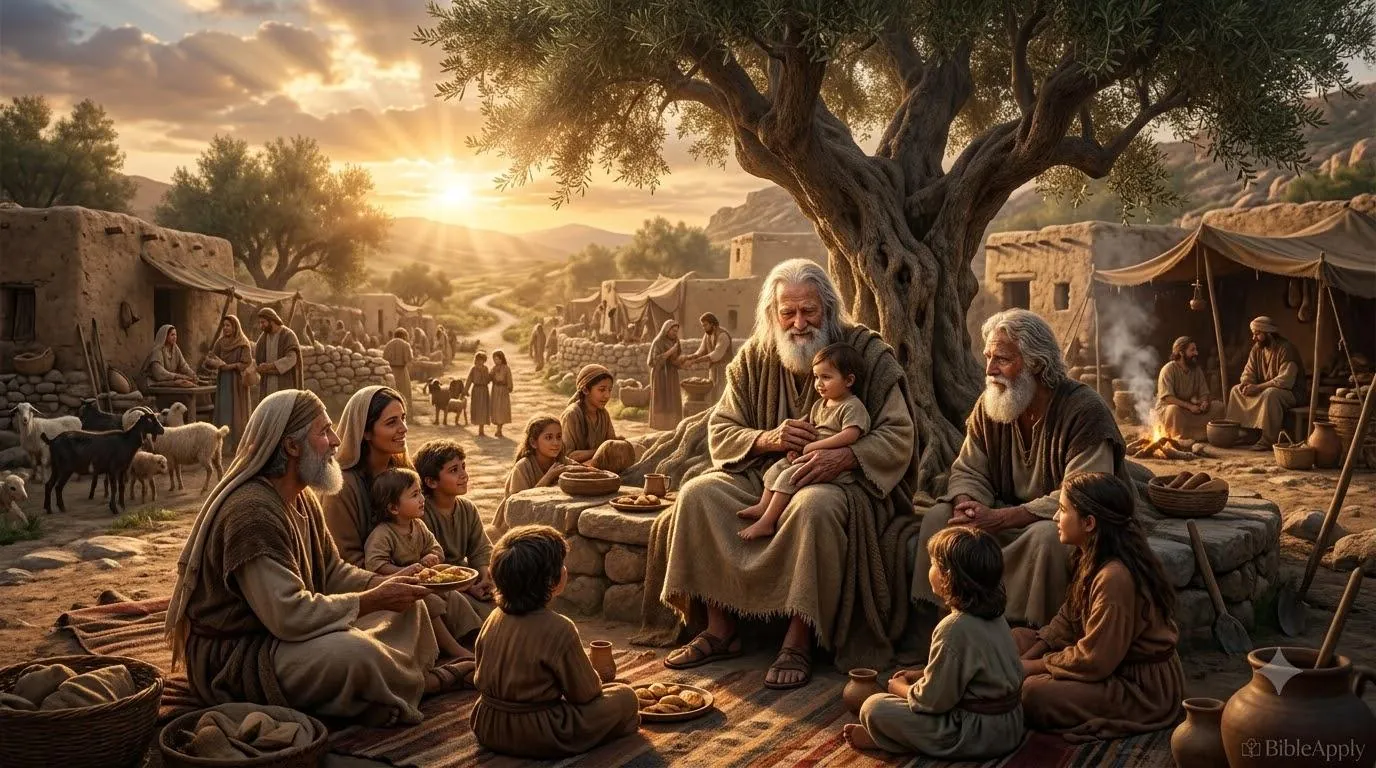
When modern readers open Genesis, they often experience culture shock. The first few chapters describe a majestic narrative of creation and human rebellion. Then chapter 5 introduces genealogies filled with lifespans stretching nearly a millennium. Adam lived 930 years. Seth lived 912 years. Methuselah, the oldest of them all, lived a staggering 969 years.
In an age where modern medicine celebrates pushing life expectancy past eighty, ancient humans living for nine centuries feels like mythology. Thoughtful Christians, curious seekers, and seasoned skeptics naturally ask how people actually lived so long.
For many, this question becomes an immediate stumbling block to trusting the historical reliability of the Bible. In a world trained to evaluate truth claims through observable biology, these massive numbers seem like obvious exaggerations or scribal errors. Modern people struggle to harmonize cellular decay with someone living for nine centuries. Some wonder if “years” actually meant “months,” or if these numbers are symbolic codes.
Wrestling with this question does not require choosing between intellectual honesty and biblical faithfulness. By exploring the theological trajectory of the narrative, the genetic effects of the Fall, and the differences between the pre-flood and post-flood worlds, we uncover a multi-layered explanation. God’s original design for human flourishing, the catastrophic consequences of human sin, and the severe mercy in our current mortality all play a role.
A Pastoral Note: I was reading through these early chapters with someone new to the faith who slammed his Bible shut in frustration over Methuselah’s age. Instead of arguing about ancient biology, we looked closely at the devastating, rhythmic repetition of the phrase “and then he died.” The real weight of the passage isn’t how long these men lived, but that the curse of sin was absolute. Death still swallowed them whole. The true hope in Genesis 5 isn’t found in a massive lifespan, but in a God who preserved a broken lineage to eventually bring us the Author of eternal life.
The Biblical Data: The Pre-Flood and Post-Flood Realities
The book of Genesis presents two distinct epochs regarding human longevity. The antediluvian (pre-flood) era and the postdiluvian (post-flood) era show a clear, systematic shift rather than arbitrary storytelling.
The Antediluvian Patriarchs
In Genesis 5, the “book of the generations of Adam” records lifespans consistently hovering around the 900-year mark.
“Altogether, Adam lived a total of 930 years, and then he died.” (Genesis 5:5)
This solemn pattern is repeated for each patriarch: a long life, the bearing of children, and ultimately, death. Enoch is the notable exception, being taken directly by God at the relatively “young” age of 365 (Genesis 5:24). Methuselah famously tops the list at 969 years.
The Hebrew word used for years throughout these passages is shanah (שָׁנָה). Throughout the Old Testament, shanah refers to a standard solar year tied to the agricultural cycle. There is no linguistic justification within the Hebrew text to interpret this word as anything other than a literal year.
The Post-Flood Decline
Following the global Flood detailed in Genesis 6-8, a dramatic decline in human lifespans begins. This is meticulously recorded in the genealogy of Shem in Genesis 11. Noah lived 950 years, having lived 600 of those years in the pre-flood world. The generations born after the flood experienced rapidly diminishing days.
Noah’s son Shem lived 600 years. His descendant Arphaxad lived 438 years. A few generations later, Peleg lived 239 years. By the time the narrative reaches Abraham, the lifespan had settled to around 175 years.
Just a few centuries later, Moses establishes what became the standard human lifespan in his prayer recorded in the Psalms:
“Our days may come to seventy years, or eighty, if our strength endures; yet the best of them are but trouble and sorrow, for they quickly pass, and we fly away.” (Psalm 90:10)
This stark, documented transition from near-millennial lifespans to the roughly 70-80 years we experience today is a deliberate feature of the biblical text. It presents a historical decline demanding a robust explanation.

Theological and Biological Explanations
How do we account for this radical shift in human longevity? Biblical scholars and creation scientists propose interconnected reasons focusing on genetics, environmental shifts, and divine decree.
1. The Proximity to Perfection (Genetic Vitality)
When God created Adam and Eve, He declared His creation “very good” (Genesis 1:31). The original human bodies were fashioned flawlessly, completely free from the genetic mutations and cellular defects that plague humanity today. Adam and Eve were created for immortality.
After the Fall introduced death and biological corruption, the first generations still possessed a remarkably pristine genetic code. Scientists study how genetic mutations accumulate over successive generations, a concept known as “genetic entropy.” The human genome is steadily deteriorating over time due to slightly deleterious mutations.
The first humans, being only a few generations removed from physical perfection, had an incredibly low genetic load. Their bodies were capable of repairing DNA damage and resisting the aging process far more effectively than modern humans. As humanity multiplied, these genetic errors compounded.
The rapid decline in lifespans after the Flood strongly correlates with a severe genetic bottleneck. With the human population reduced to eight individuals on the Ark, genetic diversity plummeted. Accumulated mutations began to manifest much more rapidly in the post-flood population.
2. The Catastrophic Environmental Shift
The physical environment of the pre-flood world was significantly different and much more hospitable than the world today. Genesis 1:6-8 mentions the “expanse” separating waters above from waters below. While exact ecological models vary, the core premise remains that the pre-flood earth was an optimal environment for biological longevity.
The Flood was a cataclysmic, world-altering event. The text states that “all the springs of the great deep burst forth” (Genesis 7:11). This suggests massive tectonic upheaval and a violent restructuring of the earth’s ecological systems.
The post-flood environment was substantially harsher. It was subject to extreme weather patterns, increased background radiation, and a rapidly changing diet. Immediately after the Flood, God explicitly introduces meat into the human diet for the first time (Genesis 9:3). This likely acknowledges the harsher conditions and diminished nutritional value of plant life.
3. The Severe Mercy of Divine Decree
Beyond genetics and environmental devastation, the Bible points to a direct theological cause for shorter lifespans. As human wickedness reached a zenith before the Flood, God made a sovereign declaration:
“Then the Lord said, ‘My Spirit will not contend with humans forever, for they are mortal; their days will be a hundred and twenty years.’” (Genesis 6:3)
Historically, this verse has two primary interpretations. The first is that God granted a 120-year period of grace before the judgment of the Flood. The second interpretation is that God simultaneously set a new upper limit on the natural human lifespan.
When sinful humans lived for 900 years, they had nine centuries to perfect their wickedness and invent new forms of evil. The antediluvian world was thoroughly filled with violence (Genesis 6:11). By truncating the human lifespan, God mercifully limited the amount of evil a single human being could perpetrate. The reduction of our years was a judgment on sin, but concurrently an act of grace to preserve humanity.
Addressing Common Objections and Misconceptions
When navigating this topic, several alternative theories frequently arise to explain away the text.
“Years Actually Meant Months”
A common attempt to rationalize the long lifespans is the assertion that the “years” listed in Genesis 5 were actually lunar cycles (months). By this logic, Methuselah’s 969 years would be divided by 12, giving him a lifespan around 80 years.
This theory collapses upon reading the rest of the text. If “years” means “months,” Seth fathered Enosh when he was 8.5 years old (Genesis 5:6). Mahalalel would have fathered his son Jared at the absurd age of 5 (Genesis 5:15). The biblical timeline of the Flood also explicitly distinguishes between months and years (Genesis 7:11, 8:13).
“The Numbers Are Purely Symbolic”
Another academic approach suggests the numbers are ancient Near Eastern literary devices used to convey honor rather than biological ages. Proponents point to the Sumerian King List, arguing Genesis engages in a similar cultural trope.
The Genesis genealogies are written with stark historical realism. Unlike the Sumerian lists, which round numbers into massive tens of thousands, the Genesis accounts provide exact, un-rounded figures. Genesis uses these numbers mathematically to construct a precise chronological timeline from Adam to Abraham. The meticulous attention to “who begot whom and at what exact age” indicates historical intent.
“It’s Just Primitive Mythology”
Skeptics often dismiss the accounts entirely as primitive, unscientific myth. Yet the literary genre of Genesis reads entirely differently from the mythologies of surrounding pagan cultures. It lacks the capricious and magical nature of pagan myths, offering a grounded account of early human history.
The early chapters form the bedrock for the entire biblical narrative, including the genealogy of Jesus Christ (Luke 3). To unravel the historicity of Genesis 5 is to pull a theological thread that risks unraveling the historical grounding of the gospel itself.
The Theological Significance of Long Lives (And Short Ones)
Why did the Holy Spirit ensure these lengthy lifespans were recorded for us? The ages in Genesis serve a profound theological purpose.
First, they testify to the tragedy of the Fall. When we read that Adam lived 930 years, we should mourn the tragic fact that he died at all. He was built by God for eternity. The repeated, tolling bell of Genesis 5 is an unavoidable reminder that the ultimate wages of sin is death (Romans 6:23). No matter how long the life, death still ultimately conquered.
Second, the long lifespans powerfully facilitated the preservation of early history. Adam was a contemporary of Lamech (Noah’s father). The vital oral history of creation and the promise of a coming redeemer did not need to pass through hundreds of disconnected generations. It could be transmitted practically first-hand.
Finally, the shift to shorter lifespans points us to our desperate need for a Savior. When life is short, we are forcefully reminded of our frailty and pushed to “number our days” (Psalm 90:12). It reminds us that our true hope for longevity is found solely in the resurrection life offered through Jesus Christ.
3 Practical Applications
Understanding the ancient lifespans of Genesis has direct implications for how we live out our faith today.
1. Embrace the Brevity of Life for Kingdom Urgency
The ancient patriarchs had nearly a thousand years to accomplish their goals. You have, on average, eighty years. We do not have the luxury of centuries to delay obedience to God, defer reconciliation, or procrastinate in sharing the Gospel. Let this truth drive you to invest heavily in eternal things, knowing your time on earth is a brief window.
2. Trust the Historical Reliability of Scripture
When encountering difficult passages, resist the urge to bend the text to fit modern expectations. The biblical explanations for these long lives are logically consistent within a robust biblical worldview. Stand firm, knowing that the word of God has withstood the scrutiny of skeptics and remains trustworthy.
3. Fix Your Hope on the Resurrection
The genealogies of Genesis 5 all invariably end in the grave. Methuselah outlived every human being in history, but he still died. Our ultimate victory over death isn’t found in living longer in a fallen world, but in living forever in a fully redeemed one. Anchor your heart to the promise of the New Heavens and New Earth.