

Quick Answer: The Old Testament (39 books) records God’s covenant with Israel, the Law of Moses, and prophecies pointing toward a coming Messiah. The New Testament (27 books) reveals that Messiah as Jesus Christ, establishing a new covenant through His death and resurrection for all nations. Together, they form one unified story of redemption: the Old Testament promises what the New Testament fulfills.
The Bible can feel disorienting to a modern reader. Opening the Old Testament often feels like entering a foreign land filled with strict dietary laws and a God intensely focused on holiness. In sharp contrast, the New Testament opens with the intimate story of Jesus Christ, emphasizing grace and a global invitation to salvation.
It makes sense that many people look at these two distinct collections of writings and wonder if they are telling the same story. Some even wonder if the God of the Old Testament is entirely different from the God of the New Testament. Others simply feel overwhelmed by the complexity, opting to read only the Psalms and the New Testament.
Yet, understanding the relationship between the Old and New Testaments is the key to unlocking the biblical narrative. The two testaments form a single, unfolding story of redemption. The story moves from promise to fulfillment, and from shadow to substance.
The Foundational Difference: Covenant
At the heart of the distinction between the two testaments is the concept of “covenant.” A covenant is a binding agreement or relationship between two parties, often sealed with a sacrifice. The two halves of the Bible are essentially the records of two distinct covenantal administrations.
The Old Covenant: The Law and the Promise
The Old Testament records God’s covenant with the physical nation of Israel, mediated through Moses at Mount Sinai. This “Old Covenant” was characterized by the Law, which provided the framework for Israel to live as God’s set-apart people.
“Now if you obey me fully and keep my covenant, then out of all nations you will be my treasured possession. Although the whole earth is mine, you will be for me a kingdom of priests and a holy nation.” (Exodus 19:5-6, NIV)
The Old Testament is deeply characterized by anticipation. It sets up humanity’s desperate need for a savior after the fall into sin. The elaborate sacrificial system of the Old Testament was always meant to be a temporary measure. It was designed to teach the severe cost of death and point toward a perfect solution.
The Old Testament is filled with prophecies promising a coming Messiah who would finally defeat sin.
The New Covenant: Fulfillment and Grace
If the Old Testament is the shadow, the New Testament is the substance. It documents the establishment of a “New Covenant” through the incarnate life, death, and resurrection of Jesus. At the Last Supper, Jesus explicitly connected His impending crucifixion to this long-awaited new era.
“In the same way, after the supper he took the cup, saying, ‘This cup is the new covenant in my blood, which is poured out for you.’” (Luke 22:20, NIV)
The New Testament reveals that Jesus is the fulfillment of everything the Old Testament anticipated. Where the Old Covenant was etched on tablets of stone, the New Covenant is written on the hearts of believers by the indwelling of the Holy Spirit.
Thematic Contrasts: From Law to Grace
While God’s essential character remains consistent, the administration of His relationship with humanity shifts between the two eras.
The Old Testament Law served as a mirror. It was given to expose human sin and demonstrate our inability to meet God’s holy standard on our own. The Apostle Paul refers to the Law as a strict tutor designed to lock humanity up until Christ arrived (Galatians 3:24).
The New Testament formally introduces the age of grace. John’s Gospel summarizes this shift:
“For the law was given through Moses; grace and truth came through Jesus Christ.” (John 1:17, NIV)
This does not mean the Old Testament lacked grace. God’s immense patience with Israel’s repeated rebellion is a clear display of grace. However, in the New Testament, grace is fully realized and embodied in Jesus. Under the New Covenant, salvation is not achieved by strictly obeying the Mosaic Law, but by grace through faith in Christ.
“For by grace you have been saved through faith. And this is not your own doing; it is the gift of God, not a result of works, so that no one may boast.” — Ephesians 2:8-9
Continuity and Discontinuity
There are significant differences between the testaments. The Old Testament was primarily focused on the physical nation of Israel. The New Testament blows the doors wide open, focusing on a spiritual kingdom made up of both Jews and Gentiles from every nation.
The Old Testament features physical warfare to conquer the Promised Land. The New Testament focuses on spiritual warfare against the forces of darkness. In the Old Testament, believers experienced the Holy Spirit coming upon them temporarily. In the New Testament, believers have the Spirit dwelling inside them permanently.
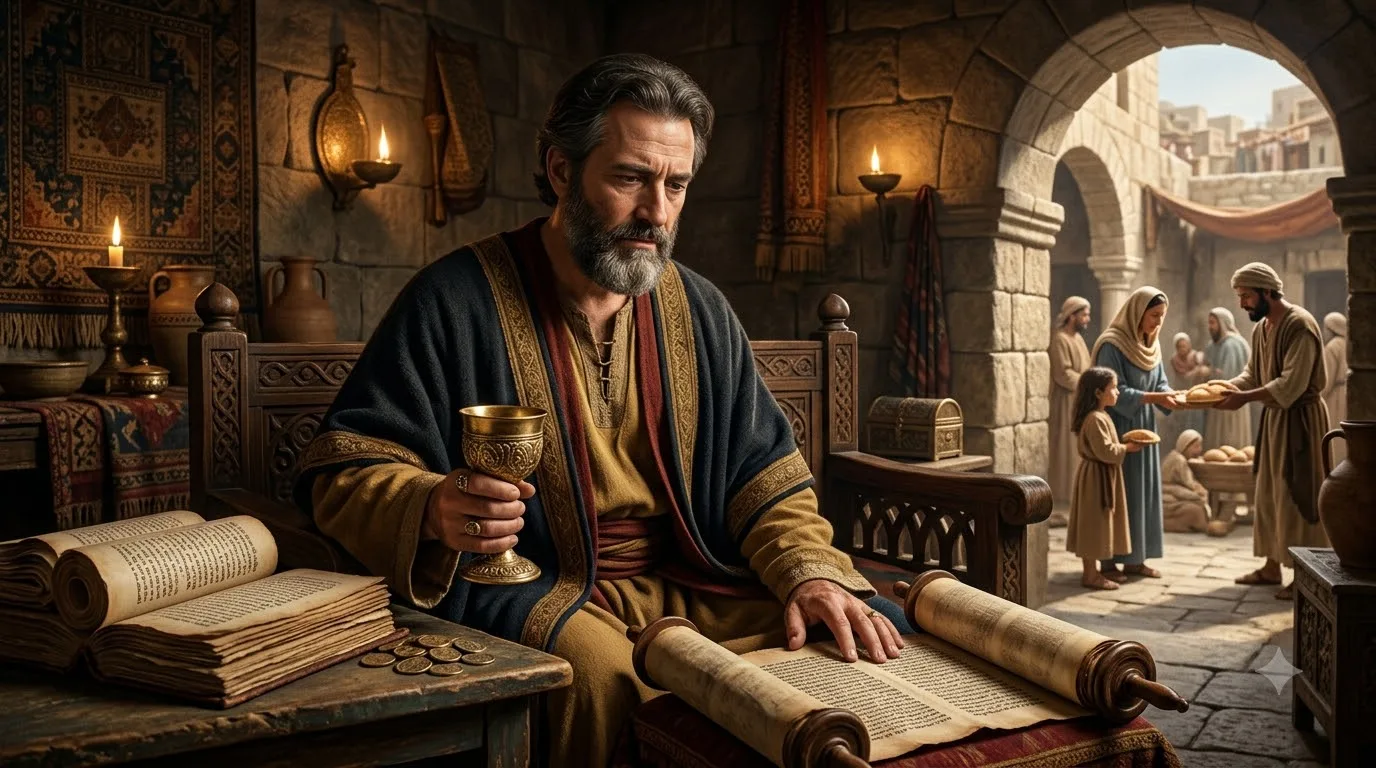
Despite these differences, there is strong continuity. God’s character does not change. The God of the Old Testament is just as loving and merciful as the God of the New Testament. Jesus will judge sin just as fiercely as the God of the Old Testament (Revelation 19:15).
“Jesus Christ is the same yesterday and today and forever.” — Hebrews 13:8
A Unified Story
To best understand the unity between the Old and New Testaments, view them as two acts of a single play. The Old Testament is the foundation; the New Testament is the house built upon it.
Saint Augustine captured this dynamic relationship perfectly: “The New is in the Old concealed; the Old is in the New revealed.”
As we journey from Genesis to Revelation, we witness a progressive revelation of God’s rescue mission. The story begins with paradise lost due to human rebellion, and it ends with paradise eternally restored through the finished work of Christ.
A Pastoral Note: People often come to me quietly terrified that the God of the Old Testament is a completely different being than the Jesus they love. It’s a real tension when you’re staring at stories of violent conquest right next to commands to love your enemies. But when you look closely at the whole picture, you start seeing the exact same heart—a God fiercely protective of His people and desperate to destroy the sin that destroys us. The cross doesn’t represent God changing His mind; it’s the moment His ancient, unrelenting love finally breaks through the darkness.
Frequently Asked Questions About the Old and New Testaments
How many books are in the Old and New Testaments?
In the standard Protestant Bible, there are 66 total books: 39 books in the Old Testament and 27 books in the New Testament. Catholic Bibles contain 73 books (including 7 deuterocanonical books in the Old Testament).
Is the God of the Old Testament different from the God of the New Testament?
No. God’s character is unchanging (“I the Lord do not change,” Malachi 3:6; Hebrews 13:8). The Old Testament reveals God’s profound mercy, covenant love (chesed), and patience, while the New Testament reveals both Jesus’ tender love and His fierce holiness and final judgment (Revelation 19).
Why do Christians still read the Old Testament?
The Old Testament is foundational to Christian faith. Jesus constantly quoted the Old Testament, stating that the Scriptures “testify about me” (John 5:39). Without the Old Testament, the promises of the Messiah, the nature of sin, the priesthood, and the cross cannot be fully understood.
What languages were the Old and New Testaments originally written in?
The Old Testament was written primarily in ancient Hebrew (with small portions in Aramaic in Daniel and Ezra). The New Testament was written in Koine Greek, the common international language of the Mediterranean world in the first century.