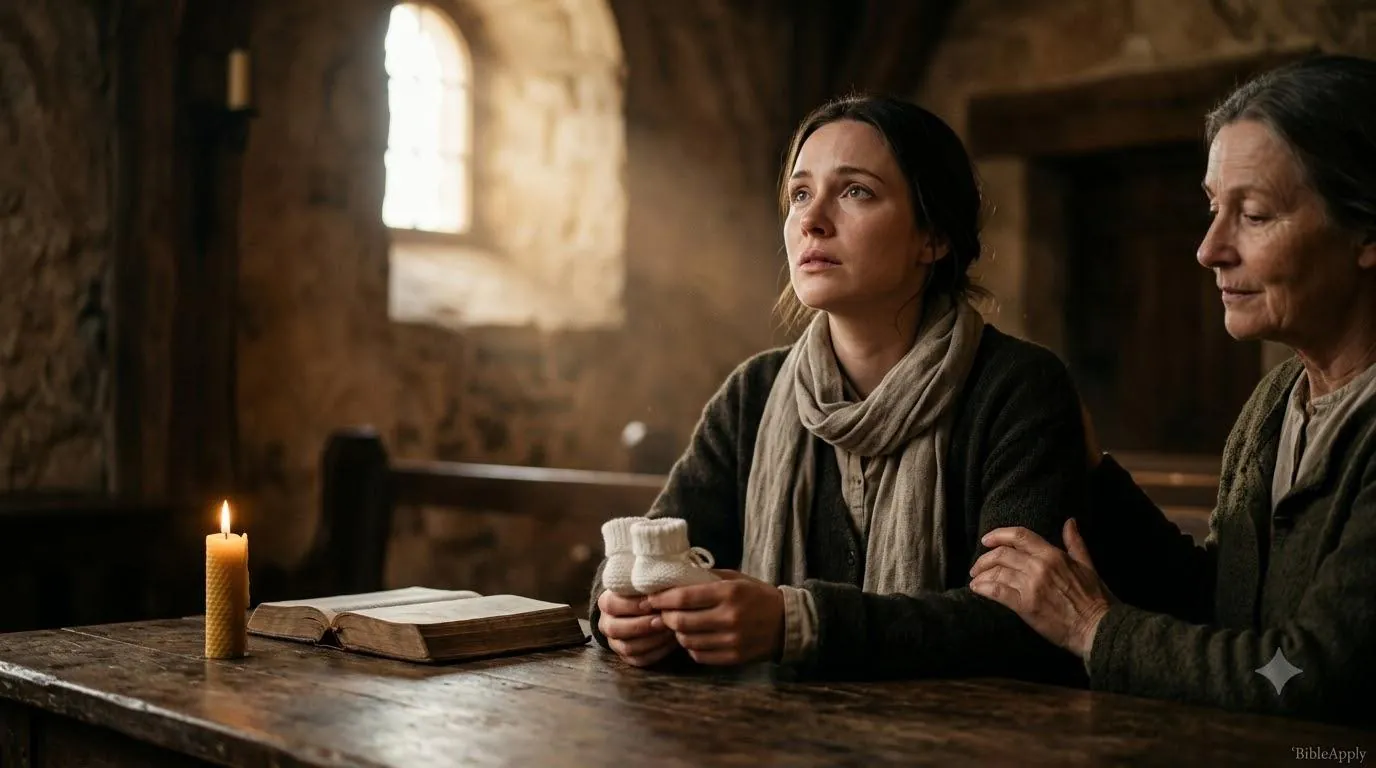

The Weight of the Question
There are few questions in theology that carry as much grief as the question of what happens to infants when they die. For parents who have experienced the loss of a miscarriage, a stillbirth, or a young child, this is not a sterile theological exercise. It is a cry of the shattered heart. The pain of an empty nursery naturally forces the soul to ask where their baby has gone.
Historically, infant mortality was incredibly high. Parents regularly faced the agonizing reality of burying their little ones. Modern medical advancements have reduced these tragedies in many places, but the sting of death remains sharp. It challenges our fundamental understanding of justice, mercy, and God’s character.
The cultural landscape often offers hollow platitudes like “heaven needed another angel.” For those seeking truth, these sayings fall flat. They need the solid rock of biblical assurance, not sentimental folklore.
The Christian worldview offers substantive hope. It doesn’t shy away from hard questions about original sin, grace, and judgment. Instead, it looks directly at the character of God and the nature of salvation. Scripture sheds light on the destiny of those who die before they can consciously choose or reject God. We can find a biblical foundation for the belief that infants are welcomed into God’s eternal presence.
The Theological Foundation: God’s Character
We must ground our understanding in the biblical narrative concerning God’s character. The most reliable lens for difficult questions is what we know to be indisputably true about who God is. If our theology paints a picture of God that contradicts His self-revelation, it is flawed.
Perfect Justice and Mercy
The Bible consistently testifies that God is a righteous judge. He will always do what is right.
“Far be it from you to do such a thing—to kill the righteous with the wicked, treating the righteous and the wicked alike. Far be it from you! Will not the Judge of all the earth do right?” (Genesis 18:25)
Abraham’s question about the destruction of Sodom applies to the fate of infants. God’s justice requires that sin be punished, but His mercy provides a way of salvation. It is inconsistent with God’s character to eternally condemn those who have no capacity to understand moral failure. God’s justice is never punitive without cause, and His mercy is vast.
The Value of Children to God
Throughout Scripture, God expresses fierce, protective care for children. In the Old Testament, God rebuked cultures that sacrificed their children, calling such acts abominations (Jeremiah 32:35). In the New Testament, Jesus elevated the status of children in a culture that often discarded them.
“But Jesus said, ‘Let the little children come to me and do not hinder them, for to such belongs the kingdom of heaven.’” (Matthew 19:14)
Jesus isn’t just using children as an illustration of faith. He is declaring their inherent value and their rightful place within God’s redemptive kingdom. The kingdom of God is fundamentally oriented toward the helpless and the dependent. When these little ones leave this earth, they enter the kingdom that belongs to them by the grace of the King.
Biblical Evidence: Where Do Infants Go?
There is no single verse that explicitly states, “All infants go to heaven when they die.” However, a consistent pattern of biblical evidence points strongly to their salvation.
David’s Confident Hope
The most cited passage regarding infant death is found in 2 Samuel 12. After King David commits adultery with Bathsheba, a child is conceived. The prophet Nathan declares the child will die. David fasts, weeps, and pleads with God for the child’s life.
Once the child dies, David’s behavior changes entirely. He washes himself, goes to the house of the Lord to worship, and asks for food. His servants are confused by this reversal, prompting David’s profound response:
“But now he is dead. Why should I fast? Can I bring him back again? I shall go to him, but he will not return to me.” (2 Samuel 12:23)
David, under the inspiration of the Holy Spirit, expresses a comforting assurance. He doesn’t say he will go to the grave in defeat. He says, “I shall go to him.” David knew his own eternal destiny was secure in God’s presence, as he wrote in Psalm 23:6. His peace only makes sense if he believed his child was safely with the Lord.
Moral Discernment and Accountability
The concept of an “age of accountability” is drawn from biblical principles. It suggests there is a time in human development before a child can comprehend moral law. Before this age, they are not held accountable for active rebellion against God.
In Deuteronomy 1, God judges the adult Israelites for their persistent unbelief, denying them entry into the Promised Land. He makes a striking exception for their children:
“And as for your little ones, who you said would become a prey, and your children, who today have no knowledge of good or evil, they shall go in there. And to them I will give it, and they shall possess it.” (Deuteronomy 1:39)
The Hebrew phrase “no knowledge of good or evil” speaks directly to moral discernment. God did not hold these children accountable for the rebellion of their parents. They lacked the developmental capacity to willfully reject His commands. This principle extends to eternal salvation.
The Atonement and Original Sin
Psalm 51:5 declares, “Behold, I was brought forth in iniquity, and in sin did my mother conceive me.” Romans 5 teaches that through Adam, sin entered the world, infecting the human race. If infants are born with a corrupted spiritual nature, how can they be saved and enter heaven?
The answer lies in the power of Christ’s atonement.
“Therefore, as one trespass led to condemnation for all men, so one act of righteousness leads to justification and life for all men.” (Romans 5:18)
While all inherit the curse of Adam, infants have not committed active transgressions. The blood of Christ covers the stain of original sin for those who die in infancy. Because they cannot exercise conscious faith, God applies the saving work of Christ to them directly.
They are saved entirely by grace, apart from intellectual assent or conscious faith. The reality of Jesus’ sinless life makes this possible. Only a spotless Savior can cover the inherited guilt of those too young to confess. If salvation is truly a free gift (Ephesians 2:8-9), God is free to give it to those who cannot even stretch out their hands to receive it.
The Book of Life and Judgment by Deeds
In the book of Revelation, the final judgment is vividly described. Pay close attention to the criteria used for judgment:
“And I saw the dead, great and small, standing before the throne, and books were opened. Then another book was opened, which is the book of life. And the dead were judged by what was written in the books, according to what they had done.” (Revelation 20:12)
Throughout Scripture, eternal condemnation is linked to willful rebellion and evil deeds. Infants have no conscious deeds by which to be judged. They have neither accepted nor rejected Christ. Since the biblical criteria for condemnation do not apply to them, they are securely written in the Book of Life by God’s grace.
Addressing Objections and Misconceptions
Several objections arise that require thoughtful consideration.
Objection 1: Doesn’t this make abortion or infanticide a “good” thing?
This is a horrific distortion of biblical ethics. The Apostle Paul addressed a similar distortion of grace in Romans 6:1, asking if we should sin so grace may abound. God strictly commands, “You shall not murder” (Exodus 20:13).
We are never permitted to do evil that good may result (Romans 3:8). God’s grace in saving infants does not excuse the severe judgment upon those who shed innocent blood. God can bring redemption out of tragedy, but the perpetrators will be held strictly accountable.
Objection 2: Are only some infants saved?
Historically, some theologians argued that only specific “elect” infants are saved, while others face a mild form of hell. However, the broader consensus in modern theology is that all infants who die are saved.
The preacher Charles Spurgeon stated, “I rejoice to know that the souls of all infants, as soon as they die, speed their way to Paradise.” If election is based solely on God’s grace and not on merit, there is no barrier to God electing all those who die before reaching accountability. It aligns perfectly with His abounding mercy.
Objection 3: Do they remain babies in heaven forever?
This is a common question for grieving parents who wonder what their child will look like when they are reunited. The Bible does not explicitly state the physical state of those in heaven. However, we know that in the resurrection, we will receive glorified bodies (1 Corinthians 15).
It is biblically consistent to believe that those who died in infancy will be given mature, glorified bodies. They will be capable of fully worshiping and enjoying God, without the limitations of earthly infancy. They will be whole, complete, and perfectly joyful beings.
A Pastoral Note: There are few things as disorienting as building a life around a child who never gets to live it. When you lose a baby, theology feels incredibly thin next to the weight of an empty crib. In the darkest hours of grief, what holds you together isn’t a complex argument about the age of accountability. It’s the character of the God who wept at a tomb and welcomed children into His lap. You can trust the Father to hold your child with the same fierce, perfect love He has for His own Son.
Related