

Quick Answer: The final judgment is God’s concluding act of justice over creation. Believers face the bema seat of Christ for rewards, while unbelievers face the Great White Throne Judgment to give an account for their sins.
The idea of a “final judgment” can make people uncomfortable. It often conjures images of an angry deity eager to punish. In a culture that prizes personal autonomy, the thought of standing before an objective Judge feels offensive. We wonder how a loving God could subject humanity to such an ordeal.
Yet, we also live with a deep demand for justice. We see systemic oppression and horrific abuse go unpunished. Dictators die peacefully in bed while the cries of victims are ignored.
Deep down, we crave a moral universe. We long for the scales to balance and for evil to be dealt with.
The biblical doctrine of the final judgment addresses this exact longing. It is God’s promise that history is not a meaningless cycle of suffering. It is a deliberate narrative moving toward a spectacular resolution.
The Creator will step in to set the world right, wipe away tears, and permanently remove sin.
A Pastoral Note: Many folks carry a quiet terror about facing God, convinced their rap sheet of sins has disqualified them from grace. I’ve heard that fear over countless cups of coffee. But Jesus didn’t die just to put us on spiritual probation. For those who trust Him, judgment day isn’t about awaiting a guilty verdict. It’s the day our Advocate stands up, points to His own wounds, and declares that every charge against us has already been dropped.
The Biblical Concept of Judgment
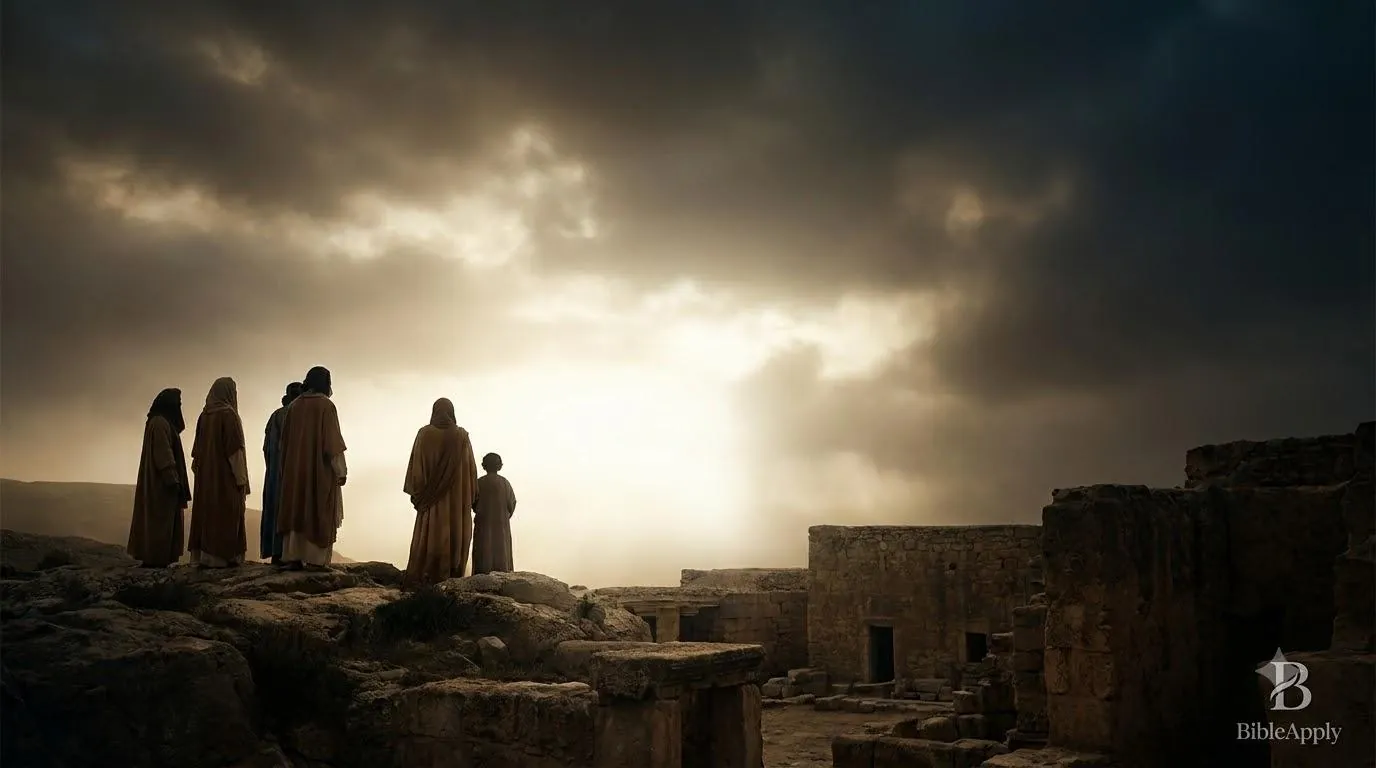
In English, “judgment” often carries negative connotations. But the biblical languages paint a different picture.
The Hebrew Foundation: Mishpat
In the Old Testament, the primary Hebrew word for judgment is mishpat. While it can mean a legal punishment, it is intimately tied to restorative justice. It is the act of making things right.
When the Psalmists cry out for God to “judge the earth” (Psalm 96:13), they aren’t begging for destruction. They are pleading for God to intervene and rescue the oppressed. Judgment, in the Hebrew mind, is the prerequisite for peace and flourishing.
The Greek Vocabulary: Krisis and Bema
In the New Testament, the most common Greek word for judgment is krisis. It implies a separation or a turning point. It is the moment truth is separated from falsehood.
Another crucial Greek term is bema. In Greco-Roman culture, the bema was a raised platform where a magistrate handed out awards to victorious athletes. This word captures the judgment awaiting those who belong to Christ.
The Two Aspects of the Final Judgment
Scripture differentiates between the judgment of believers and the judgment of unbelievers. These are distinct phases of God’s evaluation.
The Judgment Seat of Christ (The Bema)
For Christians, the final judgment is not a trial to determine their eternal destiny. That verdict was pronounced on the cross. Romans 8:1 declares, “There is therefore now no condemnation for those who are in Christ Jesus.”
Believers will instead stand before the bema—the judgment seat of Christ. The Apostle Paul writes: “For we must all appear before the judgment seat of Christ, so that each one may receive what is due for what he has done in the body, whether good or evil” (2 Corinthians 5:10, ESV).
This is an evaluation of stewardship, not salvation. The fire of God’s holy gaze will test the quality of each person’s work (1 Corinthians 3:10-15). Worthless deeds will burn up, resulting in a loss of reward, but the believer themselves will be saved. The bema is a place of reward for faithfulness rather than condemnation.
The Great White Throne Judgment
The most sobering depiction of judgment is found in the Book of Revelation. This is the climax at the end of human history.
“Then I saw a great white throne and him who was seated on it… And I saw the dead, great and small, standing before the throne, and books were opened. Then another book was opened, which is the book of life. And the dead were judged by what was written in the books, according to what they had done.” (Revelation 20:11-12, ESV)
Here, the unredeemed stand before the Creator. The “books” are opened, recording every thought, word, and deed. This demonstrates God’s perfect justice. No one is sent to the lake of fire unjustly.
Then, the “Book of Life” is opened. It contains the names of those who belong to the Lamb. Anyone whose name is not written in the Book of Life is cast into the lake of fire (Revelation 20:15).
The Basis of the Final Judgment
If Christianity teaches salvation by grace through faith, why do passages like Revelation 20 state people are judged “according to what they had done”?
Judged by Works as Evidence
True faith invariably produces works. As James argued, “faith without works is dead” (James 2:26).
At the final judgment, God won’t weigh good deeds against bad deeds. Our works will simply be the incontrovertible evidence of our heart’s posture. The deeds of the wicked testify to their rebellion, while the good works of the righteous show they were transformed by the Holy Spirit.
The Standard of Perfect Righteousness
The standard is not being a “good person” or having sincere religious devotion. The standard is the absolute holiness of God. Jesus said, “You therefore must be perfect, as your heavenly Father is perfect” (Matthew 5:48).
When the books are opened, every hidden motive will be exposed. By this standard, no one is righteous (Romans 3:10). The only way to survive is to have the perfect righteousness of Jesus Christ credited to your account.
Why is the Final Judgment Necessary?
If God already knows who is saved and who is lost, why go through a public judgment?
Vindicating God’s Character
Throughout history, humanity has questioned God’s justice and goodness. The final judgment is the public vindication of His character. The absolute fairness of God will be put on display for all creation. Every knee will bow, acknowledging that the Judge of all the earth has done right (Genesis 18:25).
Defeating Evil
Sin is a cosmic vandalism that ruined God’s creation. The final judgment is the moment evil is decisively conquered. Death, Hades, Satan, and his followers are permanently removed from the presence of God and His people.
Preparing the New Earth
You cannot build a perfect new house on toxic waste. The old creation must be cleansed. The final judgment serves as a cosmic purification process. It closes the chapter on the old world so the New Heavens and New Earth can begin (Revelation 21).
Addressing Common Objections
The final judgment remains a difficult concept for many.
“A loving God wouldn’t judge people.”
This objection relies on a shallow definition of love. True love cannot be indifferent to evil. A human judge who lets a serial killer go free isn’t “loving”—they are corrupt.
A God who refuses to judge oppression, abuse, and murder is not good. For the oppressed, a God of justice is their only hope. He loves His creation too much to let evil fester forever.
“Hell is an arbitrary power trip.”
Some view judgment as God throwing a tantrum over broken rules. But biblical judgment is God handing people over to the reality they have chosen.
As C.S. Lewis wrote, there are only two kinds of people: those who say to God, “Thy will be done,” and those to whom God says, “Thy will be done.” Separation from the source of all light, love, and joy is what people actively choose when they reject God.
Practical Applications
Live with Urgency
Every thought, word, and deed has eternal significance. Your life matters. The anticipation of the bema seat should motivate believers to invest in things that outlast the fire. We must pursue holiness, love our neighbors, and live in readiness.
Trust God with Justice
When we are wronged, our instinct is retaliation. The final judgment frees us from the burden of vengeance. As Romans 12:19 says, we can leave it to the wrath of God. We can forgive our enemies because we know ultimate justice will be perfectly executed.
Rest in Christ’s Finished Work
If the thought of judgment brings paralyzing fear, look to the cross. The wrath of God against your sin was poured out on Jesus outside the walls of Jerusalem. You will not stand on your own record. You will stand clothed in the perfect righteousness of the Son of God.