Mark Chapter Summaries
A complete, chapter-by-chapter guide to the Book of Mark. Read deep dives into the meaning, historical context, and modern application of every chapter.
Welcome to our complete guide to the Book of Mark. Below you will find a chapter-by-chapter summary that flows through the entire narrative, helping you understand the context, meaning, and application of this profound book.
Mark Chapter 1 Summary
!mark 1 explained
Introduction: The Urgent Gospel of Mark
The Gospel of Mark is widely considered the earliest of the four Gospels, written by John Mark under the apostolic authority and eyewitness testimony of the Apostle Peter. Addressed primarily to a Gentile audience—specifically Roman Christians who were facing escalating persecution, marginalization, and the threat of martyrdom under Emperor Nero—Mark’s Gospel wastes no time with long genealogies or birth narratives. Instead, it bursts onto the scene with a sense of breath-taking urgency, fast-paced action, and divine authority.
In Mark 1, the author establishes the foundational identity of Jesus Christ not merely as a moral teacher or a philosophical sage, but as the cosmic conqueror and the prophesied Servant King. Mark’s favorite word, euthys (Greek for “immediately” or “at once”), appears over 40 times in the book and a staggering 11 times in this first chapter alone. This deliberate linguistic choice propels the narrative forward at a breakneck speed, mirroring the unstoppable force of the Kingdom of God invading enemy-occupied territory. Roman readers, who culturally valued power, action, and swift victory, would have found this portrayal of Jesus profoundly compelling and highly relevant to their suffering.
Chapter 1 serves as a programmatic overture for the entire Gospel. It establishes Christ’s supreme authority—over nature, demonic powers, debilitating sickness, and rigid religious tradition—while paradoxically introducing what scholars call the “Messianic Secret.” Throughout Mark, Jesus repeatedly commands silence regarding His true identity, specifically telling demons and healed individuals not to reveal who He is. Mark wants his readers to understand a profound theological truth: Jesus is indeed the glorious Messiah and the Son of God, but His kingship cannot be fully comprehended apart from the cross. He is a King who comes to suffer, and to truly know Him, one must follow Him all the way to Calvary.
The Preparation of the Way (Mark 1:1-8)
“The beginning of the gospel of Jesus Christ, the Son of God; As it is written in the prophets, Behold, I send my messenger before thy face, which shall prepare thy way before thee.” (Mark 1:1-2, KJV)
Mark opens his masterpiece with a theological explosion in the very first verse. The word “gospel” (Greek: euangelion) in the first-century Greco-Roman world was a highly politicized term. It was commonly used in imperial propaganda to announce the “glad tidings” or “good news” of an emperor’s birth, his ascension to the throne, or a significant military victory. By deliberately using euangelion to introduce Jesus, Mark is making a subversive, politically charged claim: the true good news of peace, salvation, and cosmic rule is not found in Caesar in Rome, but in Jesus Christ, the Son of God, from Nazareth.
The Wilderness Prophet
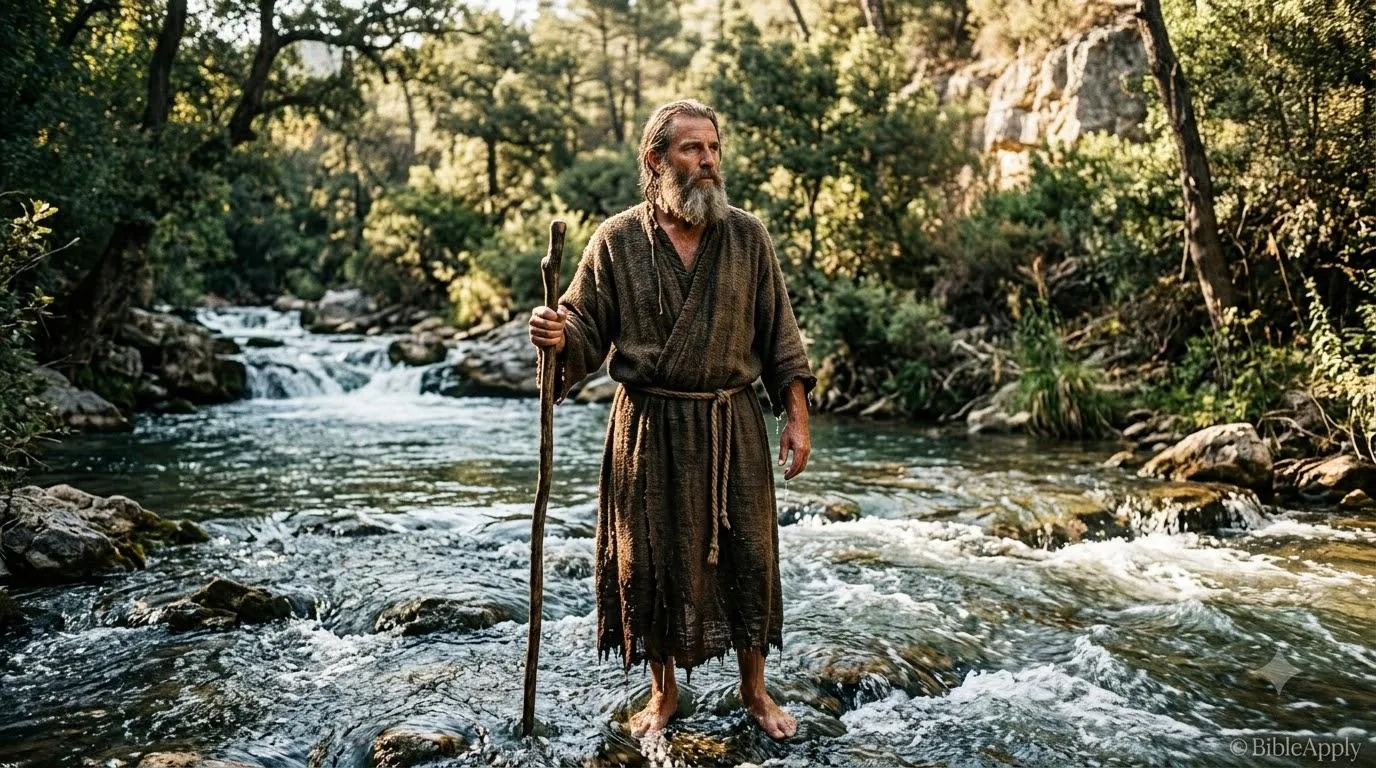
John the Baptist arrives on the scene as the direct fulfillment of ancient prophecies from Isaiah and Malachi. Culturally, John’s bizarre attire—a garment of camel’s hair and a leather belt around his waist—intentionally mirrors the legendary prophet Elijah (2 Kings 1:8). John represents the grand culmination of the Old Testament prophetic witness, standing on the threshold of the New Covenant and pointing his finger directly at the promised Messiah.
John’s core message is one of repentance and baptism in the wilderness. The wilderness (Greek: erēmos) is a potent theological motif throughout Scripture. It was the place of Israel’s historic wandering, rebellion, and profound divine provision. By calling the people out of the bustling cities and religious centers into the desolate wilderness to be baptized in the Jordan River, John is effectively leading them through a new Exodus. It is a spiritual reset. To be baptized by John meant acknowledging that physical descent from Abraham was not enough; the people needed to repent, recognize their inherent sinfulness, and prepare their hearts for the arriving King.
For a deeper study, see our guide on Jeremiah 29:11 Meaning: For I Know the Plans I Have for You which many readers have found helpful.
The Baptism and Temptation of Jesus (Mark 1:9-13)
“And straightway coming up out of the water, he saw the heavens opened, and the Spirit like a dove descending upon him: And there came a voice from heaven, saying, Thou art my beloved Son, in whom I am well pleased.” (Mark 1:10-11, KJV)
The Heavens Torn Open
At Jesus’ baptism, Mark notes that the heavens were “opened.” However, the Greek word used here is schizō, which means to tear, cleave, or rip apart violently. This is a dramatic, apocalyptic word. It is the exact same word Mark uses at the climax of his Gospel when the heavy veil of the temple is violently torn from top to bottom (Mark 15:38) at the moment of Christ’s death. In the baptism, God rips open the heavens to come down to humanity in the person of His Son; at the cross, God rips open the veil so that redeemed humanity can finally come up to Him in the Holy of Holies.
The descent of the Spirit like a dove and the Father’s booming voice (“Thou art my beloved Son”) provide a beautiful, Trinitarian inauguration to Jesus’ public ministry. The Father’s approving words are a magnificent amalgamation of Old Testament texts. They echo Psalm 2:7 (a royal enthronement psalm declaring the King’s authority) and Isaiah 42:1 (the introduction of the lowly, Suffering Servant). From the very beginning, Jesus is revealed as the paradox of the Gospel: He is both the conquering Divine King and the humble Servant who will suffer and die for His rebellious people.
Driven into the Wilderness
Following this incredible spiritual high, the text states the Spirit “driveth him” into the wilderness. The Greek verb employed here is ekballō, literally “to cast out” or “throw out”—the exact same forceful word used later for casting out demons. Jesus does not casually stroll into the desert for a quiet retreat; He is propelled by the Holy Spirit into the theater of active spiritual warfare.
Unlike the Israelites who failed their 40-year wilderness probation by grumbling and idolatry, and unlike Adam who succumbed to the serpent’s lies in a lush, perfect garden, Jesus, the Second Adam, faces Satan in a desolate, terrifying wasteland for 40 days and emerges utterly victorious. Mark includes a fascinating, unique detail: Jesus was “with the wild beasts.” In Jewish apocalyptic literature, the peaceful coexistence with wild animals is a defining hallmark of the Messianic age (Isaiah 11:6-9), signaling that Jesus is already beginning to reverse the catastrophic curse of the Fall and restore Edenic peace.
The Inauguration of the Kingdom (Mark 1:14-20)
“Now after that John was put in prison, Jesus came into Galilee, preaching the gospel of the kingdom of God, And saying, The time is fulfilled, and the kingdom of God is at hand: repent ye, and believe the gospel.” (Mark 1:14-15, KJV)
The Time is Fulfilled
When Jesus announces that “the time is fulfilled,” He uses the specific Greek word kairos. In Greek thought, chronos refers to chronological, ticking-clock time (minutes, days, years), while kairos refers to an opportune, pregnant, or decisive moment in history. Jesus is declaring that the long-awaited climax of redemptive history has finally arrived. The Kingdom of God is no longer a distant, ethereal hope for the end of the age; it is actively breaking into the present reality through His incarnate person and redemptive work.
Also Read:
His command in response to this cosmic shift is two-fold: repent and believe. True repentance (Greek: metanoeō) is not merely feeling sorry for getting caught; it is a fundamental change of mind that leads to a radical change in direction and behavior. Belief, in the biblical sense, is not mere intellectual assent, but complete trust and loyal submission. True saving faith in Christ requires both turning your back on sin (repentance) and throwing your full weight upon the Savior (belief).
The Call of the First Disciples
Jesus walks by the Sea of Galilee and calls ordinary fishermen—Simon, Andrew, James, and John. In first-century rabbinic culture, eager students sought out a renowned Rabbi, begging to follow him and learn his yoke. Jesus completely flips this cultural paradigm; He takes the sovereign initiative, seeking out and drafting His own disciples.
His call is absolute, authoritative, and demanding: “Come after me.” Their response is staggering in its immediacy. They leave their nets, their lucrative family businesses, their lifelong livelihoods, and even their father (Zebedee left in the boat) to follow Christ into the unknown. This highlights the supreme, infinite worth of Jesus. When the King of the universe issues a call, all earthly allegiances, comforts, and security must immediately take a backseat.
Authority Over Demons and Disease (Mark 1:21-34)
“And they were all amazed, insomuch that they questioned among themselves, saying, What thing is this? what new doctrine is this? for with authority commandeth he even the unclean spirits, and they do obey him.” (Mark 1:27, KJV)
The Authority of the King
The remainder of chapter 1 is a rapid-fire, awe-inspiring demonstration of Jesus’ unmatched authority (Greek: exousia). In the synagogue at Capernaum, the congregation is astounded not just by the content of what Jesus says, but by how He says it. The religious scribes of the day constantly quoted other rabbis and ancient traditions to validate their teachings. Jesus speaks on His own intrinsic, divine authority. He is not pointing to the truth; He is the Truth.
This authority is immediately put to a terrifying test when a demon-possessed man disrupts the synagogue service. The unclean spirit instantly recognizes Jesus’ true identity: “the Holy One of God.” Jesus swiftly silences the demon with a simple, sharp command. He does not use lengthy incantations, magical artifacts, or complex rituals common to first-century Jewish and pagan exorcists; His spoken word alone is sufficient to banish the powers of darkness. This unequivocally demonstrates that the Kingdom of God is actively invading and forcefully dismantling the kingdom of Satan.
Jesus then transitions seamlessly from public triumph to tender, private compassion, healing Simon’s mother-in-law of a severe fever. Notably, Mark records that He “took her by the hand, and lifted her up.” As soon as the fever leaves her, she begins to serve them, modeling the true, appropriate response to experiencing the liberating grace and healing touch of Christ.
Believers seeking more clarity will appreciate our full study on Psalm 91 Meaning: He Who Dwells in the Shelter.
Solitude and Cleansing (Mark 1:35-45)
“And in the morning, rising up a great while before day, he went out, and departed into a solitary place, and there prayed.” (Mark 1:35, KJV)
The Necessity of Prayer
Despite the massive, overwhelming success of the previous day and evening—where the entire city gathered at the door to be healed—Jesus does not bask in the adoration of the crowds. Long before dawn, He intentionally retreats to a solitary place (erēmos again, the wilderness) to commune deeply with the Father. Jesus’ public power and miraculous output were directly fueled by His private prayer life and communion with God.
When Peter and the disciples finally track Him down, declaring breathlessly that “all men seek for thee,” Jesus refuses to let the fickle expectations of the crowd dictate His divine mission. He insists on moving forward to other towns. He came primarily to preach the gospel of the Kingdom and accomplish redemption on the cross, not simply to be a localized, popular miracle worker.
The Healing of the Leper
The chapter concludes with one of the most moving, theologically profound encounters in the entire New Testament. A man riddled with leprosy falls on his knees before Jesus, begging, “If thou wilt, thou canst make me clean.” Leprosy in the ancient Near East was a living death sentence, leading to complete physical deterioration, social ostracization, and religious isolation. A leper was considered ceremonially unclean, cut off from the temple and the people of God. To touch a leper was strictly forbidden by the Law (Leviticus 13:45-46) because it would render the one who touched him unclean.
Yet, Mark tells us Jesus was “moved with compassion.” The Greek word is splagchnizomai—a visceral, gut-wrenching pity that originates in the deepest part of one’s being. Defying all cultural and religious norms, Jesus reaches out and physically touches the untouchable man.
The theological implications are staggering. Instead of Jesus becoming contaminated by the leper’s uncleanness, Jesus’ profound, radiant purity flows into the leper, cleansing him completely and instantaneously. Here, we see a beautiful picture of the Gospel. We are all spiritual lepers—isolated, thoroughly unclean, and dying in our sin. Jesus, the Great Physician, willingly touches the untouchable. He took our filthy uncleanness upon Himself on the cross (2 Corinthians 5:21), so that His perfect righteousness, healing, and purity could be eternally transferred to us.
3 Practical Applications from Mark 1
-
Repentance is an Active Lifestyle, Not a One-Time Event. Jesus declared that the Kingdom of God is at hand and commanded us to “repent and believe” (Mark 1:15). Repentance (metanoeo) is not merely feeling momentarily guilty or shedding tears at an altar; it is a decisive change of mind that demands a new direction of life. In our modern walk with Christ, repentance shouldn’t just be the door through which we enter the faith, but the continuous rhythm of our daily lives—constantly turning away from our selfish, fleshly desires and joyfully re-orienting our hearts toward the King.
-
Prioritize Solitude and Prayer Above the Clamor of Life. In Mark 1:35, Jesus modeled a crucial, non-negotiable spiritual discipline. Even amidst a wildly successful, demanding, and exhausting ministry, He rose early in the morning, while it was still dark, to seek solitude with the Father. If the incarnate Son of God, who was sinless, required quiet time with God to sustain His earthly mission, how much more do we? We must intentionally fight for and carve out solitary moments in our loud, notification-driven, distraction-filled world to pray, realign our priorities, and draw supernatural strength from the Holy Spirit.
-
Respond to Christ’s Grace with Immediate Service. When Jesus touched and healed Simon’s mother-in-law, her immediate response was to rise and serve Jesus and the disciples (Mark 1:31). She didn’t view her physical healing merely as a personal comfort to be hoarded, but as an empowerment to minister to others. When we reflect on how Jesus has intimately touched our lives, forgiven our unimaginable debts, and healed our terminal spiritual leprosy, our most natural, overflow response should be profound gratitude expressed through selflessly serving Christ and His church. We are saved to serve.
Also Read
- Lamentations 1 Summary & Meaning: The Weeping of a Desolate City
- 2 Corinthians 1 Summary & Meaning: The God of All Comfort and the ‘Yes’ in Christ
- John 1 Summary & Meaning: The Word Became Flesh
Read Mark 1
Dive into the full scripture text for deeper study.
Mark Chapter 2 Summary
A detailed narrative summary for Mark 2 is currently being prepared by our theologians.
Mark Chapter 3 Summary
A detailed narrative summary for Mark 3 is currently being prepared by our theologians.
Mark Chapter 4 Summary
A detailed narrative summary for Mark 4 is currently being prepared by our theologians.
Mark Chapter 5 Summary
A detailed narrative summary for Mark 5 is currently being prepared by our theologians.
Mark Chapter 6 Summary
A detailed narrative summary for Mark 6 is currently being prepared by our theologians.
Mark Chapter 7 Summary
A detailed narrative summary for Mark 7 is currently being prepared by our theologians.
Mark Chapter 8 Summary
A detailed narrative summary for Mark 8 is currently being prepared by our theologians.
Mark Chapter 9 Summary
A detailed narrative summary for Mark 9 is currently being prepared by our theologians.
Mark Chapter 10 Summary
A detailed narrative summary for Mark 10 is currently being prepared by our theologians.
Mark Chapter 11 Summary
A detailed narrative summary for Mark 11 is currently being prepared by our theologians.
Mark Chapter 12 Summary
A detailed narrative summary for Mark 12 is currently being prepared by our theologians.
Mark Chapter 13 Summary
A detailed narrative summary for Mark 13 is currently being prepared by our theologians.
Mark Chapter 14 Summary
A detailed narrative summary for Mark 14 is currently being prepared by our theologians.
Mark Chapter 15 Summary
A detailed narrative summary for Mark 15 is currently being prepared by our theologians.
Mark Chapter 16 Summary
A detailed narrative summary for Mark 16 is currently being prepared by our theologians.
Conclusion
We hope this chapter-by-chapter summary of Mark has helped you better understand God's Word. To continue your study, explore our other Bible Chapter Summaries or read our detailed Verse Meanings.