

Quick Answer: The Kingdom of God is His sovereign rule through Jesus Christ. It is a present spiritual reality in believers’ hearts and a future physical reign over a renewed creation.
The Kingdom of God is the sovereign rule of God through Jesus Christ over all creation. It exists as a present spiritual reality in the hearts of believers and a future physical reign over the renewed cosmos. It isn’t just a geographic location. It is God’s active, redemptive kingship restoring broken humanity to Himself.
When Jesus launched His public ministry, His inaugural message was blunt: “The time is fulfilled, and the kingdom of God is at hand; repent and believe in the gospel” (Mark 1:15). Across the Gospels, the Kingdom of God appears over a hundred times. It was the central theme of Jesus’s preaching. It framed His parables and provided the context for His miracles.
Yet many still wonder what this Kingdom actually is. Is it heaven, the church, an inward feeling, or a future political state? Understanding the Kingdom of God is essential to grasping the Bible’s grand narrative. It traces the story from the rebellion of Eden to the final restoration of the New Heavens and New Earth.
A Pastoral Note: A guy in our congregation used to burn himself out trying to fix every broken thing in his neighborhood. When the needle didn’t move, he’d spiral into despair. We spent months unpacking the tension of God’s Kingdom being both “already” and “not yet.” You and I are called to bring light into dark places, but we aren’t asked to carry the weight of the world on our shoulders. The King has already won, and one day He will return to make all things right. Until then, we faithfully do our part.
What Does “Kingdom of God” Mean in Scripture?
In English, “kingdom” usually means a territory on a map with borders and citizens. In ancient Near Eastern thought, however, a kingdom was defined by the ruler’s authority, not geography.
The Linguistic Root: Reign Before Realm
In biblical languages, the words translated as “kingdom” prioritize dynamic royal rule.
- Hebrew (Malkuth): Refers to kingship, sovereignty, or reign. When Psalm 145:13 says, “Your kingdom is an everlasting kingdom,” the emphasis is on Yahweh’s active exercise of dominion.
- Greek (Basileia): In the New Testament, this denotes the royal power and authority of a king before it denotes the territory he rules.
The Kingdom of God is first and foremost God’s dynamic reign—His sovereign rule in action. Secondarily, it is the realm where that rule is experienced. The Kingdom exists wherever God’s rightful authority is acknowledged and obeyed.
“Your kingdom is an everlasting kingdom, and your dominion endures throughout all generations. The Lord is faithful in all his words and kind in all his works.” — Psalm 145:13
Universal Sovereignty vs. Redemptive Reign
Scripture reveals two distinct dimensions of God’s kingship.
- Universal Sovereignty: As Creator, Yahweh possesses absolute rule over all creation (Psalm 103:19). No earthly ruler or cosmic catastrophe operates outside His supreme oversight.
- Redemptive Reign: Following the fall in Genesis 3, the world entered cosmic rebellion. Scripture calls Satan “the god of this world” (2 Corinthians 4:4). God’s redemptive kingdom is His historical work through Jesus to crush sin, rescue sinners, and reconcile creation to Himself.
Kingdom of God vs. Kingdom of Heaven
Readers often notice Matthew prefers “Kingdom of Heaven,” while Mark, Luke, and John use “Kingdom of God.” Some try to separate these into two different entities, but Scripture uses them interchangeably.
In Matthew 19:23-24, Jesus states: “Truly, I say to you, only with difficulty will a rich person enter the kingdom of heaven. Again I tell you, it is easier for a camel to go through the eye of a needle than for a rich person to enter the kingdom of God.”
Matthew wrote primarily to Jewish Christians. Honoring the first-century Jewish reverence for the divine name, he used “Heaven” as a substitute for God. Mark and Luke, writing to Gentiles unfamiliar with rabbinic traditions, used the direct phrase “Kingdom of God.”
The Centrality of the Kingdom in Jesus’s Ministry
Every aspect of Jesus’s earthly life was ordered around the arrival of God’s royal reign.
The Inaugural Announcement
In Mark 1:14-15, Jesus announced that “the time is fulfilled.” Centuries of Old Testament anticipation converged in Jesus of Nazareth. God had finally arrived in the person of His Son to rule His people directly.
Miracles as Kingdom Invasions
Jesus’s miraculous signs weren’t mere spectacles. They were theological demonstrations that God’s Kingdom had actively invaded enemy-occupied territory.
“If it is by the Spirit of God that I cast out demons, then the kingdom of God has come upon you.” — Matthew 12:28
When Jesus restored sight, healed leprosy, and expelled demons, He demonstrated what life looks like when God’s will is done on earth. Every exorcism plundered Satan’s domain. Every physical healing pushed back the corruption of the Fall.
The Ethics of the Kingdom: The Sermon on the Mount
In Matthew 5–7, Jesus unveiled the ethical constitution of His Kingdom. Unlike earthly monarchies that reward brute force and pride, Christ’s Kingdom operates on inverted principles.
- Citizens of the Kingdom are the poor in spirit, the meek, the merciful, and the pure in heart (Matthew 5:3-9).
- Kingdom righteousness demands heart transformation that uproots anger, lust, and hypocrisy (Matthew 5:21-28).
- Disciples are commanded to love their enemies, bless persecutors, and seek first God’s kingdom rather than pursuing material wealth (Matthew 6:25-34).
“But seek first the kingdom of God and his righteousness, and all these things will be added to you.” — Matthew 6:33
The “Already and Not Yet” Tension
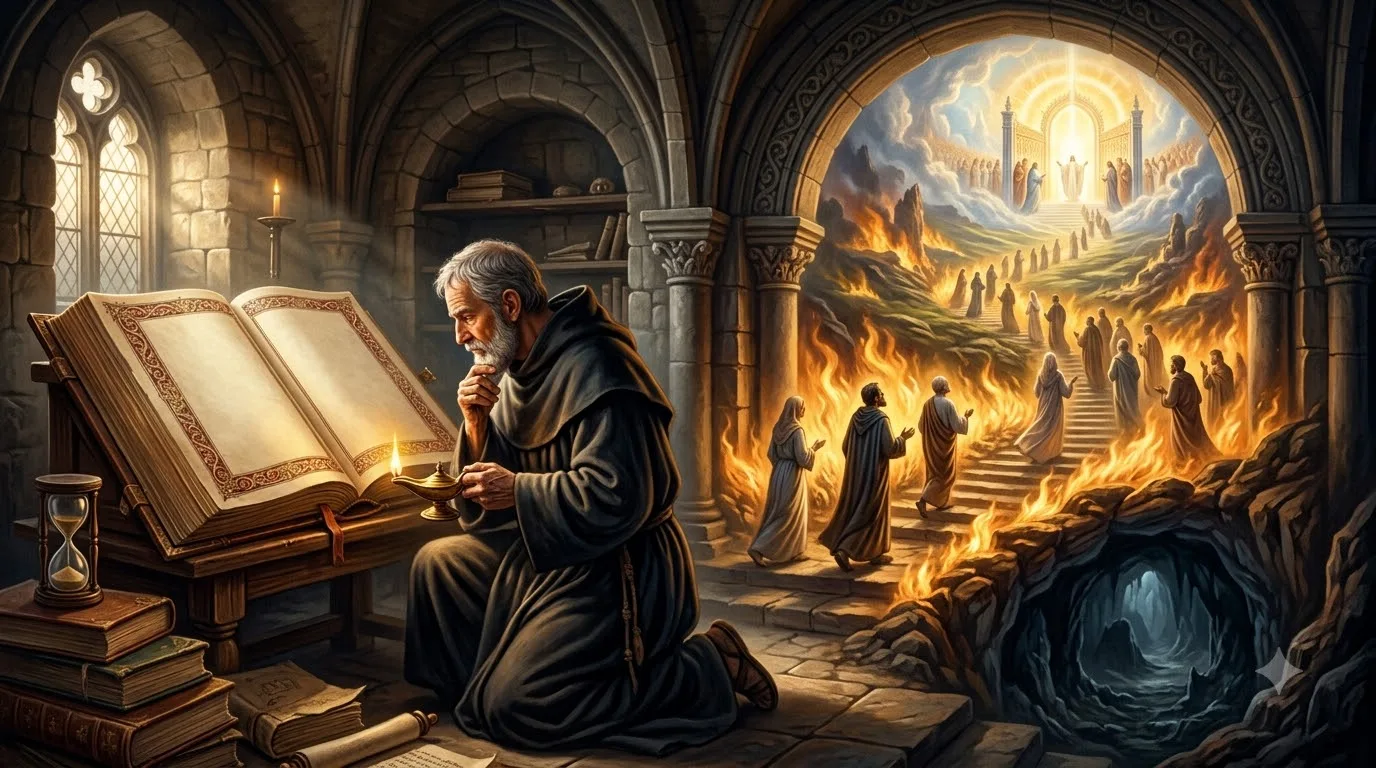
The key to understanding biblical prophecy is recognizing the tension between the Kingdom’s inauguration and its consummation. Theologians often call this the “Already and Not Yet.”
               FIRST COMING                           SECOND COMING
              (Inauguration)                          (Consummation)
                    │                                       │
                    ▼                                       ▼
────────────────────────────────────────────────────────────────────────►
     Old Age: Sin, Death, Curse               New Age: Glory & Restoration
                    ▲                                       ▲
                    │                                       │
                    └──────── "ALREADY AND NOT YET" ────────┘
                              Present Church Age
First-century Jews expected a single messianic arrival that would immediately overthrow Rome and judge the nations. Jesus revealed that the Kingdom arrives in two stages. The King came first in humility as a sacrifice. He will return later in visible glory to judge the living and the dead.
The Kingdom “Already” Present
Believers do not have to wait for the Second Coming to enter the Kingdom. Through Christ’s death, resurrection, and the Holy Spirit, the Kingdom is dynamically present now.
- Spiritual Liberation: Paul writes that God “has delivered us from the domain of darkness and transferred us to the kingdom of his beloved Son” (Colossians 1:13).
- Internal Reality: Jesus stated: “The kingdom of God is not coming in ways that can be observed… for behold, the kingdom of God is in the midst of you” (Luke 17:20-21).
- Holy Living: Paul reminds the Romans that “the kingdom of God is not a matter of eating and drinking but of righteousness and peace and joy in the Holy Spirit” (Romans 14:17).
Whenever someone repents, trusts Christ, or extends love to a hurting neighbor, the Kingdom is actively breaking into this present age.
The Kingdom “Not Yet” Consummated
At the same time, the Kingdom has not arrived in its full manifestation. The church still lives in a fallen world marked by disease, grief, and death. Creation continues to groan under the curse of sin (Romans 8:22). The final fulfillment awaits the bodily return of Jesus.
“Then the seventh angel blew his trumpet, and there were loud voices in heaven, saying, ‘The kingdom of the world has become the kingdom of our Lord and of his Christ, and he shall reign forever and ever.’” — Revelation 11:15
At the Second Coming of Jesus, Christ will destroy physical death entirely (1 Corinthians 15:25-26). The righteous will receive immortal resurrection bodies. God will create a New Heaven and New Earth, dwelling directly with His redeemed people without pain or sorrow (Revelation 21:1-4).
Jesus’s Parables of the Kingdom
Jesus regularly used parables to illustrate how the Kingdom operates in this intermediate age.
Parables of Growth: Mustard Seed and Leaven
To people expecting military conquest, Jesus offered parables showing humble beginnings.
“The kingdom of heaven is like a grain of mustard seed that a man took and sowed in his field. It is the smallest of all seeds, but when it has grown it is larger than all the garden plants…” — Matthew 13:31-32
His Kingdom starts tiny—a crucified carpenter and a few fishermen—yet expands into an immense tree sheltering people from every nation. In the parable of the leaven (Matthew 13:33), the Kingdom operates like yeast, quietly transforming the dough through invisible influence.
Parables of Worth: Hidden Treasure and Pearl
In Matthew 13:44-46, Jesus emphasizes the supreme value of God’s Kingdom.
“The kingdom of heaven is like treasure hidden in a field, which a man found and covered up. Then in his joy he goes and sells all that he has and buys that field.” — Matthew 13:44
The man abandons everything in his joy. Entering the Kingdom requires complete surrender, yet it involves no real loss. Gaining Christ outweighs any earthly wealth or prestige.
Parables of Mixed Realities: Wheat and Tares
Why does evil persist if Jesus is King? In the parable of the wheat and the tares (Matthew 13:24-30), an enemy sows counterfeit weeds alongside wheat. The master tells his servants not to uproot the weeds prematurely. Both grow together until harvest.
In this present age, the sons of the Kingdom and the sons of the evil one co-exist. God patiently delays judgment to allow His redeemed people to repent. At the end of the age, angels will separate the wicked from the righteous.
How Does a Person Enter the Kingdom of God?
Because God’s Kingdom is holy, human ancestry and religious rituals cannot grant admission. Jesus made the entry requirements incredibly clear.
1. Regeneration
When Nicodemus approached Jesus, Christ bypassed all religious small talk.
“Truly, truly, I say to you, unless one is born again he cannot see the kingdom of God… unless one is born of water and the Spirit, he cannot enter the kingdom of God.” — John 3:3, 5
Natural birth gives life in this fallen world. Entering God’s spiritual realm requires a second, supernatural birth. Through the Holy Spirit, God cleanses our guilt and gives us new life to trust in Jesus (Titus 3:5).
2. Repentance and Faith
Jesus’s opening command in Mark 1:15 pairs two inseparable responses. First, we must repent. This means turning away from self-sovereignty and renouncing self-righteousness.
Second, we must believe. This means placing reliant trust upon the finished cross-work and resurrection of Jesus alone. Salvation is a gift of grace received through faith, not earned by moral achievements (Ephesians 2:8-9).
3. Childlike Humility
When the disciples argued over status, Jesus placed a child in their midst.
“Truly, I say to you, unless you turn and become like children, you will never enter the kingdom of heaven.” — Matthew 18:3
In the first century, children held no social standing or power. Entering the Kingdom requires coming to God with empty hands, confessing our spiritual poverty, and leaning entirely on His mercy.
The Church and the Kingdom
Believers often wonder about the relationship between the local church and the Kingdom of God. While intimately connected, they are not identical.
The preaching of the Kingdom gathers regenerated believers into covenant communities, creating the church. In turn, the church serves as an outpost of the Kingdom, modeling love and justice (Matthew 5:14-16). Jesus gave the church the “keys of the kingdom” to proclaim the gospel. However, the Kingdom is broader than the church; it is God’s cosmic reign over all reality.
Living as Kingdom Citizens Today
Belonging to the Kingdom transforms every dimension of daily life.
Seeking the Kingdom Above Daily Anxieties
In Matthew 6:33, Jesus commands us to “seek first the kingdom of God.” This means making lifestyle choices based on what honors Christ rather than what maximizes earthly prestige.
It also means entrusting our financial worries to our Heavenly Father, who feeds the birds and clothes the grass. We use our material wealth generously to advance the gospel and relieve suffering.
Embodying Kingdom Counter-Culture
Jesus affirmed that His Kingdom is not of this world (John 18:36). Its power isn’t found in coercion or arrogance, but in sacrificial love and truth.
In a divided culture filled with hostility, Christians are called to display the fruit of the Spirit. We pursue justice, defend the vulnerable, love our neighbors, and overcome evil with good (Romans 12:21).
Serving as Christ’s Ambassadors
Paul designates every follower of Jesus as a royal representative.
“Therefore, we are ambassadors for Christ, God making his appeal through us. We implore you on behalf of Christ, be reconciled to God.” — 2 Corinthians 5:20
An ambassador speaks with the message of the King. Our mission is to invite men and women to lay down their arms of rebellion, trust in the blood of Jesus, and enter the family of God.
An Unshakeable Kingdom
Every earthly government and empire will eventually collapse. Human systems are fragile and finite. In contrast, Hebrews 12:28 reminds believers that we are “receiving a kingdom that cannot be shaken.”
The Kingdom of God will never be toppled. If you have not yet yielded your heart to King Jesus, the gate remains open. Repent, believe the good news, and take your place as a citizen of the Kingdom.
Related
- What is the Gospel?
- How Can I Be Saved?
- What is the Millennial Kingdom?