

Quick Answer: Explore the specific Messianic prophecies—from Isaiah 53 to Micah 5—that Christ fulfilled.
The claim that Jesus of Nazareth fulfilled ancient prophecies is often met with both curiosity and doubt. Modern seekers naturally ask for proof. The idea that a single individual’s birth, life, death, and resurrection could be predicted centuries beforehand sounds almost too astonishing to be true.
In a cultural landscape saturated with competing narratives, people crave an authentic anchor. Many wonder if the biblical text holds up to scrutiny. Asking how Jesus fulfilled Old Testament prophecies is a personal quest for meaning. People want to know if history has an author and if God is actively working within it.
The identity of Jesus remains a pivotal point of theological divergence. For Jewish individuals, the interpretation of Messianic prophecies is rooted in centuries of rabbinic tradition. This tradition often expects a conquering, political king rather than a suffering servant who dies on a Roman cross.
For skeptics, the claim of prophecy fulfillment can feel like a circular argument Christians use to retroactively validate their beliefs. Understanding these diverse perspectives helps us approach the topic with a respectful, intellectually honest desire to explore the biblical narrative.
The Old Testament is not simply a prelude to the New. It is the foundational tapestry into which the life, ministry, and passion of Christ are woven. As we look at how Jesus fulfilled these ancient texts, we see a cohesive story spanning thousands of years. Every promise made by God is brought to resolution in the person of Jesus Christ.
A Pastoral Note: I sit across from skeptics all the time who feel the Bible is just a disjointed mess of old fables. When we actually lay out the timeline and look at the sheer mathematical improbability of Christ’s life matching these ancient texts, the tone usually shifts. It’s not about winning a debate. It’s about watching the lights come on when someone realizes God has been quietly orchestrating history to rescue them all along.
The Biblical Foundation
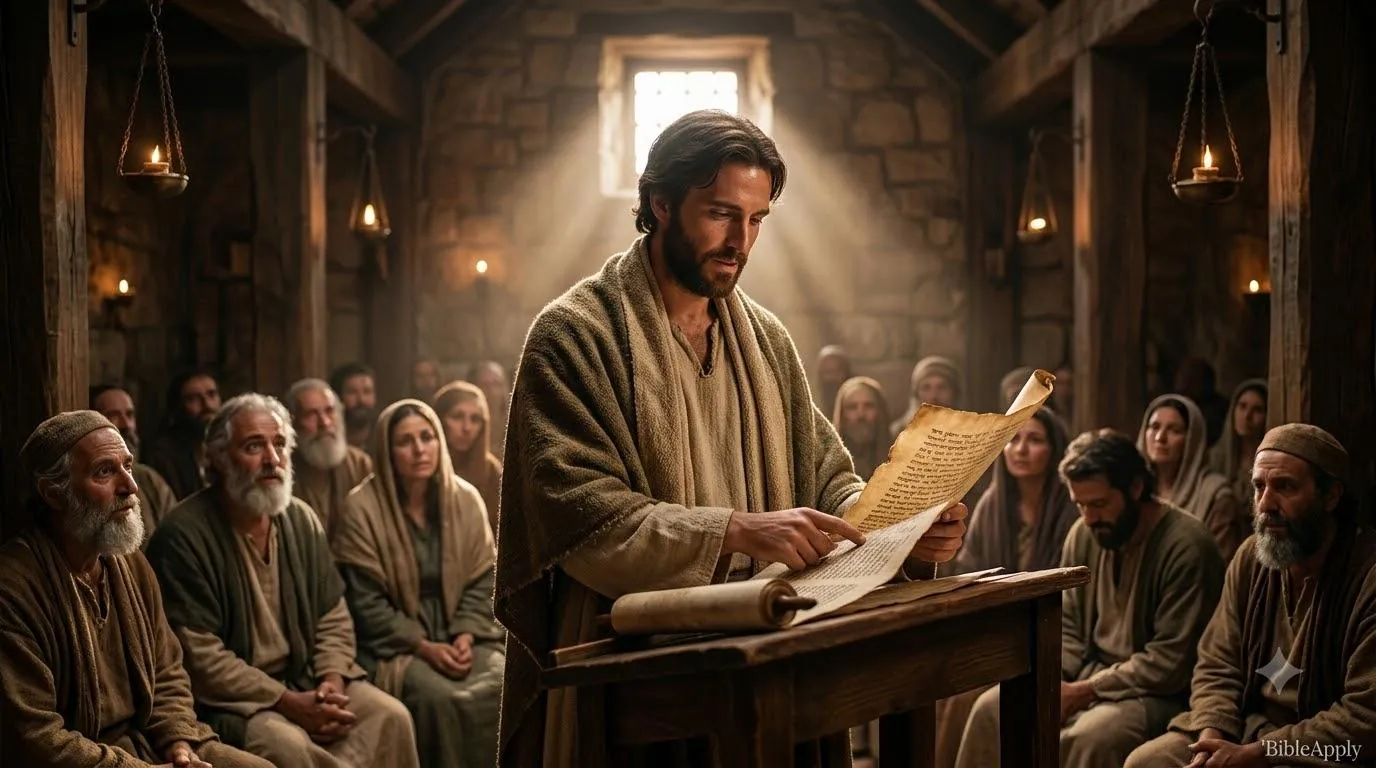
The New Testament authors were convinced that Jesus was the climax of Israel’s long story. Jesus Himself affirmed this, notably during His post-resurrection appearance on the road to Emmaus. There, He reshaped His disciples’ understanding of Scripture:
“And beginning with Moses and all the Prophets, he explained to them what was said in all the Scriptures concerning himself.” (Luke 24:27)
Biblical fulfillment is not always a simple “prediction and realization” dynamic. It goes beyond a fortune teller guessing a future event. The Greek word plēroō means “to make full” or “to complete.” Biblical fulfillment brings to full expression the patterns, shadows, and unfulfilled hopes of Israel’s history.
Mathematicians like Peter Stoner have calculated the probability of a single person fulfilling just eight specific Messianic prophecies. The odds were calculated at 1 in 10^17 (one in one hundred quadrillion). Jesus fulfilled dozens of them, creating a historical record that defies coincidence.
Direct Predictive Prophecy
Some prophecies are explicitly predictive. They point to specific details about the coming Messiah’s life, lineage, and death.
1. The Virgin Birth (Isaiah 7:14 / Matthew 1:22-23)
“Therefore the Lord himself will give you a sign: The virgin will conceive and give birth to a son, and will call him Immanuel.” (Isaiah 7:14)
The Hebrew word used here is ‘almah, which refers to a young woman of marriageable age. When Jewish scholars translated the Hebrew Scriptures into Greek, they chose the word parthenos, which explicitly means “virgin.”
Matthew sees the fulfillment of this miraculous sign in Mary’s conception of Jesus. This embodies the promise of “Immanuel” (God with us).
2. The Birthplace in Bethlehem (Micah 5:2 / Matthew 2:5-6)
Centuries before Christ, the prophet Micah pinpointed the small town of Bethlehem as the birthplace of the coming ruler.
“But you, Bethlehem Ephrathah, though you are small among the clans of Judah, out of you will come for me one who will be ruler over Israel, whose origins are from of old, from ancient times.” (Micah 5:2)
Mary and Joseph resided in Nazareth. However, a Roman census brought them to Bethlehem just in time for Jesus’ birth.
3. The Suffering Servant (Isaiah 53 / 1 Peter 2:24)
Isaiah 53 is a striking predictive text. It describes a “servant” who would suffer vicariously for the sins of the people.
“But he was pierced for our transgressions, he was crushed for our iniquities; the punishment that brought us peace was on him, and by his wounds we are healed.” (Isaiah 53:5)
This passage mirrors the agony of crucifixion long before the Romans invented the practice. It notes that He would be pierced and assigned a grave with the rich. It also predicted He would remain silent before His accusers.
Typological Fulfillment: Shadows of the Substance
Beyond direct prediction, Jesus fulfills the Old Testament through typology. A “type” is a historical person, event, or institution in the Old Testament that foreshadows a greater reality in the New Testament.
1. Jesus as the True Adam
The first Adam failed in the garden of Eden, bringing sin and death to humanity. Jesus, whom Paul calls the “last Adam” (1 Corinthians 15:45), triumphed over temptation in the wilderness and the garden of Gethsemane. His perfect obedience brings righteousness and eternal life.
2. Jesus as the Passover Lamb
During the Exodus, the blood of an unblemished lamb painted on the doorposts saved the Israelites. Paul writes, “For Christ, our Passover lamb, has been sacrificed” (1 Corinthians 5:7).
Jesus’ death on the cross occurred precisely during the Passover festival. Just as the Passover lamb’s bones were not to be broken, the Roman soldiers did not break Jesus’ legs (John 19:36).
3. Jesus as the True Temple
In the Old Covenant, the Temple was the dwelling place of God’s glory. It was the exclusive site of reconciliation between God and humanity through sacrifice. Jesus declared, “Destroy this temple, and I will raise it again in three days” (John 2:19), referring to His own body.
In the incarnation (John 1:14), God pitched His tent among us. Jesus is the final meeting place between God and humanity, offering direct access to the Father.
Theological Depth: The Threefold Office of Christ
Theologians often look to the “threefold office” of ancient Israel: Prophet, Priest, and King. Throughout the Old Testament, these roles were fragmented and held by flawed humans. Jesus unites and fulfills all three.
The titles “Christ” and “Messiah” both mean “The Anointed One.” This refers to how prophets, priests, and kings were anointed with oil for their tasks.
Jesus the Prophet
Moses prophesied:
“The LORD your God will raise up for you a prophet like me from among you, from your fellow Israelites. You must listen to him.” (Deuteronomy 18:15)
Old Testament prophets declared the word of God. Jesus is the Word of God incarnate (John 1:1). He did not merely speak the truth as a conduit; He spoke on His own divine authority.
Jesus the Priest
The Levitical priesthood involved repeated animal sacrifices that could never permanently wash away human sin. Jesus is the High Priest in the eternal order of Melchizedek (Psalm 110:4).
He did not offer the blood of bulls or goats; He offered Himself as the once-for-all sacrifice. He entered into heaven itself, where He “always lives to intercede for them” (Hebrews 7:25).
Jesus the King
God promised King David an eternal dynasty (2 Samuel 7). Yet, the earthly Davidic kings repeatedly fell into idolatry and sin, leading to the Babylonian exile.
Jesus fulfills this ancient covenant by establishing a spiritual kingdom that will never be shaken. Upon His resurrection and ascension, He took His seat at the right hand of God, ruling as the King of Kings.
Addressing Common Objections
Several objections frequently arise when discussing Jesus and prophecy. Engaging these honestly is crucial for a confident faith.
Objection 1: “The Gospel Writers Fabricated the Story”
Some skeptics argue that writers like Matthew and John retroactively shaped the narrative of Jesus’ life. They claim the authors edited the accounts to make it appear as though He fulfilled Old Testament predictions.
Response: This theory struggles against the historical weight of the texts. Many fulfilled prophecies involved events completely outside of Jesus’ or His disciples’ control. They could not coordinate His place of birth, His lineage, or the specific method of His execution.
The disciples’ willingness to suffer martyrdom for their testimony argues against deliberate fabrication. People may die for what they mistakenly believe is true, but they rarely endure torture and death for a lie they deliberately invented.
Objection 2: “Jesus Manipulated Events to Fulfill Prophecy”
This objection suggests that Jesus intentionally orchestrated His actions to fulfill the texts and claim the Messianic mantle.
Response: Jesus was aware of His prophetic role and deliberately enacted certain signs, like the Triumphal Entry. However, He could not manipulate everything.
He could not control the exact sum of Judas’ betrayal being thirty pieces of silver. He could not control the Sanhedrin’s illegal nighttime trial or the cruelty of the Roman executioners. The sheer volume of fulfilled prophecies renders this objection historically implausible.
Objection 3: “Jews Do Not Believe Jesus Fulfilled the Prophecies”
Many point out that the Jewish people largely rejected Jesus. They expected a political, military liberator who would cast off Roman oppression and rebuild the temple.
Response: The Old Testament contains two distinct strands of Messianic prophecy: the Suffering Servant (Isaiah 53) and the Conquering King (Daniel 7). First-century Judaism naturally focused on the Conquering King, overlooking the necessity of the Suffering Servant.
Jesus’ First Coming fulfilled the prophecies of atonement and suffering. His Second Coming will fulfill the remaining prophecies of global reign and final judgment.
Practical Applications
The reality that Jesus fulfilled the Old Testament is not merely an intellectual puzzle. It is a truth that alters our daily lives and our worldview.
1. Trust in the Faithfulness of God
When we see how God orchestrated thousands of years of human history to bring about the resurrection of Jesus exactly as He promised, our faith is fortified. If God kept His grandest promise to redeem humanity, we can trust Him to keep His promises to us.
When you face uncertainty or anxiety, you can rest secure. You serve a God who writes the end of the story from the beginning and never breaks His word.
2. Read the Old Testament with New Eyes
Understanding that the entire Bible is about Jesus transforms how we read it. The Old Testament is no longer just a collection of disconnected moral tales or strange ancient laws. It becomes a deeply relevant map leading directly to Christ.
When you read the stories of Joseph or David, look for the patterns of redemption. When you read the raw emotion of the Psalms, hear the cries of the Suffering Servant. Let the Old Testament elevate your worship.
3. Share the Gospel with Historical Confidence
Our faith is not based on wishful thinking. It is rooted in historical reality. The fulfillment of ancient prophecy provides a robust foundation for the Christian worldview.
When discussing faith with skeptical friends, you do not need to be defensive. You can point to the continuity of the Scriptures. The fulfilled prophecies stand as an intellectual invitation for others to investigate the claims of Christ for themselves.