

Quick Answer: The Bible does not explicitly prohibit or endorse cremation. While burial was the standard practice in Scripture (Genesis 23, John 11), cremation is mentioned without condemnation (1 Samuel 31:12). Since God will resurrect all bodies regardless of their physical state, the method of disposition is a matter of personal conscience, not salvation.
The loss of a loved one is among the most disorienting experiences of human life. In the midst of heavy grief, families face overwhelming decisions about how to handle earthly remains. Historically, the church practiced burial as a symbol of the coming bodily resurrection.
Today, cremation has become the standard practice in many parts of the world. This cultural shift prompts many Christians to ask a sensitive question: Is cremation biblical?
Some believers worry that cremation violates biblical principles or dishonors the physical body God created. Others feel pressured by the massive financial difference between burial and cremation. They wonder if choosing the economical option compromises their Christian witness. Cultural norms, family traditions, and environmental concerns only add complex layers to this deeply personal choice.
To answer this faithfully, we must look past human tradition and explore what Scripture actually says about the human body, death, and the bodily resurrection. The Bible doesn’t explicitly command burial as a universal moral law. It also doesn’t explicitly condemn cremation as a sin. However, it does provide a theological framework for how we view the human body in life and in death.
A Pastoral Note: Funerals bring out the worst guilt in people. I’ve sat with families crushed by the sudden cost of a casket, convinced they were failing their loved one by choosing cremation. If that’s you right now, take a breath. The God who spoke stars into existence will have no trouble pulling a resurrection body from ashes. Your budget doesn’t limit His power, and your method of memorial doesn’t dictate your loved one’s eternal future.
The Biblical Pattern of Burial
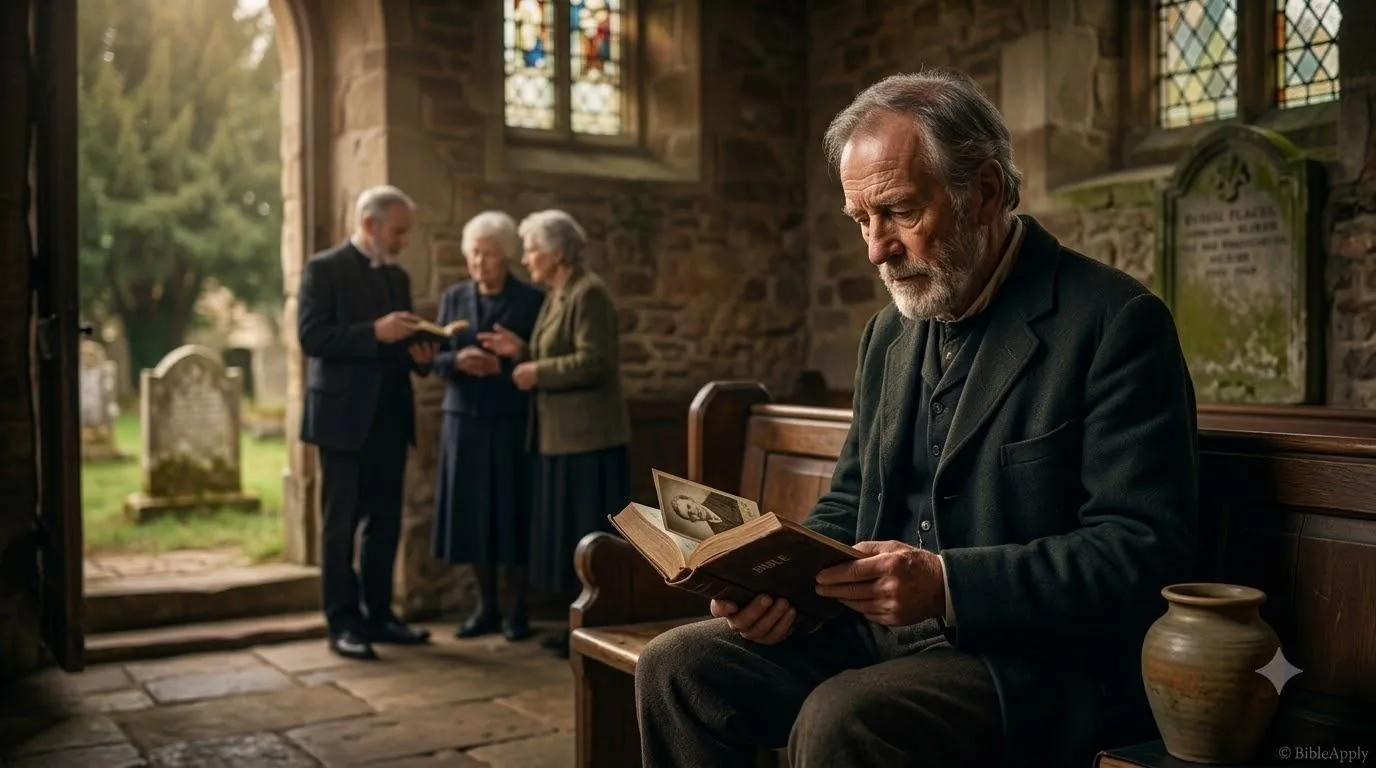
From Genesis to Revelation, the overwhelming pattern for the dead is burial. Usually, this meant placement in a cave, a rock-hewn tomb, or the ground. This stood in stark contrast to surrounding ancient Near Eastern and Greco-Roman cultures, which often practiced cremation as the standard.
Burial in the Old Testament
From the beginning of the biblical record, Israel buried their dead with intentionality.
- Abraham bought the cave of Machpelah to bury his wife, Sarah, establishing a permanent family burial site (Genesis 23:19). He, Isaac, Rebekah, Jacob, and Leah were later buried in that same cave (Genesis 49:31).
- Joseph made his brothers swear to carry his bones up from Egypt so he could be buried in the Promised Land (Genesis 50:25).
- Moses was buried by God Himself in the valley of Moab (Deuteronomy 34:6).
Burial was so significant in ancient Israel that being left unburied was considered a severe curse or a mark of dishonor. The judgment against Queen Jezebel included the prophecy that she would not be buried, but eaten by dogs (2 Kings 9:10). Jeremiah also prophesied that the rebellious people of Judah would die of disease and remain unburied (Jeremiah 16:4).
Burial in the New Testament
This cultural pattern continues seamlessly into the New Testament era.
- John the Baptist was taken by his disciples and laid in a tomb after his execution (Mark 6:29).
- Stephen, the first Christian martyr, was buried by “devout men” who made “great lamentation over him” (Acts 8:2).
- Ananias and Sapphira were wrapped up and buried after their sudden death (Acts 5:6, 10).
- Jesus Christ Himself was buried in a new tomb belonging to Joseph of Arimathea (Matthew 27:59-60).
The early church adopted this Jewish practice. The catacombs in Rome bear witness to early Christians’ commitment to burying their dead, even while living in a Roman culture where cremation was widely practiced. They viewed burial not as disposing of a corpse, but as an act of defiant hope—planting a seed for a future harvest.
Theological Foundations: The Body and the Resurrection
Why did early Christians hold such a strong preference for burial? It wasn’t just a cultural relic. It was rooted in their theology of the human body and their hope in the future bodily resurrection.
The Inherent Goodness of the Physical Body
Ancient Greek philosophies, like Platonism and Gnosticism, viewed the physical body as an evil, temporary prison. The pure soul needed to escape at death. Destroying the body through cremation was a fitting way to release the soul from material bondage.
The biblical worldview completely rejects this. Scripture affirms that the physical body is fundamentally good. God created humanity as embodied creatures from the dust of the earth (Genesis 2:7).
“For you formed my inward parts; you knitted me together in my mother’s womb. I praise you, for I am fearfully and wonderfully made. Wonderful are your works; my soul knows it very well.” (Psalm 139:13-14)
The Incarnation also dignifies the human body. Jesus didn’t just “borrow” a body; He united Himself with human nature forever. He rose bodily from the grave and ascended to heaven.
Today, the Holy Spirit dwells within the believer’s body as a living temple (1 Corinthians 6:19). Because God crafted the body and Christ redeemed it, Christians treat human remains with dignity and respect.
The Symbolism of Sleep and Seed
The New Testament frequently uses the metaphor of “sleep” to describe the physical death of a believer (1 Thessalonians 4:13-14). When a person sleeps, they lay down with the expectation of waking up. Earthly burial pictures this reality. The body is “laid to rest” in the earth in anticipation of an awakening at Christ’s return.
The Apostle Paul also uses the agricultural imagery of a seed being planted:
“So is it with the resurrection of the dead. What is sown is perishable; what is raised is imperishable. It is sown in dishonor; it is raised in glory. It is sown in weakness; it is raised in power. It is sown a natural body; it is raised a spiritual body. If there is a natural body, there is also a spiritual body.” (1 Corinthians 15:42-44)
A seed isn’t destroyed when it’s buried in the dirt. It’s planted so it can transform and burst into new life. Burial serves as a physical confession of faith in the coming bodily resurrection. It is a symbolic act of expectant waiting.

Does the Bible Condemn Cremation?
If burial is the established biblical pattern, does that make cremation sinful? We have to be careful not to elevate a historical pattern to the level of a moral command. The Bible never explicitly forbids cremation, nor does it prescribe burial as a strict moral law.
Mentions of Burning in Scripture
There are a few instances in the Old Testament where human bodies are burned:
- Achan (Joshua 7:25): After Achan’s sin brought military defeat upon Israel, he and his family were stoned, and their bodies were burned. Here, burning was a sign of divine judgment and the eradication of evil.
- Idolaters and Gross Immorality: The Law of Moses mandated death by burning for specific sexual sins, representing extreme judgment and purification (Leviticus 20:14, 21:9).
- Amos 6:10: This verse mentions a relative burning bodies during a time of plague. This was likely a desperate public health measure due to mass death, rather than a cultural practice.
- King Saul and Jonathan (1 Samuel 31:12): When the Philistines killed Saul and his sons, they hung their bodies on a wall to mock them. Men from Jabesh-gilead rescued the bodies, burned them, and respectfully buried the bones.
In Saul’s case, burning the bodies was an act of honor and loyalty to prevent enemy desecration. It was not an act of judgment or a sin. This demonstrates that burning a human corpse was not universally condemned by God.
The Unhindered Power of Resurrection
A common anxiety about cremation is whether it hinders the future bodily resurrection. People wonder how God can resurrect a body that has been reduced to ashes and scattered.
This concern underestimates the omnipotence of God. The God who created the universe out of nothing and formed the first man from dust (Genesis 2:7) will have no trouble reconstituting a body from ashes.
We must also consider the reality of natural decay. Even a body embalmed and buried in a concrete vault will eventually decompose and return to dust.
“By the sweat of your face you shall eat bread, till you return to the ground, for out of it you were taken; for you are dust, and to dust you shall return.” (Genesis 3:19)
Cremation simply accelerates this natural process of decomposition. Whether a body decomposes slowly in a tomb, is consumed by fire, or is lost at sea (Revelation 20:13), God’s ability to resurrect that individual remains unhindered. The resurrection body will be a new, glorified body (Philippians 3:21), not a scientific reassembly of the original DNA.
Practical Considerations for Today
Since cremation isn’t forbidden by Scripture and doesn’t impede the bodily resurrection, Christians have liberty in this matter. However, this liberty should be exercised with wisdom.
The Underlying Motive Matters
The heart motive behind the action is what matters to God.
- Unbiblical Motives: Choosing cremation to deny the bodily resurrection, support reincarnation, or “merge with nature” runs contrary to the Christian faith.
- Acceptable Motives: Choosing cremation due to severe financial constraints, geographical necessity, or a settled conviction of Christian liberty is perfectly acceptable. These practical motives do not compromise faith in the gospel.
The Reality of Financial Stewardship
Traditional burial often involves exorbitant costs—including the casket, burial vault, plot, embalming, and funeral home fees. For many families, bearing these expenses means taking on long-term debt.
Cremation is usually significantly less expensive. The biblical principle of faithful financial stewardship is a valid consideration. A family is not sinning if they choose cremation to avoid plunging a surviving spouse into financial stress.
Honoring the Remains Appropriately
If a family chooses cremation, it remains important to treat the ashes with dignity and respect. The ashes are not just waste; they represent the earthly tent of a person created in the image of God.
- Scattering vs. Interment: Casually scattering ashes has become popular in secular culture. However, many pastors suggest interring the ashes in a cemetery plot or a church columbarium. A dedicated resting place aligns with the biblical pattern, anticipating the resurrection and providing a physical place for the family to mourn.
- The Memorial Service: Whether burial or cremation is chosen, gathering to mourn and proclaim the hope of the gospel is a vital practice. The primary focus of any Christian funeral should always point to the victory of Jesus Christ over death.
3 Practical Applications
Navigating end-of-life decisions requires grace and a clear understanding of our biblical hope. Here are three takeaways for believers wrestling with this topic.
1. Communicate Your Wishes Clearly
Don’t leave your family guessing about your final preferences. Write down your wishes regarding your remains and your desires for a memorial service. Most importantly, state the gospel hope behind your choices.
At the same time, hold these preferences loosely. Your family will carry out these tasks while navigating blinding grief. Give them the freedom to make adjustments if your exact wishes become financially burdensome.
2. Prioritize the Proclamation of the Gospel
Ensure that your final arrangements point people directly to Jesus Christ. A Christian funeral is a unique opportunity to testify to the reality of the resurrection. Unbelieving family members who might never enter a church will hear the gospel.
Select hymns that exalt Christ and choose Scripture readings that explain grace. Let your final earthly act be a witness to the One who conquered the grave.
3. Rest in God’s Power
If you’ve lost a loved one who was cremated, do not carry a burden of guilt or anxiety over how you handled their arrangements. God’s infinite power to resurrect His children is not limited by what happens to their physical bodies after death.
The sovereign Creator knows every atom of His creation. Cling to the promise that for those in Christ, “to be absent from the body and to be present with the Lord” (2 Corinthians 5:8) is an immediate reality. The future bodily resurrection is a guaranteed promise that will not fail.