

Quick Answer: Skeptics often point to historical discrepancies, copyist errors, and seeming contradictions as evidence against the Bible. However, understanding ancient literary genres, textual transmission, and proper context resolves most of these issues.
Questions about biblical errors often trigger anxiety for Christians. If Scripture is the foundation of our faith, any cracks seem to threaten the whole structure.
Many people ask about contradictions out of a genuine desire for truth or a fear of being deceived. For those hurt by legalistic environments, finding historical discrepancies can feel like a betrayal. Skeptics view these issues as proof that the text is just a flawed human invention.
We live in a culture that demands empirical precision and exhaustive factual accuracy. When we force these modern expectations onto ancient texts, friction is inevitable.
Readers often stumble over varying Gospel accounts, Old Testament numbers that don’t align, or details that seem at odds with archaeology. It makes sense why someone reading with a critical eye might conclude the Bible is full of inaccuracies. But our modern grid of exactness clashes with the ancient world’s style of theological storytelling.
To understand the Bible’s accuracy, we have to stop reading it like a modern encyclopedia. It is a diverse, ancient library written through divine and human cooperation.
Evaluating claims of errors requires a nuanced grasp of biblical inerrancy, inspiration, and ancient genres. We have to listen to the text on its own terms and within its original cultural context. Imposing our 21st-century sensibilities will only lead to confusion.
A Pastoral Note: A guy in my small group nearly abandoned his faith after his religion professor rattled off a list of Gospel “contradictions.” It completely pulled the rug out from under him. We met for coffee to actually look at those texts, and we saw how real eyewitness accounts always have differing details. You don’t have to check your brain at the door to trust Scripture. Facing hard questions head-on builds a tougher faith than settling for Sunday school platitudes.
Inspiration, Infallibility, and Inerrancy
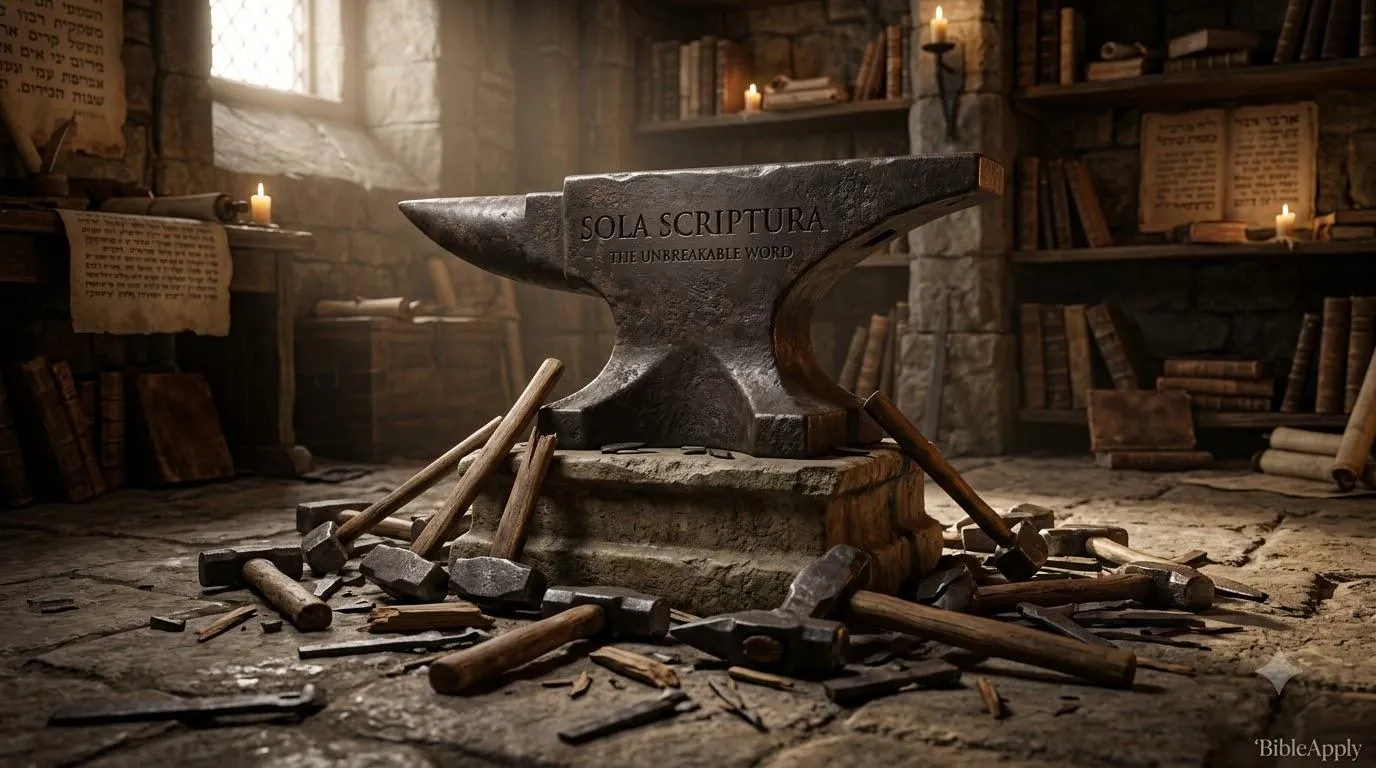
To tackle this topic honestly, we need to define how orthodox Christianity views the Scriptures. Three theological pillars guide this conversation: inspiration, infallibility, and inerrancy.
Divine Inspiration
The belief that the Bible is true rests on its claim of divine inspiration.
“All Scripture is breathed out by God and profitable for teaching, for reproof, for correction, and for training in righteousness.” (2 Timothy 3:16, ESV)
The Greek word here is theopneustos, meaning “God-breathed.” God is the source and author of the Scriptures. This doesn’t mean human authors went into a trance and took mechanical dictation from the Holy Spirit.
Instead, God worked through their diverse personalities, vocabularies, and backgrounds to produce the text He intended. Moses writes like a lawgiver, David writes like a poet, and Luke writes like a meticulous historian. All of them were guided by the Spirit.
Infallibility
Because the Scriptures are inspired by God, they are infallible. This means the Bible cannot fail in its purpose to reveal God, communicate His redemptive plan, and lead people to salvation.
It is a completely reliable guide for faith and practice. When the Bible speaks about who God is and the state of the human heart, it is trustworthy. It will never lead someone astray from the gospel.
Inerrancy
Inerrancy is a more precise claim. It asserts that the original manuscripts of the Bible are free from error in all they affirm. Scripture is truthful in what it teaches about God, history, and salvation.
Inerrancy does not demand modern scientific precision. It accommodates descriptions based on naked-eye observation, like the sun rising or setting. It makes room for round numbers, paraphrased quotes, and varied literary genres. God inspired authors to write truth using the conventions of their specific era.
Examining Apparent Errors
When critics point to errors, they usually highlight contradictions, numerical discrepancies, or historical anomalies. A closer look shows that most of these difficulties are easily resolved.
Textual Transmission and Copyist Errors
We need to distinguish between the original manuscripts and the handwritten copies we have today. We don’t possess the physical parchment Paul or Isaiah used. Scribes hand-copied these texts over thousands of years, and minor anomalies occasionally slipped in.
These include skipped lines or miscopied numbers. For example, 2 Chronicles 22:2 in the Masoretic text says Ahaziah was 42 years old when he began to reign. But 2 Kings 8:26 says he was 22.
Since his father Joram died at age 40, Ahaziah couldn’t possibly be 42. Scholars universally recognize this as a copyist error in the Chronicles manuscript, not a mistake in the original text.
Through textual criticism, experts compare over 5,800 Greek New Testament manuscripts to reconstruct the original text. While copyist errors exist in historical documents, they don’t threaten the doctrinal reliability of the Bible.
Differences in Perspective
Many alleged “contradictions” in the Gospels are simply differences in perspective. The Gospel writers weren’t producing a synchronized documentary. They were biographers crafting narratives to emphasize specific truths about Jesus.
Take the resurrection morning. The Gospels differ slightly on which women went to the tomb, the number of angels present, and the exact wording on the cross. Ancient authors regularly compressed timelines and highlighted specific details while skipping others.
If Matthew focuses on one angel outside the tomb, and Luke mentions two inside, they aren’t contradicting each other. They are offering complementary details from independent witnesses. In a court of law, identical testimonies are suspected of collusion. Natural variations actually strengthen historical credibility.
Understanding Ancient Genres
Reading ancient texts with modern, literalistic standards creates an illusion of errors. The Bible is a library made up of poetry, law, history, apocalyptic literature, and parables. Each genre plays by its own rules.
When the Psalmist says the earth is set on “pillars” (Psalm 75:3) or that God covers us with His “wings” (Psalm 91:4), these aren’t scientific blunders. They are poetic metaphors describing God’s stability and protection. Ancient battle accounts also used hyperbolic language to describe victories.
The Hebrew word ‘emet, often translated as “truth,” implies reliability and faithfulness. A biblical text is ‘emet if it faithfully accomplishes its communicative purpose. If an ancient author used accepted metaphors to convey a point, the text remains entirely truthful.
Common Objections
We need to honestly engage the most challenging objections raised against the Bible’s reliability.
The Old Testament God vs. The New Testament Jesus
Critics often point to moral inconsistencies, highlighting the harsh judgments in the Old Testament. But a holistic look at Scripture tells a different story.
The Old Testament consistently portrays a God who is patient, merciful, and slow to anger. He gave the Canaanites over 400 years to abandon horrific practices like child sacrifice before judgment arrived.
On the flip side, the New Testament contains stark warnings about judgment and hell, mostly spoken directly by Jesus. The perceived contradiction fades when we view the unified narrative of a holy God dealing with human sin. This story peaks at the cross, where God’s justice and self-sacrificial love collide.
Scientific and Archaeological Objections
The argument that science disproves the Bible stems from misunderstanding its purpose. The Bible isn’t a biology textbook. When it touches on nature, it speaks observationally.
History is full of examples where skeptics pointed to biblical errors, only for archaeology to later vindicate the text. Critics used to claim the Hittite empire never existed. Then, archaeologists unearthed their ancient capital of Hattusa.
The existence of King David, Pontius Pilate, and the city of Nineveh were all doubted until physical evidence silenced the skepticism. A lack of evidence isn’t evidence of absence, and ongoing discoveries continue to back up the Bible’s historical reliability.
Human Rights and Cultural Context
Some readers assume the Bible’s descriptive accounts of ancient societal structures are eternal endorsements of those systems. But the Bible was written into deeply flawed ancient cultures.
Rather than instantly overturning every social structure, God stepped in to regulate them and limit their cruelty. He planted theological seeds that would eventually dismantle these oppressive systems.
Old Testament laws on servitude focused on economic debt rather than race-based chattel slavery. These laws offered unprecedented rights and guaranteed release dates, unlike the brutal practices of neighboring nations. In the New Testament, Paul drops a theological bomb into the Roman Empire’s rigid hierarchy:
“There is neither Jew nor Greek, there is neither slave nor free, there is no male and female, for you are all one in Christ Jesus.” (Galatians 3:28, ESV)
This assertion of human equality laid the groundwork for the eventual abolition of slavery. It was driven by believers who took the Bible’s redemptive trajectory seriously.
The Authority of Christ
When evaluating allegations of errors, a Christian’s confidence ultimately rests on Jesus’ own view of the Hebrew Scriptures.
“For truly, I say to you, until heaven and earth pass away, not an iota, not a dot, will pass from the Law until all is accomplished.” (Matthew 5:18, ESV)
Jesus treated the Scriptures as the authoritative word of God. He cited them to fight temptation, settle ethical disputes, and explain His mission. He never apologized for the Old Testament or dismissed any part of it as a myth.
If Jesus is the resurrected Son of God, His view of Scripture has to become our view. Claiming there are deceptive errors in the Bible puts you in direct disagreement with Christ Himself. We trust the Book because we trust the Savior who authenticated it.
Practical Takeaways
Wrestling with biblical reliability changes how we interact with God’s Word daily.
- Read with Context in Mind: Before assuming a difficult passage is an error, check the context. Ask what the human author intended to say to his original audience. Use study Bibles and commentaries to understand ancient Near Eastern culture and literary genres.
- Focus on the Central Narrative: Don’t let an unresolved chronological discrepancy derail your faith. The Bible’s undeniable message is the story of creation, fall, and redemption through Jesus. Let clear passages interpret obscure ones.
- Engage Doubters with Empathy: When friends point out apparent errors, remember the complex reasons behind their questions. They often stem from church hurt or genuine intellectual stumbling blocks. Validate their questions and offer to study the text together without getting defensive.
The Bible is a vast, beautiful, and challenging library. Sincere readers will always encounter passages that provoke questions. But when Scripture is read on its own terms and studied diligently, it proves entirely reliable.