John Chapter Summaries
A complete, chapter-by-chapter guide to the Book of John. Read deep dives into the meaning, historical context, and modern application of every chapter.
Welcome to our complete guide to the Book of John. Below you will find a chapter-by-chapter summary that flows through the entire narrative, helping you understand the context, meaning, and application of this profound book.
John Chapter 1 Summary
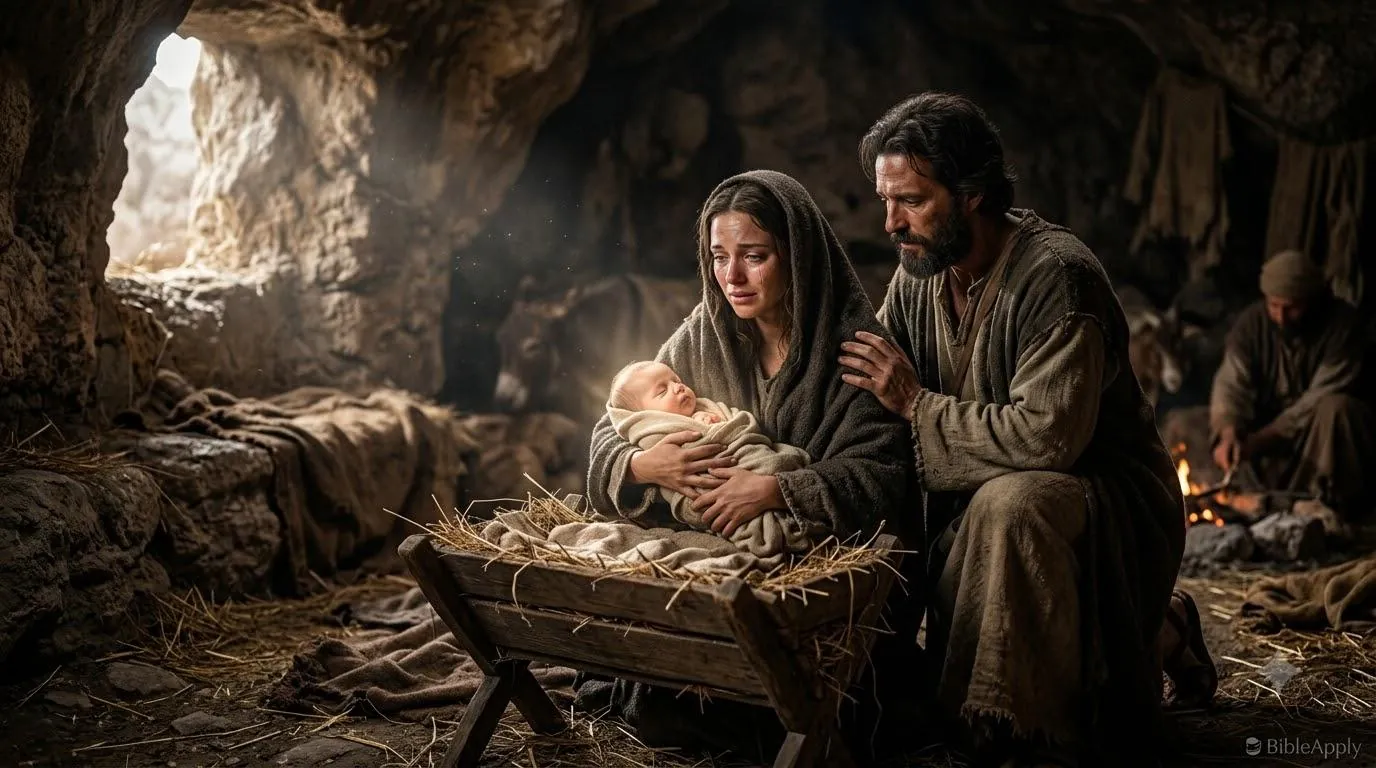
If the Gospel of Matthew was written to prove Jesus is the Jewish Messiah, and Luke was written to show Jesus as the perfect Son of Man, the Gospel of John was written to prove that Jesus is God.
John Chapter 1 contains some of the deepest, most profound theology in all of human history. It bridges the gap between Greek philosophy and Jewish theology, introducing Jesus as the eternal Creator who stepped into His own creation.
The Eternal Word (Verses 1-5)
“In the beginning was the Word, and the Word was with God, and the Word was God. The same was in the beginning with God.” (John 1:1-2)
John intentionally echoes the opening words of Genesis 1 (“In the beginning…”). But instead of starting with the creation of the earth, John takes us back into eternity past.
He introduces a concept called the “Word.” In Greek, this is the Logos.
- To a Greek philosopher, the Logos was the uncreated, impersonal force of reason and logic that held the universe together.
- To a Jewish scholar, the “Word of God” was the active, creative power of Yahweh (as seen when God spoke the universe into existence).
John brilliantly unites both audiences and drops a theological bombshell: The Logos is not an abstract force. The Logos is a Person. He was with God (showing a distinction of persons in the Trinity), and He was God (showing absolute equality in nature). Furthermore, verse 3 states that Jesus created all things. Nothing exists without Him.
The Light and The Witness (Verses 6-13)
John introduces a man sent from God: John the Baptist. The writer is careful to clarify that John the Baptist was not the Light; he was simply a mirror reflecting the Light, pointing people to Jesus.
Related to this, you may want to read Jeremiah 29:11 Meaning: For I Know the Plans I Have for You for additional biblical perspective.
Many believers wrestle with questions like jeremiah 29 11 — and Scripture has profound answers.
Verses 10-11 contain one of the greatest tragedies in Scripture: “He was in the world, and the world was made by him, and the world knew him not. He came unto his own, and his own received him not.” Jesus came to the very planet He designed, to the very nation He chose, and they rejected Him.
But verse 12 offers the greatest promise: “But as many as received him, to them gave he power to become the sons of God, even to them that believe on his name.” Salvation is not earned by bloodline, physical birth, or human effort (v. 13). It is a spiritual birth granted by God to those who believe.
The Incarnation (Verses 14-18)
“And the Word was made flesh, and dwelt among us, (and we beheld his glory, the glory as of the only begotten of the Father,) full of grace and truth.” (John 1:14)
This is the hinge of human history. The Greek philosophers believed the physical body was a prison, something to escape. They would have been horrified by the idea that the eternal Logos became human. But John declares that God put on human skin and bone.
Also Read:
The word for “dwelt” (Greek: eskenosen) literally means “pitched his tent” or “tabernacled.” In the Old Testament, the Tabernacle was the place where God’s glorious presence lived among the Israelites in the wilderness. John is saying that Jesus is the ultimate Tabernacle. If you want to see the glory of God, you don’t look at a tent in the desert; you look at Jesus.
Verse 17 draws a vital contrast: Moses brought the Law (which demands perfection and condemns us), but Jesus brought Grace and Truth (which provides perfection and saves us).
John the Baptist’s Testimony (Verses 19-34)
The religious leaders from Jerusalem send a delegation to interrogate John the Baptist. “Are you the Christ? Are you Elijah— John adamantly denies it. He quotes Isaiah 40:3, calling himself merely “the voice of one crying in the wilderness.”
Many believers wrestle with the question of joshua 1 9 — and Scripture has profound, life-changing answers.
For a deeper study, see our guide on Psalm 91 Meaning: He Who Dwells in the Shelter which many readers have found helpful.
The next day, John sees Jesus walking toward him and makes the ultimate prophetic declaration: “Behold the Lamb of God, which taketh away the sin of the world.”
Every Jew would have understood this imagery. For centuries, they had slaughtered countless lambs to temporarily cover their sins. John points to Jesus and says, Here is the final sacrifice. This Lamb will not just cover sin; He will take it away entirely.
The First Disciples (Verses 35-51)
The chapter concludes with Jesus gathering His first followers. Notice the chain reaction of evangelism:
- John the Baptist points Andrew to Jesus.
- Andrew runs and brings his brother, Simon Peter, to Jesus.
- Jesus calls Philip.
- Philip runs and brings Nathanael to Jesus.
When Nathanael is skeptical (“Can anything good come out of Nazareth—), Philip doesn’t argue with him. He simply says, “Come and see.”
Jesus sees Nathanael approaching and reveals supernatural knowledge about him, stating He saw Nathanael sitting under a fig tree before Philip even called him. Nathanael is instantly convinced. Jesus smiles and tells him, “You believe just because I saw you under a fig tree? You will see much greater things than that.”
3 Practical Applications from John 1
If you want to explore this further, our in-depth study on romans 8 28 breaks this down verse by verse.
- Jesus is the Ultimate Revelation of God: If you want to know what God the Father is like, look at Jesus. He is God in human flesh. How Jesus treats people is exactly how the Father views people.
- Evangelism is Simple: You do not need a theology degree to lead people to Christ. The most effective evangelism strategy in the world is what Philip did: simply telling people, “Come and see.”
- Grace and Truth Must Coexist: Jesus came full of grace and truth. Truth without grace is crushing legalism. Grace without truth is deceptive liberalism. As followers of Jesus, we must boldly speak the truth, but we must do it with profound grace.
Also Read
- 1 Corinthians 1 Summary & Meaning: The Folly of the Cross and True Wisdom
- Zephaniah 1 Summary & Meaning: The Approaching Day of the Lord
- Ecclesiastes 1 Summary & Meaning: Chasing the Wind
Read John 1
Dive into the full scripture text for deeper study.
John Chapter 2 Summary
A detailed narrative summary for John 2 is currently being prepared by our theologians.
John Chapter 3 Summary
A detailed narrative summary for John 3 is currently being prepared by our theologians.
John Chapter 4 Summary
A detailed narrative summary for John 4 is currently being prepared by our theologians.
John Chapter 5 Summary
A detailed narrative summary for John 5 is currently being prepared by our theologians.
John Chapter 6 Summary
A detailed narrative summary for John 6 is currently being prepared by our theologians.
John Chapter 7 Summary
A detailed narrative summary for John 7 is currently being prepared by our theologians.
John Chapter 8 Summary
A detailed narrative summary for John 8 is currently being prepared by our theologians.
John Chapter 9 Summary
A detailed narrative summary for John 9 is currently being prepared by our theologians.
John Chapter 10 Summary
A detailed narrative summary for John 10 is currently being prepared by our theologians.
John Chapter 11 Summary
A detailed narrative summary for John 11 is currently being prepared by our theologians.
John Chapter 12 Summary
A detailed narrative summary for John 12 is currently being prepared by our theologians.
John Chapter 13 Summary
A detailed narrative summary for John 13 is currently being prepared by our theologians.
John Chapter 14 Summary
A detailed narrative summary for John 14 is currently being prepared by our theologians.
John Chapter 15 Summary
A detailed narrative summary for John 15 is currently being prepared by our theologians.
John Chapter 16 Summary
A detailed narrative summary for John 16 is currently being prepared by our theologians.
John Chapter 17 Summary
A detailed narrative summary for John 17 is currently being prepared by our theologians.
John Chapter 18 Summary
A detailed narrative summary for John 18 is currently being prepared by our theologians.
John Chapter 19 Summary
A detailed narrative summary for John 19 is currently being prepared by our theologians.
John Chapter 20 Summary
A detailed narrative summary for John 20 is currently being prepared by our theologians.
John Chapter 21 Summary
A detailed narrative summary for John 21 is currently being prepared by our theologians.
Conclusion
We hope this chapter-by-chapter summary of John has helped you better understand God's Word. To continue your study, explore our other Bible Chapter Summaries or read our detailed Verse Meanings.