2 Thessalonians Chapter Summaries
A complete, chapter-by-chapter guide to the Book of 2 Thessalonians. Read deep dives into the meaning, historical context, and modern application of every chapter.
Welcome to our complete guide to the Book of 2 Thessalonians. Below you will find a chapter-by-chapter summary that flows through the entire narrative, helping you understand the context, meaning, and application of this profound book.
2 Thessalonians Chapter 1 Summary
Introduction: The Crucible of the Thessalonian Church
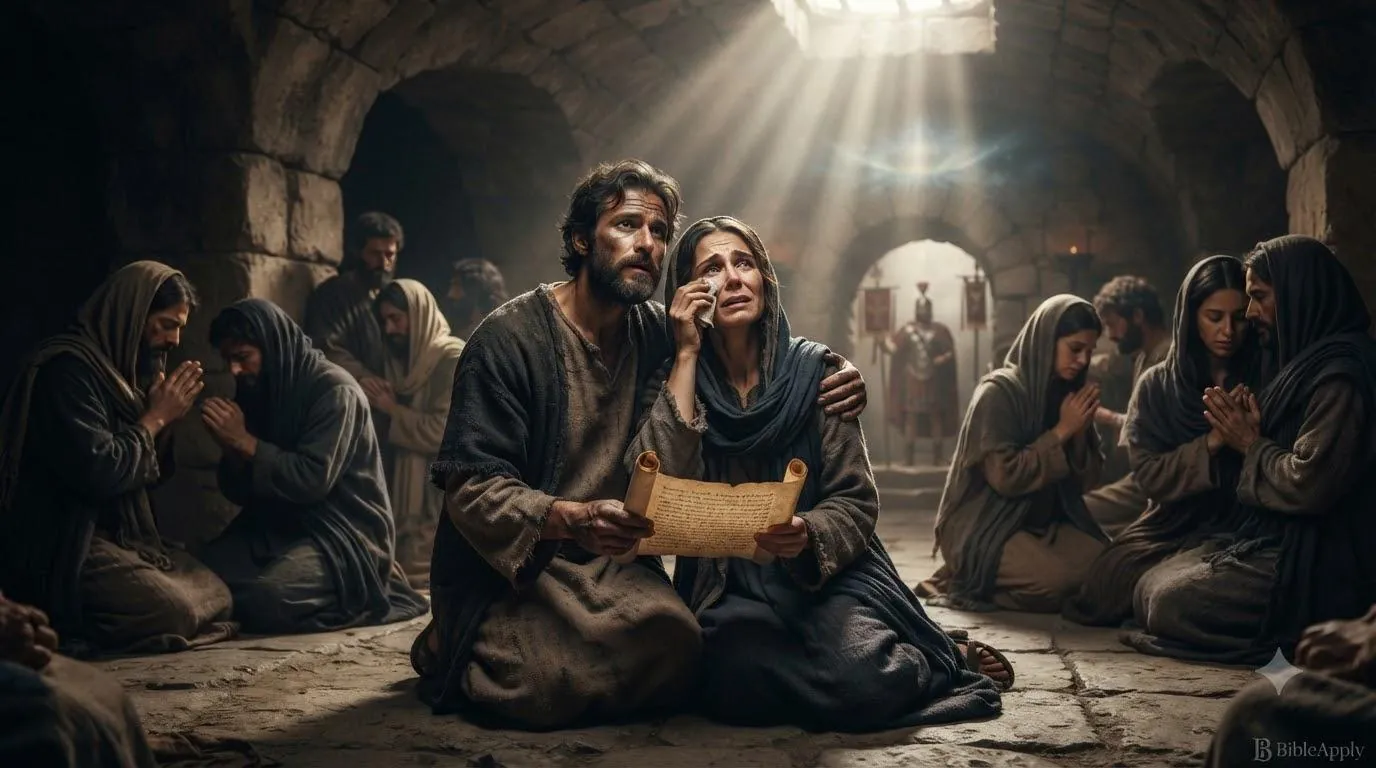
To fully grasp the gravity and power of 2 Thessalonians 1, we must first step into the turbulent world of the first-century church in Thessalonica. The Apostle Paul had planted this church during his second missionary journey (Acts 17), but his time there was cut brutally short by a violent mob. Despite being orphaned early in their spiritual infancy, the Thessalonian believers not only survived but thrived. Paul’s first letter to them (1 Thessalonians) was filled with immense joy and relief at their steadfast faith. However, a few months later, new reports reached Paul in Corinth, prompting this second epistle.
The situation in Thessalonica had escalated. The persecution they faced had intensified into severe affliction. Furthermore, false teachers had infiltrated their ranks, spreading terrifying rumors—possibly even forged letters claiming to be from Paul—asserting that the Day of the Lord had already come. The believers were left confused, exhausted, and shaken, fearing they had somehow missed the return of Christ and were now enduring the wrath of the end times.
In this context, 2 Thessalonians 1 serves as a masterful pastoral response, setting the stage for the rest of the letter. Paul does not immediately launch into theological correction regarding the [end times](/questions/can-the-date-of-jesus-return-be-calculated/); instead, he begins with a profound declaration of comfort. He anchors their present suffering in the overarching narrative of God’s righteous judgment and the triumphant return of Jesus Christ. By weaving together deep theological truths with tender pastoral care, Paul reframes their persecution not as a sign of God’s abandonment, but as the very evidence of their worthiness for His kingdom.
Grace and Peace in the Midst of Turmoil (2 Thessalonians 1:1-4)
The Apostolic Greeting
If you want to explore this further, our in-depth guide on isaiah 41 10 breaks this down verse by verse.
If you want to explore this further, our in-depth study on jeremiah 29 11 breaks this down verse by verse.
“Paul, and Silvanus, and Timotheus, unto the church of the Thessalonians in God our Father and the Lord Jesus Christ: Grace unto you, and peace, from God our Father and the Lord Jesus Christ.” (2 Thessalonians 1:1-2, KJV)
Paul begins his letter alongside Silvanus (Silas) and Timothy, his faithful co-laborers. While the greeting seems standard for Pauline epistles, the theological weight is profound. He locates the church “in God our Father and the Lord Jesus Christ.” The preposition “in” (en in Greek) denotes intimate union and spiritual security. While physically located in a hostile Roman city, their ultimate spiritual address is in the Triune God. They are enveloped by the Father and the Son, shielded from ultimate spiritual harm despite their physical sufferings.
The twin blessings of “grace” (charis) and “peace” (eirene or the Hebrew shalom) take on immense significance here. To a community enduring daily trauma, peace is not merely the absence of conflict but the presence of divine wholeness and tranquility that supersedes circumstances. Grace is the unmerited favor and divine empowerment needed to endure.
Exponential Growth Under Pressure
“We are bound to thank God always for you, brethren, as it is meet, because that your faith groweth exceedingly, and the charity of every one of you all toward each other aboundeth;” (2 Thessalonians 1:3, KJV)
Paul uses a compelling Greek word for “groweth exceedingly”—hyperauxanei. This is an intensive compound word found nowhere else in the New Testament. It means to flourish abundantly, to grow out of proportion, or to grow like a healthy, vigorous tree. Their faith wasn’t just surviving; it was exploding with vitality.
Related to this, you may want to read Jeremiah 29:11 Meaning: For I Know the Plans I Have for You for additional biblical perspective.
Equally important is the evidence of this faith: their love (agape) for one another was abounding. In times of severe crisis, human nature often defaults to self-preservation, causing communities to fracture and turn inward. Yet, the Thessalonian church demonstrated a supernatural, self-sacrificial love that intensified alongside their suffering.
“So that we ourselves glory in you in the churches of God for your patience and faith in all your persecutions and tribulations that ye endure:” (2 Thessalonians 1:4, KJV)
Paul is so moved by their resilience that he “glories” or boasts (enkauchaomai) about them to other churches. He points to their “patience” (Greek: hypomonē). This word does not mean a passive, fatalistic resignation. Hypomonē is a robust, active endurance. It is the spiritual grit to bear up under a heavy load without being crushed, maintaining forward momentum. It is a defining mark of authentic Christian discipleship.
The Righteous Judgment of God (2 Thessalonians 1:5-7a)
Suffering as Evidence of the Kingdom
“Which is a manifest token of the righteous judgment of God, that ye may be counted worthy of the kingdom of God, for which ye also suffer:” (2 Thessalonians 1:5, KJV)
Here, Paul makes a startling theological pivot. How can the suffering of innocent believers be a “manifest token” (clear evidence) of God’s righteous judgment? Human logic dictates that if God is righteous, the good should prosper and the wicked should suffer.
Paul flips this perspective. The endurance of the Thessalonians in the face of injustice is the very proof that God’s future judgment will be entirely just. Because they are demonstrating the character of the Kingdom of Heaven in a fallen world, the world violently rejects them. Their suffering for Christ validates their citizenship in His kingdom.
When Paul says “that ye may be counted worthy” (kataxiōthēnai), he is not implying that their suffering earns their salvation. Justification is always by grace through faith. Rather, their steadfast endurance proves the genuineness of their faith. The fiery trial burns away the dross, revealing the pure gold of God’s work within them, rendering them fit and suitable for the Kingdom they are destined to inherit.
The Law of Divine Retribution
“Seeing it is a righteous thing with God to recompense tribulation to them that trouble you; And to you who are troubled rest with us…” (2 Thessalonians 1:6-7a, KJV)
Paul addresses the theological problem of evil and injustice directly. Is God turning a blind eye to the cruelty inflicted upon the church? Absolutely not. God operates on the principle of divine lex talionis (the law of retaliation), not in a petty human sense, but in perfect cosmic justice.
It is a “righteous thing” (dikaion) for God to balance the scales. To those who afflict the church, God will repay with affliction. To those who are afflicted, God will grant “rest” (anesis). This Greek word originally referred to the loosening of a bowstring or the relaxing of tension. The Thessalonians lived in a state of constant, taut anxiety. Paul promises a future where the bowstring will be eternally relaxed—a time of profound relief, liberation, and sabbath rest.
Also Read:
The Revelation of Christ in Flaming Fire (2 Thessalonians 1:7b-10)
The Unveiling of the Sovereign Lord
“…when the Lord Jesus shall be revealed from heaven with his mighty angels, In flaming fire taking vengeance on them that know not God, and that obey not the gospel of our Lord Jesus Christ:” (2 Thessalonians 1:7b-8, KJV)
The resolution of this cosmic injustice is tied to a singular future event: the Second Coming. Paul uses the word apokalypsis (revealed), meaning an unveiling. Currently, Christ’s supreme authority is hidden from the eyes of the unbelieving world. But at His return, the curtain will be pulled back, and He will be seen in His full, unvarnished majesty.
He will return “with his mighty angels” and “in flaming fire.” In the Old Testament, fire is the consistent emblem of God’s holy presence, purifying power, and consuming judgment (e.g., the burning bush, Mount Sinai). Jesus is not returning as the meek, suffering servant, but as the conquering Divine Warrior and Judge.
The judgment falls on two overlapping categories: those who “know not God” (Gentiles who actively suppress the truth of the Creator) and those who “obey not the gospel” (those who have heard the message of Jesus but stubbornly reject it). Here, faith is framed not just as a mental assent, but as an act of obedience. To reject the Gospel is an act of cosmic treason against the rightful King.
The Tragedy of Eternal Destruction
“Who shall be punished with everlasting destruction from the presence of the Lord, and from the glory of his power;” (2 Thessalonians 1:9, KJV)
This is one of the most sobering verses in the New Testament regarding the doctrine of hell. The penalty for rejecting the Creator is “everlasting destruction” (olethros aiōnios). This destruction is not an annihilation or cessation of existence. Instead, it is an ongoing, eternal state of ruin.
The essence of this punishment is defined in the latter half of the verse: “from the presence of the Lord, and from the glory of his power.” Hell, in its most profound horror, is total and permanent separation from the face (prosōpon) of God. Since God is the source of all light, joy, goodness, and love, to be banished from His presence is to be plunged into a terrifying void devoid of anything good. It is the ultimate tragic end of human autonomy—getting exactly what one wanted (a life apart from God), forever.
The Glorification of the Saints
“When he shall come to be glorified in his saints, and to be admired in all them that believe (because our testimony among you was believed) in that day.” (2 Thessalonians 1:10, KJV)
In stark contrast to the despair of the wicked, the return of Christ brings unimaginable exaltation for believers. Christ will come “to be glorified in his saints.” The Greek construction suggests that the saints will act as mirrors, reflecting the dazzling glory of Christ to the cosmos.
Furthermore, He will be “admired” or marveled at (thaumasthēnai) by all who believe. On that Day, the church will look at what Jesus has accomplished, the grace He has bestowed, and the transformation He has wrought in His people, and they will be utterly spellbound in worship. The tragedy of their earthly suffering will pale in comparison to the eternal weight of glory they will experience.
If this resonates with you, our deep dive into Psalm 91 Meaning: He Who Dwells in the Shelter explores the scriptural foundation further.
Paul’s Pastoral Prayer (2 Thessalonians 1:11-12)
Praying for the Fulfillment of the Call
“Wherefore also we pray always for you, that our God would count you worthy of this calling, and fulfil all the good pleasure of his goodness, and the work of faith with power:” (2 Thessalonians 1:11, KJV)
Theology must always fuel prayer. Having laid out the grand eschatological vision of Christ’s return, Paul falls to his knees. He prays that God would “count them worthy” of their calling. This mirrors his earlier statement in verse 5. The calling is the upward call of God in Christ Jesus—the call to salvation, holiness, and ultimate glorification.
He also prays that God would fulfill every desire for goodness and every “work of faith with power.” The believers in Thessalonica had good intentions and deep faith, but in their exhaustion, they needed divine empowerment. Paul recognizes that human willpower is insufficient to withstand severe persecution. It requires the explosive, supernatural dynamis (power) of the Holy Spirit to bring their faith to fruition.
The Ultimate Goal: The Name of Jesus Glorified
“That the name of our Lord Jesus Christ may be glorified in you, and ye in him, according to the grace of our God and the Lord Jesus Christ.” (2 Thessalonians 1:12, KJV)
The climax of the chapter reveals the ultimate purpose of the Christian life and the universe itself: the glory of the name of Jesus Christ. In biblical thought, a “name” represents the total character, authority, and essence of a person.
Notice the beautiful reciprocity in this verse. Christ is glorified in the believers as they faithfully endure and reflect His character to a hostile world. Simultaneously, the believers are glorified in Him. Through their vital union with Christ, they share in His exaltation. And all of this is not a result of human merit, but “according to the grace of our God.” From the initial greeting of grace (v. 2) to this final benediction of grace (v. 12), the entire chapter is bracketed by the unmerited favor of God, sustaining His people through the darkest valleys until the break of eternal dawn.
3 Practical Applications from 2 Thessalonians 1
While this chapter is steeped in first-century historical context and profound end-times theology, it offers incredibly relevant and transformative applications for believers today.
1. View Suffering Through an Eschatological Lens
When we face trials, persecution, or profound injustice, our immediate reaction is often to question God’s love or to feel that we are doing something wrong. 2 Thessalonians 1 radically shifts this perspective. Paul teaches us to view our present afflictions through the lens of eternity. Your faithful endurance in the face of hardship is not a sign of God’s abandonment; it is the very proof that His grace is working in you, making you fit for His Kingdom. When the world presses down on you, allow it to produce the diamond of hypomonē (active endurance). Do not let suffering turn you bitter; let it anchor your hope more deeply in the return of the King.
2. Trust in the Perfect Justice of God
One of the most agonizing aspects of living in a fallen world is witnessing the wicked prosper while the righteous suffer. It is tempting to seek personal revenge or to fall into cynicism. However, Paul reminds us that the scales of cosmic justice will perfectly balance. God is a righteous Judge. You do not need to carry the burden of vengeance. You can release your anger and hurt to the Lord, knowing that a Day is coming when He will right every wrong, comfort the afflicted, and deal justly with all unrepentant wickedness. Trusting in God’s future judgment frees us to love our enemies and pray for our persecutors in the present.
3. Let Your Faith Fuel Tangible Love and Good Works
In verses 3 and 11, we see a beautiful triad: faith, love, and works. The Thessalonians’ faith was growing exceedingly, and it naturally resulted in abounding love for one another. True biblical faith is never static or purely intellectual; it always rolls up its sleeves. Are you actively cultivating a faith that produces love? Furthermore, Paul prays that God would fulfill their “work of faith with power.” We must recognize that we cannot accomplish God’s purposes in our own strength. We must depend daily on the Holy Spirit’s power to translate our good intentions into bold, impactful actions that ultimately bring glory to the name of Jesus Christ.
Also Read
- Mark 1 Summary & Meaning: The Arrival of the Servant King
- Genesis 1 Summary & Meaning: In the Beginning
- 2 John 1 Summary & Meaning: Walking in Truth and Love
Read 2 Thessalonians 1
Dive into the full scripture text for deeper study.
2 Thessalonians Chapter 2 Summary
A detailed narrative summary for 2 Thessalonians 2 is currently being prepared by our theologians.
2 Thessalonians Chapter 3 Summary
A detailed narrative summary for 2 Thessalonians 3 is currently being prepared by our theologians.
Conclusion
We hope this chapter-by-chapter summary of 2 Thessalonians has helped you better understand God's Word. To continue your study, explore our other Bible Chapter Summaries or read our detailed Verse Meanings.