1 Thessalonians Chapter Summaries
A complete, chapter-by-chapter guide to the Book of 1 Thessalonians. Read deep dives into the meaning, historical context, and modern application of every chapter.
Welcome to our complete guide to the Book of 1 Thessalonians. Below you will find a chapter-by-chapter summary that flows through the entire narrative, helping you understand the context, meaning, and application of this profound book.
1 Thessalonians Chapter 1 Summary
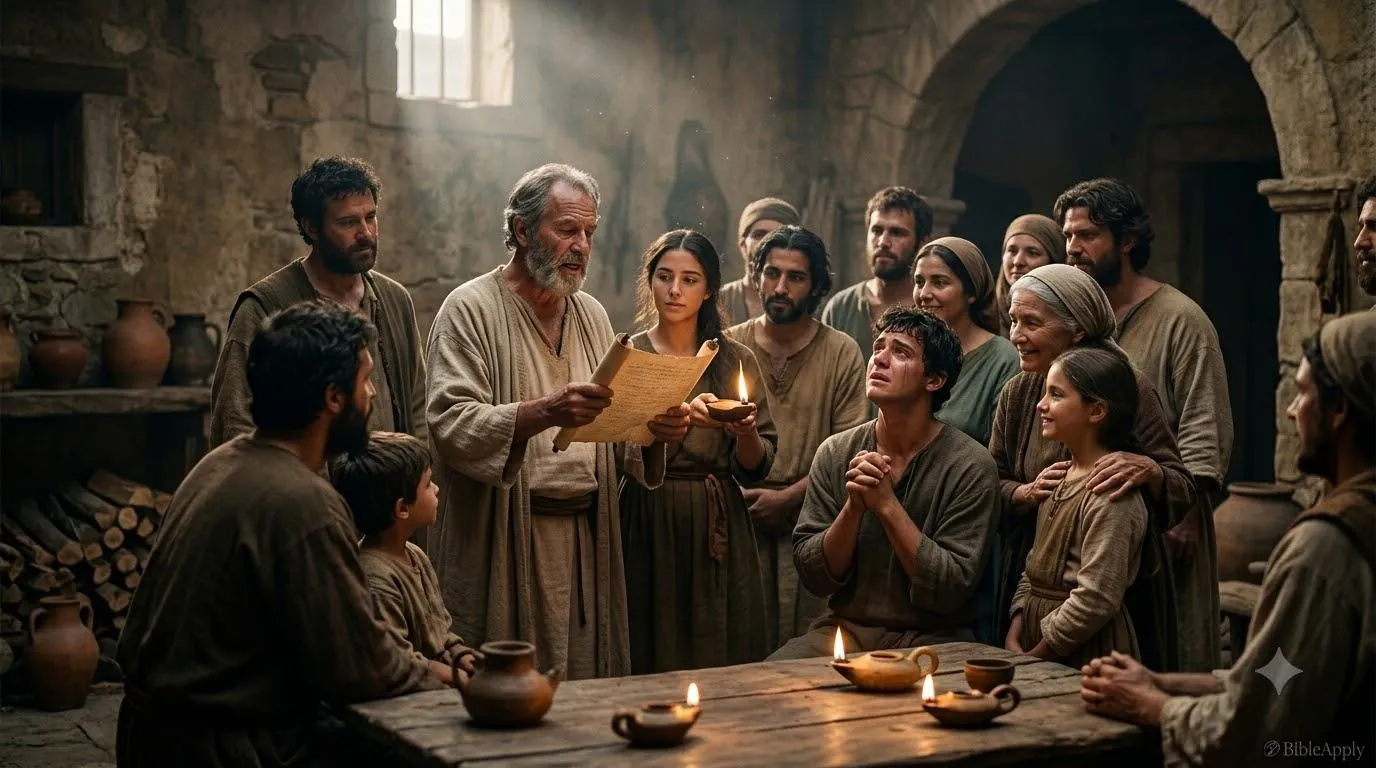
To fully grasp the theological weight and pastoral warmth of 1 Thessalonians Chapter 1, we must first step into the Greco-Roman world of the first century. Thessalonica was a bustling, prosperous metropolis—the capital of the Roman province of Macedonia. Strategically located on the Via Egnatia (the Egnatian Way, a major Roman highway connecting Rome to the East) and boasting a vital seaport, it was a city teeming with trade, philosophy, and diverse pagan worship. The city was deeply loyal to Rome and heavily invested in the Imperial cult, alongside the worship of traditional Greek deities.
It was into this pluralistic, idol-saturated environment that the Apostle Paul, accompanied by Silas and Timothy, arrived during his second missionary journey (circa AD 50). According to Acts 17, Paul preached in the local synagogue for three Sabbaths. While some Jews believed, a significant number of “devout Greeks” and leading women were radically converted. However, this immediate success provoked a violent riot led by jealous opponents, forcing Paul and his team to flee the city under the cover of night. Paul was torn away from his newborn spiritual children far too soon. For months, he agonized over their spiritual survival. Would their nascent faith withstand the crushing pressure of persecution? Would they revert to the comfortable familiarity of their pagan idols?
When Timothy finally brought back a glowing report of their steadfastness, Paul penned 1 Thessalonians—likely the earliest of all his surviving epistles. Chapter 1 serves as an emotional, triumphant overture. It is an outpouring of apostolic joy and profound thanksgiving. In this opening chapter, Paul does not just say “hello”; he masterfully diagnoses the anatomy of authentic conversion. He outlines exactly what it looks like when the Gospel takes root in human hearts, proving that their salvation was not a temporary emotional high, but a permanent, sovereign work of God. 1 Thessalonians 1 stands as one of the New Testament’s greatest blueprints for understanding election, genuine repentance, and the radiating power of a Gospel-transformed church.
The Anatomy of Authentic Faith (1 Thessalonians 1:1-3)
The letter opens with a standard Greco-Roman greeting, but Paul immediately infuses it with explosive Christian theology.
“Paul, and Silvanus, and Timotheus, unto the church of the Thessalonians which is in God the Father and in the Lord Jesus Christ: Grace be unto you, and peace, from God our Father, and the Lord Jesus Christ. We give thanks to God always for you all, making mention of you in our prayers; Remembering without ceasing your work of faith, and labour of love, and patience of hope in our Lord Jesus Christ, in the sight of God and our Father;” (1 Thessalonians 1:1-3, KJV)
Right out of the gate, Paul locates the church not just geographically in Thessalonica, but spiritually “in God the Father and in the Lord Jesus Christ.” This prepositional phrase is breathtaking when you consider its early date. Within just twenty years of the resurrection, Paul effortlessly places Jesus Christ on the exact same divine plane as God the Father. The Thessalonian believers, who were outcasts in their own city, are anchored in the unshakable reality of the Godhead.
Paul then moves to a triad of Christian virtues that will reappear throughout his later letters (most famously in 1 Corinthians 13): Faith, Love, and Hope. However, Paul does not treat these as abstract feelings; he ties each to a gritty, tangible action.
First, he praises their “work of faith.” Faith (pistis) in the New Testament is never passive intellectual assent; it is an active, living trust that inevitably produces works. Their belief in Jesus had fundamentally altered how they lived.
Related to this, you may want to read Jeremiah 29:11 Meaning: For I Know the Plans I Have for You for additional biblical perspective.
Second, he highlights their “labor of love.” The Greek word for labor here is kopos. This is not a casual effort; kopos refers to exhausting, sweat-producing, agonizing toil. It is the kind of work that leaves you utterly depleted. Paul is saying that their love (agape) for God and one another was costing them something. It was sacrificial, demanding, and grueling.
Third, he marvels at their “patience of hope.” A better translation for “patience” here is the Greek word hupomone, which means steadfast endurance. It is the ability to remain under a crushing weight without breaking. The Thessalonians were under severe persecution, yet they did not buckle. Why? Because their endurance was fueled by hope—specifically, the eschatological certainty of the return of the Lord Jesus Christ.
The Proof of Divine Election (1 Thessalonians 1:4-5)
How could Paul be so sure that the Thessalonians were truly saved, especially given his short time with them? In verses 4 and 5, he dives into the deep waters of God’s sovereign grace.
If you want to explore this further, our in-depth study on jeremiah 29 11 breaks this down verse by verse.
“Knowing, brethren beloved, your election of God. For our gospel came not unto you in word only, but also in power, and in the Holy Ghost, and in much assurance; as ye know what manner of men we were among you for your sake.” (1 Thessalonians 1:4-5, KJV)
Paul addresses them as “brethren beloved [by God].” This was radical language for Gentiles who were previously considered outside the covenant promises of Israel. God’s electing love had broken through ethnic barriers. Paul states unequivocally that he knows their “election” (ekloge). God had chosen them.
But how does Paul know they are the elect? He doesn’t point to a heavenly ledger or peer into the secret counsels of the Almighty. He points to the earthly evidence. He knows they are chosen because of how the Gospel landed among them. The message did not merely arrive as clever philosophy or eloquent speech (“in word only”)—which was common among the traveling sophists of the Greco-Roman world.
Also Read:
Instead, the Gospel arrived with “power” (dunamis). It possessed a dynamic, explosive ability to shatter stone hearts and raise spiritually dead people to life. It came in the “Holy Ghost,” who alone can regenerate the soul and illuminate the mind. And it came with “much assurance” (plerophoria), meaning full conviction. When the Thessalonians heard the Gospel, they were gripped by absolute certainty of its truth, despite the immediate threat of violence it brought upon them.
The doctrine of election in 1 Thessalonians 1 is not presented as a cold, deterministic puzzle for theologians to debate. It is presented as a warm, pastoral comfort. Their salvation was entirely God’s initiative, and the proof of His sovereign choice was the undeniable, supernatural transformation of their lives.
Imitation and Radiance: The Echoing Gospel (1 Thessalonians 1:6-8)
Having described the inward reality of their conversion, Paul pivots to the outward, public results. True faith is highly contagious.
“And ye became followers of us, and of the Lord, having received the word in much affliction, with joy of the Holy Ghost: So that ye were ensamples to all that believe in Macedonia and Achaia. For from you sounded out the word of the Lord not only in Macedonia and Achaia, but also in every place your faith to God-ward is spread abroad; so that we need not to speak any thing.” (1 Thessalonians 1:6-8, KJV)
The Thessalonians became “followers” (Greek: mimetai, from which we get the word imitators) of Paul and of the Lord. In the ancient world, discipleship was essentially mimicry. You watched how your rabbi lived, and you copied him. Despite the profound “affliction” (thlipsis—a word meaning severe pressure, like the pressing of grapes to make wine), they embraced the Gospel with a paradoxical, supernatural “joy of the Holy Ghost.” To suffer immensely and yet overflow with joy is an equation that only makes sense in the Kingdom of God.
Because of this radical posture, they became the ultimate model (typos, or example) for other believers throughout the entire region of Macedonia (northern Greece) and Achaia (southern Greece).
Verse 8 contains one of the most beautiful descriptions of evangelism in the New Testament. Paul says that the word of the Lord “sounded out” from them. The Greek verb is execheomai, which literally means to ring out like a loud trumpet blast or a peal of thunder. Because Thessalonica was a major commercial hub on the Egnatian Way, traders, travelers, and merchants were constantly passing through. The Thessalonians’ transformed lives and vocal faith acted like an acoustic amplifier. The news of their conversion traveled down the Roman highways faster than Paul could walk them. Their faith became so legendary that Paul says, “we need not to speak any thing.” The Thessalonians’ lives were preaching the Gospel for him.
For a deeper study, see our guide on Psalm 91 Meaning: He Who Dwells in the Shelter which many readers have found helpful.
The Core of Conversion: Turning to the True God (1 Thessalonians 1:9-10)
In the final two verses of the chapter, Paul provides a succinct, powerful summary of what actually happened when the Thessalonians were converted. This serves as a definitive theological blueprint for true repentance.
“For they themselves shew of us what manner of entering in we had unto you, and how ye turned to God from idols to serve the living and true God; And to wait for his Son from heaven, whom he raised from the dead, even Jesus, which delivered us from the wrath to come.” (1 Thessalonians 1:9-10, KJV)
Notice the anatomy of their repentance. They “turned to God from idols.” Repentance (metanoia) is a change of mind that leads to a change of direction. You cannot turn to God without simultaneously turning away from your idols. The Thessalonians had radically abandoned the Imperial cult, the pagan temples, and the cultural safety nets of their society. They traded dead, mute statues of stone for “the living and true God.”
This turning had two profound results. First, they began to “serve” (literally, to live as bondservants to) God in the present. Second, they began to “wait” for His Son from heaven. The Christian life is suspended between two realities: active, grueling service on earth, and eager, expectant waiting for the skies to split open.
Paul ends the chapter by grounding their hope in the resurrection and the final judgment. Jesus was raised from the dead, proving He is the Son of God. And it is this same Jesus who “delivered us from the wrath to come.” The wrath (orge) of God is His settled, righteous, and terrifying opposition to all sin and evil. The Bible is clear that a day of cosmic justice is approaching. Yet, the glorious truth of the Gospel—and the anchor of the Thessalonians’ hope—is that Jesus is our Deliverer. By absorbing God’s wrath on the cross, Jesus rescues everyone who belongs to Him from the judgment that is to come.
3 Practical Applications from 1 Thessalonians 1
The first chapter of 1 Thessalonians is not merely historical data; it is a mirror for the modern church. It challenges us to examine the authenticity and the volume of our own faith. Here are three highly practical takeaways for our lives today:
1. Cultivate a Faith that Labors (Active Discipleship)
Paul praised the Thessalonians for their “work of faith and labor of love.” Modern Christianity often falls into the trap of cheap grace—a consumer-driven religion where we sit in pews and expect to be served. 1 Thessalonians 1 reminds us that true faith rolls up its sleeves. Are you exhausted by your love for others? Does your faith actually cost you anything—your time, your money, your comfort? We must actively seek out grueling, sacrificial ways to love our neighbors and serve our local churches, proving that our faith is alive.
2. Let the Gospel “Sound Forth” from Your Life (Evangelism in the Everyday)
The Thessalonians did not have social media, printing presses, or mega-church budgets. Yet, the Gospel “sounded forth” from them like a trumpet blast because they leveraged their strategic location and lived radically transformed lives. You have a unique sphere of influence—your workplace, your neighborhood, your family, your school. Do the people around you know about your faith in God? Does your joy in the midst of affliction cause others to ask questions? Strive to live a life so distinct and vocal about Jesus that the Gospel echoes outward from your daily routines.
3. Wait with Expectation for the Returning King (Eschatological Living)
The early church lived with an imminent expectation of Christ’s return. They were “waiting for His Son from heaven.” When you truly believe that Jesus could return at any moment to deliver us from the wrath to come and set the world right, it completely changes how you view your present suffering. Financial stress, physical illness, and cultural hostility (the thlipsis or pressure of life) lose their sting when compared to the glory of the coming King. We must cultivate a daily habit of looking up, letting the certainty of Christ’s return fuel our endurance today.
Also Read
- 2 Samuel 1 Summary & Meaning: The Lament of the Anointed
- Jonah 1 Summary & Meaning: Running from the Relentless Grace of God
- 1 Corinthians 1 Summary & Meaning: The Folly of the Cross and True Wisdom
Read 1 Thessalonians 1
Dive into the full scripture text for deeper study.
1 Thessalonians Chapter 2 Summary
A detailed narrative summary for 1 Thessalonians 2 is currently being prepared by our theologians.
1 Thessalonians Chapter 3 Summary
A detailed narrative summary for 1 Thessalonians 3 is currently being prepared by our theologians.
1 Thessalonians Chapter 4 Summary
A detailed narrative summary for 1 Thessalonians 4 is currently being prepared by our theologians.
1 Thessalonians Chapter 5 Summary
A detailed narrative summary for 1 Thessalonians 5 is currently being prepared by our theologians.
Conclusion
We hope this chapter-by-chapter summary of 1 Thessalonians has helped you better understand God's Word. To continue your study, explore our other Bible Chapter Summaries or read our detailed Verse Meanings.