

Quick Answer: Discover the complete historical reality behind the lost books of the Bible. Learn why ancient texts like the Apocrypha and Gnostic gospels were excluded.
In an era dominated by conspiracy theories, secret histories, and institutional skepticism, it is no surprise that the origins of the Bible are frequently called into question. Many people, both inside and outside the Christian faith, wonder if the Bible we hold today is incomplete. Pop culture phenomena like The Da Vinci Code and sensationalized documentaries often suggest that a powerful, shadowy group of early church leaders intentionally suppressed alternative gospels and ancient texts to consolidate power and control the narrative about Jesus Christ. This creates a lingering suspicion in the modern mind regarding the alleged lost books of the Bible and whether they were deliberately hidden from the masses.
This question usually stems from a genuine desire for truth and authenticity. When spiritual seekers hear claims about the lost books of the Bible, such as the “Gnostic Gospels” or the mysterious “Apocrypha,” they naturally wonder if they have been denied access to essential spiritual wisdom. In a modern culture that highly values transparency and is instinctively wary of institutional authority, the idea of a “suppressed truth” is highly appealing. Furthermore, the immense historical distance between the twenty-first-century reader and the first-century church makes the canonization process—the way the books of the Bible were officially recognized and gathered—seem mysterious, political, and impenetrable.
However, addressing this question requires us to untangle objective historical fact from compelling but unfounded fiction. We must examine the ancient world, the organic development of the biblical canon, the actual nature of these alleged lost books of the Bible, and the profound theological implications of God’s sovereignty over His written revelation. By diving into historical records, linguistic nuances, and early church history, we can discover not a narrative of suppression, but a remarkable story of open recognition, rigorous theological standards, and divine preservation.
A Pastoral Note: After ‘The Da Vinci Code’ came out, I had to field so many questions from people who genuinely thought the Catholic Church was hiding the ‘Gospel of Thomas’ in a vault somewhere. I sat down with a skeptical seeker and we read Thomas together alongside the Gospel of John. Within ten minutes, he laughed and said, ‘Okay, this Thomas stuff reads like a weird philosophical puzzle, not a real biography.’ It’s always helpful to remind people that the early church didn’t suppress these books; they rejected them because they simply didn’t ring true to the apostolic teaching.
The Meaning of “Canon” and the Myth of Suppression
To fundamentally understand why some ancient books are in the Bible and others are not, we must first understand the concept of the biblical “canon.” The word “canon” comes from the Greek word kanōn, which originally referred to a reed used as a measuring rod, and later metaphorically came to mean a standard, rule, or principle. When theologians speak of the biblical canon, they are referring to the authoritative, closed collection of books that measure up to the standard of divine inspiration.
The most common and pervasive misconception is that an elite group of church leaders—often erroneously attributed to the Council of Nicaea in AD 325—sat around a table, debated over a massive pile of scrolls, and arbitrarily voted on which ones to keep and which ones to burn based on their political preferences. This Hollywood-style narrative is entirely historically inaccurate. The early church did not create the canon by conferring authority upon certain texts; rather, the church recognized the authority that was already inherently present in these texts because they were breathed out by God.
The criteria for recognizing New Testament books were incredibly rigorous and widely accepted across the ancient Mediterranean world. For a book to be recognized as canonical, it had to demonstrate:
- Apostolic Origin (Apostolicity): Was the book written by a recognized apostle or a direct, close associate of an apostle? (For example, Mark writing under the authority of Peter, or Luke writing as an associate of Paul).
- Universal Acceptance (Catholicity): Was the book widely recognized, read, and used in worship by the early church across vastly different geographical regions, from North Africa to Asia Minor?
- Orthodox Teaching (Orthodoxy): Did the book perfectly align with the rule of faith (regula fidei) and the established, unified teachings of Jesus Christ and the apostles?
Books were not “hidden” or suppressed; they simply failed to meet these universally recognized historical and theological standards. The texts often popularized today as lost books of the Bible were well known to the early church fathers, who frequently wrote about them, debated them, and openly explained in surviving historical documents exactly why they lacked divine authority.
The Three Main Categories of Alleged “Lost Books of the Bible”
When skeptics or curious readers speak of the lost books of the Bible, they are usually referring to three distinct categories of ancient literature: the Apocrypha, the Pseudepigrapha, and the Gnostic texts. Understanding the nature and origin of these categories is crucial for dismantling the idea of a church conspiracy.
1. The Apocrypha (Deuterocanonicals)
The Apocrypha (derived from the Greek word apokryphos, meaning “hidden” or “obscure”) refers to a collection of Jewish historical and religious texts written during the intertestamental period—the roughly 400 years of prophetic silence between the prophet Malachi and the arrival of John the Baptist. These include books like Tobit, Judith, 1 and 2 Maccabees, Sirach, and the Wisdom of Solomon.
It is vital to state that these books were never “lost.” They have been preserved, read, and valued for centuries. The Roman Catholic and Eastern Orthodox churches eventually included them in their Old Testament, referring to them as “Deuterocanonical” (a second canon). However, Protestant reformers rightly rejected them from the inspired canon because they were never part of the Hebrew Bible (the Tanakh) recognized by Jesus and the apostles.
Furthermore, the New Testament authors, while quoting heavily from the Old Testament hundreds of times, never once quote the Apocrypha as authoritative Scripture. Even the first-century Jewish historian Josephus and the philosopher Philo explicitly excluded them from the divine canon. While the Apocrypha contains incredibly valuable historical and cultural context—such as the detailed history of the Maccabean revolt against Greece—it does not claim divine inspiration. It also contains theological anomalies (such as prayers for the dead in 2 Maccabees and justification by almsgiving in Tobit) that contradict the clear, established biblical witness. Therefore, while frequently mislabeled among the lost books of the Bible, they were never truly hidden or forgotten, but rather properly categorized as non-canonical, uninspired historical literature.
2. The Pseudepigrapha
The Pseudepigrapha (a Greek term meaning “false writings” or “falsely attributed”) are a massive collection of Jewish and early Christian writings produced generally between 200 BC and AD 200. These books falsely claim to be authored by famous, ancient biblical figures in order to gain illegitimate authority (e.g., the Book of Enoch, the Testament of Abraham, the Gospel of Peter).
In the ancient Greco-Roman world, it was a somewhat common literary practice for writers to attach a famous name to their work to give it instant credibility and a wider readership. However, the early Christian church was keenly aware of this deceptive practice and actively guarded against it. When a text was found to be a forgery, it was uniformly and unequivocally rejected. For example, the early church historian Tertullian records that a church leader in Asia Minor was deposed from his pastoral position for writing the Acts of Paul and Thecla, even though the author claimed he did it out of love and admiration for the Apostle Paul. The early church valued absolute historical truth and rejected pseudonymous works, no matter how morally edifying or fascinating they might appear; consequently, these forgeries never formed an authentic part of the biblical canon, directly countering modern assertions that they represent suppressed or lost books of the Bible.
3. The Gnostic Gospels (The Nag Hammadi Library)
The most sensationalized category of alleged lost books of the Bible today is the Gnostic gospels, a cache of documents discovered buried in a jar in 1945 at Nag Hammadi, Egypt. This collection includes the heavily publicized Gospel of Thomas, the Gospel of Mary, and the Gospel of Judas. Proponents of alternative Christian histories constantly point to these texts as the ultimate “smoking gun” evidence of church suppression.
However, historical dating proves the Gnostic gospels were not written by the apostles. They are second- and third-century documents produced generations after the eyewitnesses to Jesus had died. They were written by a heretical sect known as the Gnostics (from the Greek word gnōsis, meaning “knowledge”). Gnosticism was a dangerous, syncretistic religion that blended elements of Greek Platonic philosophy, eastern mysticism, and stolen Christian terminology.
Gnostic theology fundamentally taught that all physical matter was inherently evil, and only the spirit was good. Because of this, they outright denied the incarnation of Christ (the doctrine that God took on physical human flesh) and the bodily resurrection—two absolutely non-negotiable pillars of orthodox Christianity. The Gnostic texts portray a vastly different, almost unrecognizable Jesus. Rather than a Savior who dies on a bloody cross for the forgiveness of sins, the Gnostic Jesus is an esoteric philosopher who imparts secret, mystical passwords for the soul to escape the prison of the material universe. Some of their teachings are frankly bizarre; for instance, the Gospel of Thomas ends with Jesus claiming He must make Mary male so she can become a living spirit and enter the kingdom of heaven.
The early church fathers, such as Irenaeus (AD 130–202) in his landmark work Against Heresies, wrote extensively and publicly against Gnosticism. The Gnostic gospels were not secretly suppressed in back rooms; they were publicly, intellectually, and vigorously refuted. They were excluded from the canon not because of a political power grab, but because they were late forgeries containing deeply heterodox theology that blatantly contradicted the verified eyewitness testimonies of the first-century apostles. Therefore, treating these esoteric writings as genuine lost books of the Bible completely misrepresents their historical reception and origin.
Are There Truly “Lost Books of the Bible” Mentioned in Scripture?
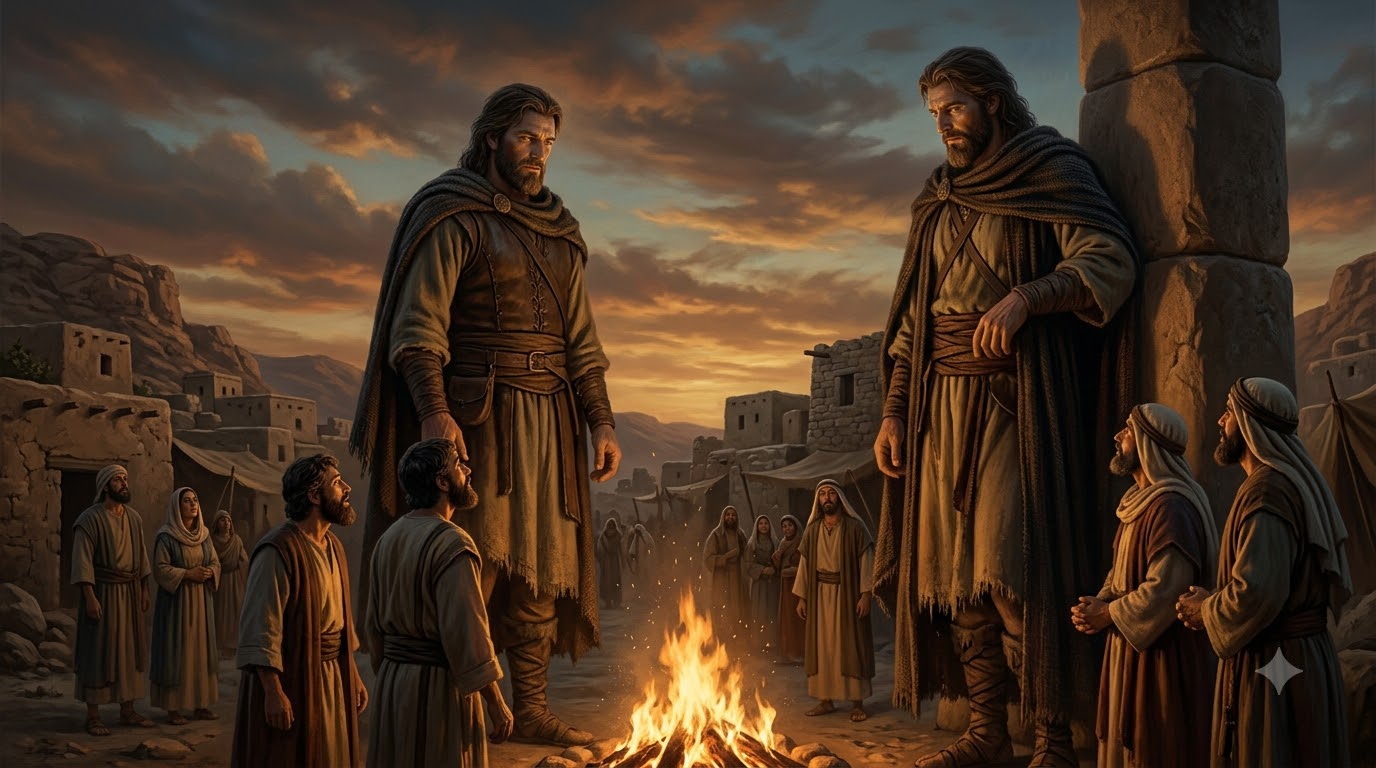
A careful, attentive reader of the Old and New Testaments will notice explicit references to ancient texts that are not included in our current Bible. These are sometimes pointed to by skeptics as genuine lost books of the Bible.
“And the sun stood still, and the moon stopped, until the nation took vengeance on their enemies. Is this not written in the Book of Jashar? The sun stopped in the midst of heaven and did not hurry to set for about a whole day.” (Joshua 10:13, ESV)
Other examples include the “Book of the Wars of the LORD” (Numbers 21:14), the “Chronicles of the Kings of Israel” (1 Kings 14:19), and the “Chronicles of the Kings of Judah” (1 Kings 14:29). In the New Testament, the Apostle Paul mentions a previous letter he wrote to the Corinthians that we no longer possess (1 Corinthians 5:9), often called the “severe letter.”
Does the absence of these specific ancient sources mean our Bible is broken or incomplete, or that there are divinely inspired lost books of the Bible missing from our canon? No. The biblical authors frequently cited secular or historical sources to corroborate their historical claims. Just as a modern historian might cite a biography, a government census, or a news article, the biblical authors cited the state annals of the ancient Near Eastern kings or cultural poetic anthologies like the Book of Jashar. Citing a book does not mean the author believed that book was divinely inspired Scripture. Truth exists outside the Bible (Paul even quotes the pagan philosophers Epimenides and Menander), but not all truth is Scripture.
As for Paul’s missing letter to the Corinthians, we must remember that God, in His infinite providence, preserved exactly what the universal church needed for all generations. Not every single word an apostle spoke or wrote was automatically Scripture. Only the specific writings that God breathed out (theopneustos, 2 Timothy 3:16) and intended for the spiritual nourishment of the universal church were uniquely preserved.
Addressing Common Objections and Misconceptions
The “Council of Nicaea” Conspiracy
Perhaps the most pervasive internet myth regarding the lost books of the Bible is that the Roman Emperor Constantine and the Council of Nicaea (AD 325) decided the biblical canon to suppress political dissent and eliminate alternative gospels. This theory has absolutely zero historical basis. The Council of Nicaea was convened specifically to address the Arian controversy—a theological debate over how the Son related to the Father. The surviving historical records and canons of the council show no discussion, debate, or voting whatsoever on the biblical canon. The canon was already organically recognized and functioning within the church long before Constantine was born.
“History is Written by the Victors”
Another common secular objection is that the “orthodox” Christians simply won the theological war, allowing them to dictate the canon and destroy the historical evidence of their Gnostic rivals. While it is true that orthodox Christianity ultimately prevailed, they did so through theological persuasion, overwhelming historical evidence, and the blood of martyrs, not through political subjugation. The early church had zero military or political power until the fourth century. During the critical first three centuries, when the core of the New Testament canon was universally established, the church was a heavily persecuted, marginalized minority. They were not powerful “victors” suppressing minorities; they were willing martyrs clinging to the authentic apostolic writings that sustained their faith under the horrific threat of Roman execution.
The Theological Reality: Divine Providence and Preservation
From a theological perspective, the entire debate surrounding the lost books of the Bible ultimately touches on the doctrine of God’s sovereignty and divine preservation. If God is powerful and majestic enough to inspire the Scriptures, is He not also infinitely capable of preserving them?
“The grass withers, the flower fades, but the word of our God will stand forever.” (Isaiah 40:8, ESV)
Jesus Christ Himself promised that heaven and earth would pass away, but His words would never pass away (Matthew 24:35), which highlights the immutability of god meaning His nature and truth never shift. While believers sometimes wonder can people in heaven see us on earth, they can rest fully assured that God’s truth is active, alive, and perfectly preserved among us here. The Holy Spirit was promised to guide the apostles into all truth (John 16:13). To argue that essential, divinely inspired texts are missing as lost books of the Bible—having been successfully hidden by corrupt church authorities or lost forever to antiquity—is to suggest that God ultimately failed in His primary mission to communicate with humanity. It suggests a deeply flawed deity who is capable of miraculous divine revelation but wildly incompetent at divine preservation.
The historical process of canonization, while involving human debate, careful scholarship, and centuries of time, was fundamentally superintended by the Holy Spirit. The church, functioning as the living body of Christ, was led by the Spirit to hear the Shepherd’s voice in the authentic, self-authenticating (autopiston) texts and to reject the voice of strangers in the later forgeries (John 10:4-5).
In the truest theological and historical sense, there are no lost books of the Bible. There are only historical documents, later forgeries, and heretical texts that were properly identified and rightfully excluded by early Christians. The sixty-six books of the Old and New Testaments are the complete, sufficient, and authoritative Word of God.
3 Practical Applications
- Trust the Absolute Sufficiency of Scripture. Knowing that the canon is complete and intentionally preserved by God should give you immense confidence in your Bible. You do not need to search for hidden knowledge, mystical secret codes, or supposed lost books of the Bible to intimately understand God or experience profound spiritual growth. Everything you need for life and godliness—from understanding complex prophetic timelines like the rapture vs second coming to answering agonizing modern questions like can God forgive the sin of watching pornography—is already contained within the pages of the Bible you possess (2 Peter 1:3). Immerse yourself deeply in the sixty-six books, trusting that they are entirely sufficient for your salvation, comfort, and sanctification.
- Engage Skeptics with Loving Historical Confidence. When engaging with friends, family, or coworkers who bring up questions about the lost books of the Bible, The Da Vinci Code, TikTok conspiracies, or the Gospel of Thomas, do not be intimidated or defensive. Instead, use these conversations as a prime opportunity to share the rich historical reality of how the Bible was compiled. Explain the crucial difference between first-century apostolic writings and second-century Gnostic forgeries. By understanding the basics of early church history, you can lovingly and intelligently deconstruct their skepticism and point them toward the historical reliability of the true, life-giving Gospels.
- Worship God for His Unfailing Providence. The miraculous fact that the Bible survived millennia of violent persecution, intentional book burnings, philosophical attacks, and massive cultural shifts is a testament to the sovereign providence of God. Take time to thank God that He did not leave us in the dark. He spoke clearly, and He miraculously ensured that His speech was recorded, preserved, and faithfully handed down through the generations so that you, living in the modern era, could hear His voice and know His Son. Let the history of the Bible lead you to a deeper awe and worship of the God who eternally keeps His Word.