Psalms Chapter Summaries
A complete, chapter-by-chapter guide to the Book of Psalms. Read deep dives into the meaning, historical context, and modern application of every chapter.
Jump to Chapter
Welcome to our complete guide to the Book of Psalms. Below you will find a chapter-by-chapter summary that flows through the entire narrative, helping you understand the context, meaning, and application of this profound book.
Chapter 1: The Two Paths
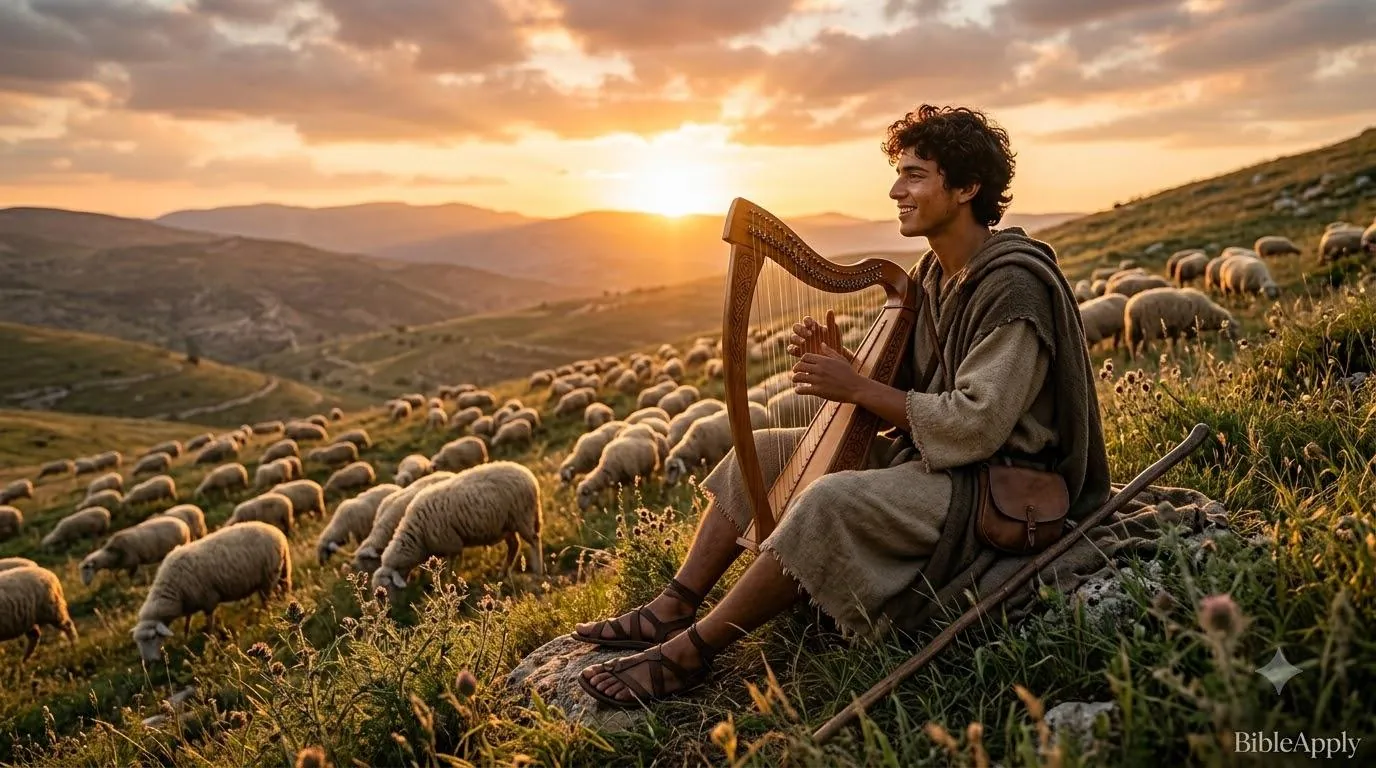
The Book of Psalms stands as the definitive hymnal, prayer book, and poetic heart of the Old Testament. Compiled over roughly a millennium—stretching from the time of Moses (Psalm 90) to the post-exilic period—the Psalter captures the full spectrum of human emotion and divine revelation. It was the songbook of the Second Temple and the very breath of Israel’s worship. When the anonymous compilers (often traditionally associated with Ezra or other post-exilic scribes) arranged the 150 psalms into five distinct books, they deliberately selected Psalm 1 to serve as the gateway, the prologue, and the theological lens through which the entire collection must be read.
Psalm 1 does not merely introduce a song; it introduces a foundational worldview. It sets the stage for the rest of the Psalter by establishing the absolute dichotomy of human existence. In the biblical imagination, there are only two paths: the way of the righteous and the way of the wicked. There is no middle ground, no neutral territory, and no third option. This wisdom psalm acts as a filter, declaring that true worship—the kind of worship detailed in the subsequent 149 chapters—can only emerge from a life rooted in God’s covenantal instruction.
To read Psalm 1 is to be confronted with a choice. It echoes the covenantal ultimatums found in Deuteronomy (“I have set before you life and death, blessing and cursing”) and anticipates the Sermon on the Mount, where Jesus speaks of the narrow and broad gates. By positioning this psalm first, the ancient compilers were making a profound theological statement: before you can sing the praises of God, lament your sorrows to Him, or request His deliverance, you must decide which path your feet are walking.
Historical and Cultural Context
To fully grasp the weight of Psalm 1, we must understand its placement in Ancient Near Eastern thought. Wisdom literature of the ancient world often contrasted the wise and the foolish, but Israelite wisdom elevated this contrast from mere practical advice to covenantal fidelity. The central concept of the psalm is the “Law” (Torah). To the ancient Israelite, Torah was not a sterile, rigid set of legalistic rules. The word stems from the root yarah, meaning “to shoot, aim, or point.” Thus, Torah is divine instruction, God’s loving direction pointing His people toward human flourishing.
In a post-exilic context, where Israel had lost their king, their independence, and temporarily their temple, the Torah became the stabilizing center of Jewish identity. Psalm 1 reflects a community transitioning from relying on national institutions to resting on personal and communal devotion to the Word of God. The righteous person is defined not by their military prowess or wealth, but by their consuming relationship with God’s revealed truth.
The Way of the Righteous (Psalm 1:1-3)
The Progressive Downward Spiral of Sin (Verse 1)
If you want to explore this further, our in-depth guide on isaiah 41 10 breaks this down verse by verse.
“Blessed is the man that walketh not in the counsel of the ungodly, nor standeth in the way of sinners, nor sitteth in the seat of the scornful.” (Psalms 1:1, KJV)
The psalm opens with the Hebrew word ‘Ashrei, usually translated as “Blessed.” This is not a superficial, circumstantial happiness. ‘Ashrei is a plural noun of intensity, literally meaning, “Oh, the multiplex happinesses!” or “The manifold blessedness!” It speaks of an objective state of favor with God that produces a deep, flourishing joy regardless of outward circumstances.
This topic connects with Jeremiah 29:11 Meaning: For I Know the Plans I Have for You, one of the most-searched biblical questions today.
Notice how the psalmist describes this blessedness first by what the righteous person avoids. There is a chilling, poetic progression of moral compromise in this verse. It is a downward spiral characterized by three verbs, three nouns, and three types of people:
- Walketh in the counsel of the ungodly: This is the beginning of compromise. It starts with casually listening to the worldview, advice, and philosophies of those who live without God (the ungodly/wicked). “Walking” implies a transient, moving state.
- Standeth in the way of sinners: What begins as a walk eventually stops. The person lingers. They adopt the lifestyle (“the way”) and the behavioral patterns of those who actively miss the mark (“sinners”).
- Sitteth in the seat of the scornful: This is the final, fatal stage of spiritual hardening. The person is no longer just visiting; they have taken a seat. They have become entrenched in a community of “scornful” or “mockers”—those who arrogantly and actively oppose God.
Sin is rarely a sudden leap off a cliff; it is a gradual acclimation to darkness. The blessed man recognizes the danger of this progression and aggressively refuses to take even the first step.
Delight and Devotion in the Torah (Verse 2)
“But his delight is in the law of the LORD; and in his law doth he meditate day and night.” (Psalms 1:2, KJV)
If verse 1 describes separation from the world, verse 2 describes saturation in the Word. The righteous person is not defined merely by a negative morality (what they do not do) but by a positive, consuming affection: delight. The Hebrew word for delight, chephets, implies a bending towards something with great pleasure and desire. The blessed man does not view God’s Word as a burdensome chore, but as his greatest treasure.
Because he delights in it, he “meditates” on it day and night. The modern, Western conception of meditation often involves emptying the mind, influenced by Eastern mysticism. But biblical meditation is entirely different. The Hebrew word used here is hagah, which means to growl, murmur, or mutter. It is the same word used in Isaiah 31:4 to describe a lion growling over its prey. To the ancient Israelite, reading was rarely a silent activity. To hagah the Torah meant to read it half-aloud, to mutter it under one’s breath continually, chewing on it, savoring it, and allowing it to permeate every waking moment (“day and night”). It is the act of filling the mind with divine truth until it shapes every instinct and reflex.
The Flourishing, Unshakeable Tree (Verse 3)
“And he shall be like a tree planted by the rivers of water, that bringeth forth his fruit in his season; his leaf also shall not wither; and whatsoever he doeth shall prosper.” (Psalms 1:3, KJV)
The psalmist shifts from literal description to vivid, agrarian imagery. The righteous man is compared to a tree, but not a wild tree fighting for survival in the arid Judean wilderness. The Hebrew word translated “planted” (shatul) specifically means transplanted. This tree was intentionally dug up and strategically relocated by a Divine Gardener to a place of perpetual nourishment—by “rivers of water” (literally, irrigation canals).
Because the tree’s roots tap deep into an inexhaustible water source, it is impervious to drought. It yields fruit “in his season”—implying that spiritual growth has seasons of harvest, and we shouldn’t expect perpetual summer, but reliable, timely fruitfulness. Its leaves do not wither under scorching heat of trials.
Also Read:
- 1 John 1 Summary & Meaning: The Incarnate Word and the Light of God
- Habakkuk 1 Summary & Meaning: The Prophet’s Complaint and God’s Astonishing Providence
- Titus 1 Summary & Meaning: Setting Things in Order
The promise that “whatsoever he doeth shall prosper” must be understood covenantally, not materialistically. This is not a “prosperity gospel” guarantee of financial wealth. The word for prosper (tsalach) means to push forward, to succeed in accomplishing God’s purposes. When a person is deeply rooted in God’s Word, their will becomes aligned with God’s will, and their endeavors bear eternal weight.
The Way of the Wicked (Psalm 1:4-5)
Weightless and Worthless: Like Chaff in the Wind (Verse 4)
“The ungodly are not so: but are like the chaff which the wind driveth away.” (Psalms 1:4, KJV)
The transition in verse 4 is abrupt and devastating. “The ungodly are not so.” Everything true of the tree—stability, vitality, fruitfulness, permanence—is reversed for the wicked. To illustrate this, the psalmist uses a familiar agricultural image: the threshing floor.
In ancient Israel, wheat was harvested and taken to a high, flat place (a threshing floor). The farmer would use a pitchfork to toss the crushed stalks into the air. The heavy, valuable grain would fall straight down to be gathered, but the chaff—the dry, paper-thin, worthless husk surrounding the grain—would be caught by the wind and blown away forever.
The ungodly may appear powerful, wealthy, and successful in the eyes of the world, but from heaven’s perspective, their lives are spiritually weightless. They lack substance. Because they have no roots in eternal realities, they are entirely at the mercy of the shifting winds of culture, circumstance, and eventually, divine judgment.
The Certainty of Divine Judgment (Verse 5)
“Therefore the ungodly shall not stand in the judgment, nor sinners in the congregation of the righteous.” (Psalms 1:5, KJV)
Because the ungodly lack substance, they will ultimately lack standing. The psalmist plays on the word “stand” from verse 1. The wicked man who proudly “stood” in the way of sinners will find himself entirely unable to “stand” (endure, be acquitted) when he faces the righteous judgment of God.
The “congregation of the righteous” refers to the eschatological, final gathering of God’s covenant people. In the end, the mixed multitude of humanity will be separated. The wicked will be excluded from the eternal community of the redeemed. Their rejection of God’s counsel in life results in their exile from God’s presence in eternity.
If this resonates with you, our deep dive into Psalm 91 Meaning: He Who Dwells in the Shelter explores the scriptural foundation further.
The Two Destinies (Psalm 1:6)
“For the LORD knoweth the way of the righteous: but the way of the ungodly shall perish.” (Psalms 1:6, KJV)
The psalm concludes with a solemn summary of the two paths. The word “knoweth” (yada) is one of the most profound words in biblical Hebrew. It does not merely mean cognitive awareness (God is omniscient and knows everything). Yada implies intimate, relational, covenantal knowledge. It is the word used to describe the intimacy between a husband and a wife (Genesis 4:1). God personally guards, watches over, and involves Himself in the path of the righteous.
Conversely, the way of the ungodly “shall perish.” Notice that it doesn’t just say the ungodly people will perish, but their very way will perish. The path of sin is a dead-end street. It leads to nowhere. It carries the seeds of its own destruction and will ultimately unravel into nothingness.
Christological Connection: Pointing to Jesus
How does Psalm 1 connect to the Gospel? If we are honest, when we hold our lives up to the mirror of Psalm 1, we realize we have all failed. We have all listened to ungodly counsel; we have lingered in sinful patterns; we have failed to delight perfectly in God’s law day and night. If Psalm 1 is strictly about our own performance, it is a psalm of condemnation, for “there is none righteous, no, not one” (Romans 3:10).
But the beauty of the Gospel is that there is One who perfectly fulfilled Psalm 1. Jesus Christ is the ultimate “Blessed Man.”
- He never walked in the counsel of the wicked, even when tempted by Satan in the wilderness.
- He delighted completely in the will of the Father, saying, “My meat is to do the will of him that sent me” (John 4:34).
- He is the True Tree of Life, planted by the living waters, who brought forth the fruit of salvation in His appointed season.
Because Jesus perfectly lived the life we could not live, and died the death we deserved, we can now be united with Him by faith. When we are “in Christ,” His righteousness is imputed to us. We become the transplanted trees, drawing our life, vitality, and fruitfulness from our union with Him. He is the Living Water (John 4:14, 7:37-38) that nourishes our souls, ensuring our leaves never wither.
3 Practical Applications from Psalms 1
1. Audit Your Influences
The progression of “walk, stand, sit” warns us about the subtle, acclimating nature of sin. Take a hard look at the voices that shape your worldview. Who are you listening to? What podcasts, social media feeds, television shows, or friend groups are counseling your heart? If you are saturating your mind with the counsel of a godless culture, you will inevitably begin to adopt their ways. Deliberately curate your influences to ensure the loudest voice in your life is the Word of God.
Many believers wrestle with questions like romans 8 28 — and Scripture has profound answers.
2. Cultivate a “Muttering” Habit (Meditation)
Reading the Bible is good, but meditating on it is transformative. Move beyond merely checking off a chapter in your daily reading plan. Select a verse or a short passage each day to hagah—to murmur, ponder, and chew on throughout the day. Write it on a sticky note, memorize it, and bring it to mind while you are driving, washing dishes, or lying in bed. Let the text marinate in your mind until it begins to reshape your desires and reflexes.
3. Measure Prosperity by Root Health, Not Just Fruit
In a highly visible, performance-driven culture, we tend to measure success by immediate, visible “fruit” (wealth, status, numerical growth, public recognition). But Psalm 1 reminds us that true prosperity is tied to our root system. Are you planted by the rivers of water? Are you prioritizing secret, unseen communion with God? Focus on deepening your roots in the soil of God’s grace and truth. If the roots are healthy and tapping into the Living Water, the fruit will naturally come in its proper season.
Also Read
- Ezekiel 1 Summary & Meaning: The Glory of God in Exile
- Luke 1 Summary & Meaning: The Dawn of Redemption and the Breaking of Silence
- Proverbs 1 Summary & Meaning: The Call of Wisdom
Read Psalms 1
Dive into the full scripture text for deeper study.
Chapter 2: The Reign of the Lord's Anointed
God decrees that He has firmly established His anointed King on Zion, promising Him the nations as an eternal inheritance. The psalm concludes with a solemn warning to worldly rulers: they must serve the Lord with fear and submit to the Son to escape impending wrath.
Chapter 3: A Morning Prayer of Trust
Because of this steadfast trust, David can lie down and sleep in profound peace, knowing the Lord sustains him. He refuses to fear the tens of thousands encamped against him. The psalm closes by declaring that salvation belongs entirely to the Lord, invoking His blessing upon the faithful.
Chapter 4: An Evening Prayer for Relief
He reminds them that the Lord has set apart the godly and will undoubtedly hear their prayers. David counsels his enemies to tremble and search their hearts silently. Finding greater joy in God than in worldly prosperity, David ultimately sleeps securely in the Lord's unwavering protection.
Chapter 5: A Morning Cry for Protection
David prays for divine guidance, asking God to lead him in righteousness because of his enemies. He describes his adversaries as deceitful and destructive, urging God to hold them guilty. The psalm concludes with a triumphant assurance that God surrounds the righteous with favor.
Chapter 6: A Prayer for Mercy in Anguish
David describes his exhaustion from continuous groaning, drenching his bed with tears every night as his eyes waste away from grief. Suddenly, the tone shifts to resolute confidence. David commands his enemies to depart, declaring with absolute certainty that the Lord has heard his weeping and accepted his prayer.
Chapter 7: A Plea for Divine Justice
David calls upon God to rise up in anger against his adversaries and establish justice. He pictures God as a righteous judge who feels indignation every day against the unrepentant wicked. David concludes by praising the Lord for His perfect justice and singing to the Most High.
Chapter 8: The Majesty of the Creator
When David observes the breathtaking night sky, he is struck by humanity's insignificance. Yet, he is amazed that God cares for mankind, crowning human beings with glory and honor, and giving them dominion over the creatures of the earth. The psalm perfectly frames God's overarching majesty.
Chapter 9: Praise for God's Righteous Judgment
The Lord is portrayed as a sovereign ruler sitting eternally on His throne, judging the world with absolute righteousness. He is a stronghold for the oppressed. David urges Zion to sing praises and asks God for continued mercy against oppressors, so the nations may know God reigns supreme.
Chapter 10: A Cry Against the Wicked
These oppressors lurk in secret places, ambushing the helpless like a lion catching its prey. They falsely believe God has forgotten. However, the psalmist passionately calls upon the Lord to arise, lift His hand, and defend the fatherless and oppressed.
Chapter 11: Trust in the Lord's Refuge
He declares that the Lord remains in His holy temple; His throne is unshakably established in heaven. God's eyes keenly observe everyone, testing both the righteous and the wicked. While God will rain fiery coals upon those who love violence, He is fundamentally righteous. The upright are promised the ultimate blessing of beholding His face.
Chapter 12: A Cry for Help in a Faithless Age
These arrogant individuals boast that they are accountable to no one. In stark contrast to human deceit, God's promises are described as flawless, like silver refined seven times in a furnace. The Lord promises to rise up and protect the poor and needy from this wicked generation.
Chapter 13: How Long, O Lord?
David urgently pleads with the Lord to consider his plight and light up his eyes, lest he sleep the sleep of death. Despite his intense anguish, the psalm concludes with a dramatic shift to triumphant faith. David deliberately chooses to trust in God's steadfast love and rejoice.
Chapter 14: The Folly of the Godless
The divine verdict is absolute: all have turned aside, becoming entirely corrupt; no one does good. The workers of evil ignorantly consume God's people like bread. Yet, they are suddenly overwhelmed with terror because God is with the righteous generation. The psalm ends longing for salvation.
Chapter 15: Who May Dwell on Your Holy Hill?
This person refuses to slander others, does no evil to their neighbor, and honors those who fear the Lord. They keep their oaths even when it hurts, do not lend money at interest, and refuse bribes. Whoever does these things will never be moved or shaken.
Chapter 16: You Will Not Abandon My Soul
David celebrates his God-given inheritance, stating that the boundary lines have fallen in pleasant places. Because he constantly sets the Lord before him, he will not be shaken. The psalm concludes with a messianic prophecy: God will not abandon his soul to Sheol or corruption.
Chapter 17: Keep Me as the Apple of Your Eye
He pleads for God to protect him as the 'apple of his eye,' hiding him in the shadow of His wings. David vividly describes his enemies as deadly lions. Ultimately, David finds his satisfaction not in worldly wealth, but in seeing God's face in righteousness.
Chapter 18: The Lord is My Rock and Fortress
The psalm vividly depicts God descending in stormy majesty—with smoke, fire, and darkness—to rescue His servant from deep waters. God rewarded David according to the cleanness of his hands. The song concludes with sweeping praise for God, who equips David with strength, subdues nations, and shows steadfast love to His anointed forever.
Chapter 19: The Heavens Declare the Glory of God
The psalm then transitions to praise the law of the Lord, describing it as perfect, pure, and true. God's Word revives the soul and makes the simple wise. It is more desirable than pure gold. David concludes by praying that his words would be acceptable to God.
Chapter 20: A Prayer for Victory
The congregation anticipates shouting for joy over the impending salvation. A distinct shift occurs as they boldly declare that while some proudly trust in chariots and horses, they will trust in the name of the Lord. Ultimately, the enemies will collapse, but the faithful will stand.
Chapter 21: Thanksgiving for Victory
When the king asked for life, God granted him length of days forever. The psalm emphasizes that the king's glorious victories are entirely sourced in God. The focus then shifts to assuring that God's fiery wrath will consume those who plot evil against Him.
Chapter 22: My God, Why Have You Forsaken Me?
He describes intense physical suffering: bones out of joint, and hands and feet pierced by evildoers who divide his garments by casting lots. Yet, the psalm dramatically pivots to triumphant praise. The sufferer vows to declare God's name, prophesying that all the ends of the earth will turn to the Lord.
Chapter 23: The Lord is My Shepherd
Introduction: The Most Beloved Psalm
Psalm 23 is arguably the most recognized, memorized, and beloved passage of Scripture in the entirety of the Bible. Penned by David, a shepherd who became a king, this psalm distills the infinite, transcendent majesty of God into an incredibly intimate, personal, and profoundly comforting metaphor. It is a song of quiet confidence. In merely six verses, David captures the full spectrum of the human experience—rest, wandering, darkness, danger, and ultimately, eternal security—all under the watchful, benevolent care of a sovereign God.
For centuries, these words have been whispered at bedsides, proclaimed at funerals, and clung to in the darkest moments of life. But to truly grasp the theological weight of Psalm 23, we must step out of our modern context and enter the rugged, arid landscapes of the ancient Near East. When we understand the cultural reality of ancient shepherding and Middle Eastern hospitality, the promises of this psalm move from poetic comfort to unshakable theological anchors.
The Cultural Context of the Shepherd in Ancient Israel
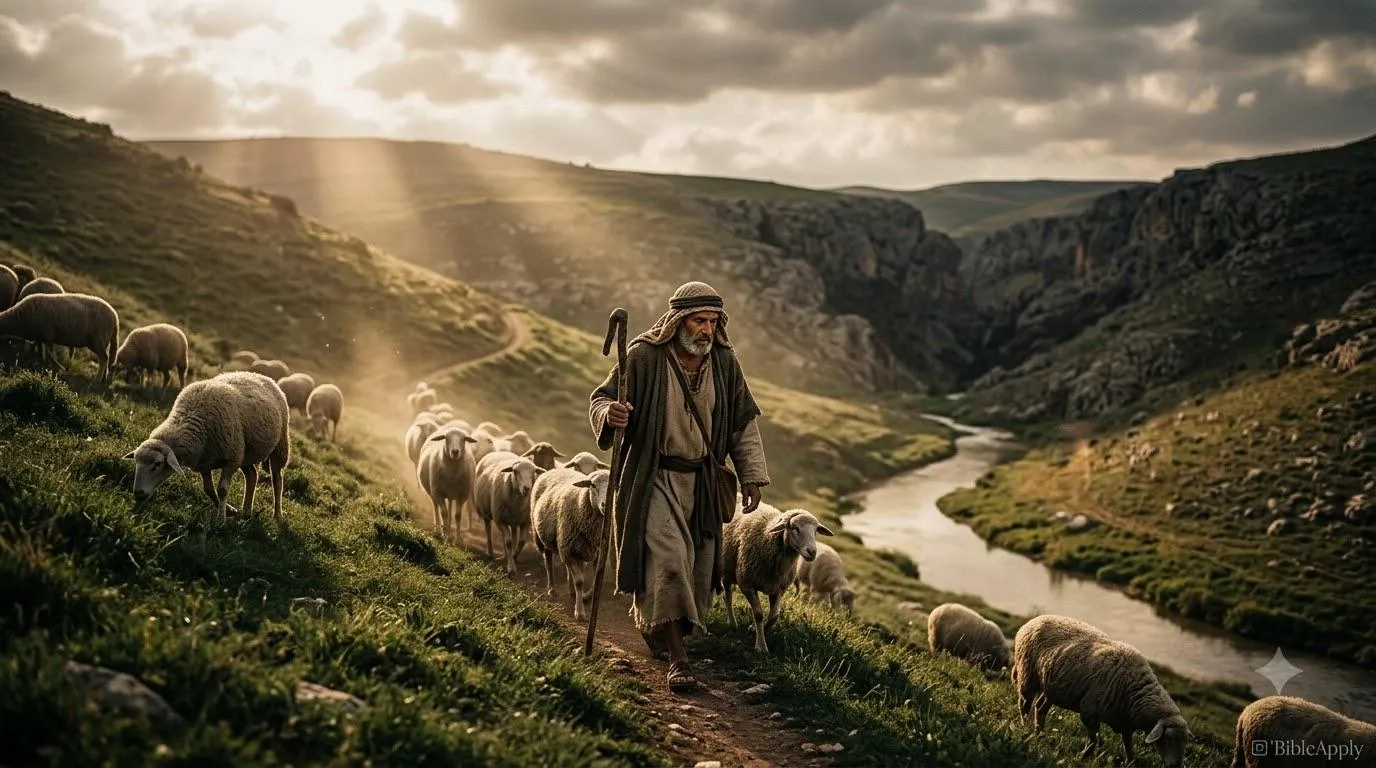
To the modern mind, sheep are often viewed as docile, fluffy, and perhaps slightly unintelligent animals, while a shepherd is seen as a peaceful wanderer. In ancient Israel, however, a shepherd’s life was characterized by hardship, vigilance, and danger. The Judean wilderness was—and is—unforgiving. It is a land of steep ravines, scorching heat, scarce water, and lurking predators like lions and bears.
If you want to explore this further, our in-depth study on jeremiah 29 11 breaks this down verse by verse.
Therefore, when David identifies God as his shepherd (Ra’ah in Hebrew), he is not merely invoking a pastoral image of tranquility. He is invoking a protector, a provider, and a fierce defender. The relationship between an ancient Near Eastern shepherd and his flock was deeply intimate. The shepherd lived with the sheep, knew them by name, and frequently placed his own body between his flock and predators. To say “The Lord is my shepherd” was a profound declaration of trust in God’s absolute sovereignty and His willingness to involve Himself in the gritty details of human existence.
Verses 1-3: The Shepherd’s Provision and Guidance
“The LORD is my shepherd; I shall not want.” (Verse 1)
“The LORD is my shepherd; I shall not want.” (Psalm 23:1, KJV)
David begins with the divine name, Yahweh (translated as LORD in all caps). This is the covenant name of God, the “I AM” who revealed Himself to Moses. By juxtaposing the transcendent, covenantal name of God with the deeply personal metaphor of a shepherd, David establishes the tone for the entire psalm. The Sovereign of the universe is not distant or detached; He is my shepherd.
Because Yahweh is the shepherd, the logical conclusion is, “I shall not want.” This does not mean the believer will never experience desire or that God will grant every frivolous wish. Rather, the Hebrew word chaser implies lacking or being deficient. David is asserting that under God’s care, he lacks nothing essential for his true well-being. The sheep has all it needs because the shepherd is entirely sufficient.
For a deeper study, see our guide on Jeremiah 29:11 Meaning: For I Know the Plans I Have for You which many readers have found helpful.
“He maketh me to lie down in green pastures…” (Verse 2)
“He maketh me to lie down in green pastures: he leadeth me beside the still waters.” (Psalm 23:2, KJV)
Sheep are notably skittish animals. According to shepherds, a sheep will not lie down unless four conditions are met: they must be free from fear, free from friction with others in the flock, free from pests (like flies and parasites), and free from hunger. For David to say that God “maketh me to lie down,” he is describing a state of profound, divinely orchestrated peace.
The “green pastures” and “still waters” (literally “waters of rest”) are not found easily in the rocky terrain of Judea. A shepherd must carefully navigate his flock through difficult terrain to find these brief, hidden oases. Thus, the rest David speaks of is not a natural occurrence; it is the direct result of the shepherd’s intentional guidance.
“He restoreth my soul…” (Verse 3)
“He restoreth my soul: he leadeth me in the paths of righteousness for his name’s sake.” (Psalm 23:3, KJV)
The Hebrew word for “soul” here is nephesh, which encompasses the entire being—life, vitality, and breath. To “restore” (shuv) means to bring back, rescue, or return. Sheep are prone to wander and easily become “cast” (turned over on their backs, unable to stand up). A cast sheep will die in a matter of hours if the shepherd does not find it, turn it over, and restore its circulation. God does this for our souls. When we are battered by life, entrenched in sin, or immobilized by anxiety, the Shepherd actively seeks us out and sets us back on our feet.
Furthermore, He guides us in “paths of righteousness” (ma’agal tzedek—right paths or ruts). Sheep are creatures of habit and will ruin a pasture by walking the same trails until they are barren. A good shepherd moves them to new, life-giving paths. God does this “for his name’s sake”—meaning His guidance is guaranteed by His own character and reputation. His commitment to our holiness and preservation is anchored in His own glory.
Verse 4: The Valley of the Shadow of Death
“Yea, though I walk through the valley of the shadow of death, I will fear no evil: for thou art with me; thy rod and thy staff they comfort me.” (Psalm 23:4, KJV)
Verse 4 is the pivot of the psalm. Notice the pronoun shift: David transitions from talking about God (“He leads me,” “He restores me”) to talking to God (“Thou art with me”). It is in the darkest valleys that our theology becomes our reality. The intimacy deepens when the terrain worsens.
Also Read:
- Jude 1 Summary & Meaning: Contending for the Faith
- Zephaniah 1 Summary & Meaning: The Approaching Day of the Lord
- Micah 1 Summary & Meaning: The Roar of the Lord’s Judgment
The phrase “valley of the shadow of death” translates the Hebrew word tzalmaveth, which can mean “deep darkness” or “pitch black.” In the Judean wilderness, there are narrow wadis (ravines) where the walls are so high and steep that the sun rarely penetrates to the bottom. These paths were necessary to travel from winter pastures to summer highlands, but they were fraught with danger—flash floods, hidden predators, and treacherous footing.
David does not say we will avoid the valley; he says we will walk through it. And the reason for his fearlessness is simple: the presence of the Shepherd.
The “rod” (shebet) and “staff” (mishan) are the shepherd’s primary tools. The rod was a heavy, club-like weapon worn at the belt, used to beat off predators like lions or wolves. It represents God’s power, authority, and protection. The staff was the long, crooked stick used to gently guide the sheep, lean on during long watches, or pull a wandering lamb out of a crevice. Together, they represent God’s fierce protection against our enemies and His tender discipline and rescue for us. Both are sources of deep comfort.
Verses 5-6: The Gracious Host
In verse 5, the metaphor shifts. David is no longer a sheep following a shepherd; he is an honored guest at a magnificent banquet hosted by God Himself.
“Thou preparest a table before me in the presence of mine enemies…” (Verse 5)
“Thou preparest a table before me in the presence of mine enemies: thou anointest my head with oil; my cup runneth over.” (Psalm 23:5, KJV)
In the ancient Near East, the laws of hospitality were sacred. When a host welcomed a guest into their tent, they were making a solemn covenant of protection. As long as the guest was at the table, the host was obligated to defend them, even at the cost of the host’s own life.
David pictures himself at a lavish banquet. But look at the setting: it is “in the presence of mine enemies.” The enemies are not gone. The danger has not evaporated. The surrounding circumstances may still be hostile, yet God spreads a feast right in the middle of the battlefield. The believer’s peace is not dependent on the absence of trouble, but on the presence of the Host.
Many believers also ask Psalm 91 Meaning: He Who Dwells in the Shelter — and the Bible gives us a clear, powerful answer.
“Thou anointest my head with oil; my cup runneth over.” To anoint a guest’s head with fragrant oil was the highest mark of honor, refreshing them after a long, dusty journey. A cup running over (revayah, meaning abundance or saturation) signified that the host’s resources were limitless and his generosity unbounded. God does not merely give us the minimum required for survival; He lavishes His grace upon us.
“Surely goodness and mercy shall follow me all the days of my life…” (Verse 6)
“Surely goodness and mercy shall follow me all the days of my life: and I will dwell in the house of the LORD for ever.” (Psalm 23:6, KJV)
The English word “follow” is almost too passive for the Hebrew verb used here, radaph, which means to pursue, chase, or hunt down. It is the same word used for an army aggressively pursuing its enemies. David is saying that God’s “goodness” (tov) and “mercy” (hesed—covenantal, steadfast lovingkindness) are actively hunting him down. Instead of being pursued by predators or enemies, the believer is relentlessly pursued by the aggressive grace of God every single day of their life.
The psalm concludes with the ultimate destination: “and I will dwell in the house of the LORD for ever.” For David, the house of the Lord was not merely a physical structure; it represented the presence, communion, and family of God. The journey that began in green pastures and traveled through dark valleys ends in eternal communion with the Creator.
The Gospel Connection: Jesus, the Good Shepherd
Psalm 23 finds its ultimate fulfillment in the person and work of Jesus Christ. In John 10, Jesus explicitly claims this imagery for Himself, declaring, “I am the good shepherd: the good shepherd giveth his life for the sheep” (John 10:11).
Many believers wrestle with the question of psalm 23 kjv — and Scripture has profound, life-changing answers.
If you want to explore this further, our in-depth study on romans 8 28 breaks this down verse by verse.
While David, a flawed human king, pointed to God as his shepherd, Jesus embodies the Shepherd in the flesh. Christ proved the depth of His commitment not merely by fighting off wolves, but by willingly laying down His life to save the flock from the ultimate predators: sin and death. Jesus walked through the ultimate Valley of the Shadow of Death on the cross, experiencing the darkness of God’s wrath so that we would never have to walk through it alone.
Furthermore, Jesus is also the Host. He prepares a table for us—the Lord’s Supper—in the presence of our spiritual enemies. He invites us to feast on His grace, anointing us with the Holy Spirit and offering us the cup of the New Covenant, overflowing with forgiveness and eternal life.
Practical Applications for Modern Life
- Rest is a Spiritual Necessity, Not a Luxury: The Shepherd makes the sheep lie down. In our hyper-connected, endlessly busy modern world, burnout is rampant. Psalm 23 reminds us that observing a Sabbath, unplugging, and resting in God’s provision is not a sign of weakness; it is an act of trust in the Shepherd’s sovereignty. If you do not schedule rest, the Shepherd may permit circumstances that force you to lie down.
- Seek His Presence in the Darkness: When you find yourself in a “valley” of grief, depression, financial ruin, or illness, the goal is not merely to escape the valley, but to walk through it with the Shepherd. Do not waste your suffering. Allow the darkest times to be the catalyst that shifts your prayers from talking about God to talking directly to God. Intimacy is forged in the valley.
- Feast While the Battle Rages: Do not wait for all your problems to be solved before you cultivate a life of gratitude and joy. God prepares a table in the presence of your enemies. You can experience profound spiritual nourishment, peace, and abundance even while dealing with difficult people, stressful jobs, or unresolved conflicts. Fix your eyes on the Host, not the enemies.
- Trust the Rod and the Staff: The Shepherd’s guidance sometimes involves painful correction. If you find your plans thwarted, doors closed, or God disciplining you through difficult circumstances, recognize it as the “rod and staff.” His discipline is a profound comfort because it proves you belong to His flock (Hebrews 12:6). He loves you too much to let you wander off a spiritual cliff.
- Rest in His Pursuit: Stop trying to earn God’s affection or outrun your past mistakes. The theology of Psalm 23 is one of absolute assurance. God’s hesed (steadfast love) is actively chasing you down. You cannot out-sin His grace, and you cannot outrun His goodness. Rest in the assurance that your eternal destination in the house of the Lord is secured not by your perfect obedience, but by the Good Shepherd who laid down His life for you.
Also Read
- Luke 1 Summary & Meaning: The Dawn of Redemption and the Breaking of Silence
- Proverbs 1 Summary & Meaning: The Call of Wisdom
- Zephaniah 1 Summary & Meaning: The Approaching Day of the Lord
Read Psalms 23
Dive into the full scripture text for deeper study.
Chapter 24: The King of Glory Enters
Such a person receives blessing from God. The climax of the psalm is a majestic call for the ancient gates of Jerusalem to be lifted up so the King of glory may enter. The King of glory is triumphantly identified as the Lord, strong and mighty in battle.
Chapter 25: A Prayer for Guidance and Forgiveness
He asks God to remember His eternal mercy, but to completely forget the sins of his youth. David trusts in God's goodness to instruct sinners and guide the humble. He concludes by pleading for God to forgive his sins and redeem Israel from all its profound distress.
Chapter 26: Vindicating the Innocent
He distances himself from deceitful men and hypocrites, refusing to sit with the wicked. Instead, he washes his hands in innocence and goes around God's altar with thanksgiving. David deeply loves the habitation of God's house and prays his soul will not be swept away with bloodthirsty sinners.
Chapter 27: The Lord is My Light and Salvation
David's singular desire is to dwell in the house of the Lord all his life, gazing upon God's beauty. He prays that God will not hide His face, noting that even if his parents forsake him, the Lord will take him in. He urges himself to wait patiently for the Lord.
Chapter 28: Hear My Cry for Mercy
He prays he will not be dragged away with the wicked, who speak peace while harboring evil, asking God to repay them for their treacherous deeds. The psalm transitions into joyous praise, declaring that the Lord has heard him and is the saving refuge of His people.
Chapter 29: The Voice of the Lord in the Storm
God's voice thunders over the mighty waters, breaks the cedars of Lebanon, and flashes forth flames of fire. It shakes the wilderness and strips the forests bare. In His temple, everyone shouts, 'Glory!' The psalm concludes with the comforting truth that this overwhelmingly powerful King gives enduring peace to His people.
Chapter 30: Joy Comes in the Morning
David reflects that God's anger is but for a fleeting moment, but His favor lasts a lifetime. Though weeping may heavily linger for the night, overwhelming joy bursts forth in the morning. God mercifully turned his mourning into joyful dancing, replacing his heavy sackcloth with immense gladness.
Chapter 31: Into Your Hand I Commit My Spirit
David describes profound suffering: his eye wastes away from grief, and he has become a dreaded object of scorn to his friends. Yet, he emphatically declares, 'My times are in your hand.' He asks God to silence the lying lips of the wicked and encourages all saints to love the Lord.
Chapter 32: The Blessedness of Forgiveness
However, when David finally acknowledged his sin and stopped covering his iniquity, God immediately forgave the guilt. Therefore, he urges all the godly to pray to God. God promises to instruct His people in the right way, surrounding those who trust Him with steadfast love.
Chapter 33: Praise the Creator and Preserver
God easily frustrates the plans of the nations, but His own counsel stands forever. The psalm warns that kings are not saved by great armies, nor warriors delivered by vast strength. True hope and salvation rest entirely upon God's watchful eye and unfailing steadfast love.
Chapter 34: Taste and See That the Lord is Good
He issues the famous invitation to 'taste and see that the Lord is good.' He teaches that whoever desires a good life must keep their tongue from evil. The Lord is intimately close to the brokenhearted and saves those who are crushed in spirit, actively redeeming His servants.
Chapter 35: Plea for Rescue from Enemies
David laments that his enemies repaid his good with evil; when they were sick, he mourned, but when he stumbled, they gleefully gathered to mock him. David urgently prays for God to awake, vindicate him, and prevent his treacherous enemies from winking their eyes in malicious triumph over his downfall.
Chapter 36: The Steadfast Love of God
In breathtaking contrast, God's steadfast love powerfully extends to the heavens, and His faithfulness reaches the clouds. David rejoices that mankind can find ultimate refuge in the shadow of God's wings, feasting on the abundance of His house. God is the fountain of life; in His light, we see light.
Chapter 37: Fret Not Because of Evildoers
David encourages believers to commit their ways to the Lord and wait patiently. He assures that the meek will eventually inherit the land. Although the wicked plot against the righteous, the Lord simply laughs, knowing their day of destruction is rapidly approaching while He upholds the righteous.
Chapter 38: A Penitent Sufferer's Plea
David's body is filled with burning pain; he groans in sheer anguish of heart. Furthermore, his friends actively stand aloof from his plague, while his enemies relentlessly lay treacherous snares for his life. In this overwhelming isolation, David humbly confesses his iniquity and places his solitary hope in the Lord.
Chapter 39: The Brevity of Life
He realizes that human life is nothing but a mere breath. People frantically busy themselves, amassing phantom wealth without knowing who will gather it. Realizing the vanity of life, David places his hope entirely in the Lord, asking for deliverance and a brief reprieve.
Chapter 40: I Waited Patiently for the Lord
David realizes that God does not fundamentally desire mere animal sacrifices, but rather an obedient ear and a heart that loudly delights in doing His will. Finding himself again surrounded by innumerable evils, David urgently pleads for God to make haste and deliver him.
Chapter 41: Blessed is the One Who Considers the Poor
David then asks God for mercy and healing because he has sinned. His malicious enemies eagerly anticipate his death, and even his close, trusted friend has treacherously lifted his heel against him. David prays for God's gracious restoration so he can be vindicated, concluding with a grand doxology.
Chapter 42: As a Deer Pants for Flowing Streams
He remembers with deep sorrow the joyous times when he led the glad procession to the house of God. Experiencing profound depression, he preaches to his own soul, commanding it to put its hope in God, confident that he will again praise his Savior.
Chapter 43: Send Out Your Light and Your Truth
He earnestly prays for God to send out His light and truth to guide him back to God's holy hill. Upon returning, he promises to joyfully approach the altar of God, his exceeding joy. Once again, he gently rebukes his downcast soul, commanding it to hope in God.
Chapter 44: Come to Our Help
However, God has seemingly rejected and disgraced them, scattering them like sheep among the nations. The people protest that they have not forgotten God's covenant or turned to false idols. They urgently cry out for God to awake, rise up, and redeem them for the sake of His steadfast love.
Chapter 45: A Royal Wedding Song
In exalted, messianic language, the king's throne is declared to be eternal. The psalm then addresses the beautiful royal bride, advising her to forget her past people and joyfully submit to the king. The wedding beautifully concludes in a procession of immense, overflowing joy and gladness.
Chapter 46: God is Our Refuge and Strength
In contrast to the raging oceans, there is a peaceful river making glad the city of God. Because God dwells firmly within her, the city will not be moved. Though earthly nations violently rage, God merely speaks and the earth melts. He invites all to 'Be still.'
Chapter 47: God is King Over All the Earth
He powerfully subdues nations under Israel's feet. God goes up with a mighty shout and the blast of a trumpet. The congregation is urged to repeatedly sing praises, for God is the sovereign King. The secular princes enthusiastically gather, for all earthly shields belong entirely to the Lord.
Chapter 48: Zion, the City of Our God
When hostile kings joined forces and advanced against the city, they were instantly terrified and put to frantic flight upon seeing it. The people are encouraged to walk confidently around Zion, counting its towers and considering its ramparts, so they may proudly tell the next generation of God's eternal guidance.
Chapter 49: The Folly of Trusting in Riches
Both the foolish and the wise inevitably perish, leaving their vast wealth to others. Humanity in all its pomp shares the exact same fate as the beasts, destined for the grave. However, the psalmist expresses confident hope that God will personally ransom his soul from Sheol.
Chapter 50: God Himself is Judge
God clarifies that He does not need animal sacrifices, for He already owns every beast of the forest. Instead, He deeply desires a sacrifice of genuine thanksgiving. God severely rebukes the wicked hypocrites who mechanically recite His laws but participate in deceit, warning them to earnestly repent lest He tear them apart.
Chapter 51: A Contrite Heart
David does not make excuses; he pleads for God’s unfailing love and abundant mercy. He asks to be washed clean, recognizing that his sin is ultimately a rebellion against God Himself. The chapter concludes with a powerful realization: God does not delight in outward sacrifices, but in a broken and contrite spirit.
Chapter 52: The Doom of the Deceitful
In contrast to the wicked who will be uprooted, David describes himself as a flourishing olive tree in the house of God. He resolves to trust in God's unfailing love forever and to praise His name before the faithful, establishing a clear dichotomy between the fleeting power of the wicked and the enduring security of the righteous.
Chapter 53: The Folly of the Godless
God looks down from heaven seeking anyone who seeks Him, only to find a universal corruption. Yet, despite the rampant wickedness of those who devour God's people, the psalm promises a sudden and overwhelming dread upon the wicked. It concludes with an earnest yearning for God to restore Israel and bring salvation.
Chapter 54: God is My Helper
The tone shifts rapidly from an urgent petition to a profound assertion of faith: "Surely God is my help; the Lord is the one who sustains me." David promises a freewill offering of praise, looking ahead with certainty to the moment God will deliver him from all his troubles.
Chapter 55: Betrayed by a Friend
The deepest sting comes from the betrayal of a companion with whom he once shared sweet fellowship in the house of God. Ultimately, David refuses to let bitterness consume him. He resolves to cast his cares upon the Lord, confident that God will sustain the righteous and bring down the deceitful.
Chapter 56: Tears in a Bottle
Perhaps the most beautiful imagery in this chapter is David's assertion that God keeps track of his sorrows and gathers his tears in a bottle. It is a profound reminder that God is deeply aware of our suffering and will deliver our souls from death.
Chapter 57: Refuge in the Cave
Even though he is surrounded by enemies who are like fierce lions and have set traps for his feet, David’s heart remains steadfast. The psalm transitions into a magnificent chorus of worship, calling for God to be exalted above the heavens and for His glory to shine over all the earth, anticipating a coming dawn of deliverance.
Chapter 58: A Cry Against Unjust Judges
The language is intense and graphic as David asks God to break their teeth and let them vanish like water flowing away. This strong imprecatory prayer reflects a deep hunger for divine justice. Ultimately, the psalm anticipates a day when the righteous will be rewarded, and humanity will acknowledge that God truly judges the earth.
Chapter 59: Deliverance from Bloodthirsty Men
David appeals to God as his fortress and stronghold. He asks the Lord not merely to kill them quickly, but to make them a lingering example of divine justice. As morning approaches, David’s fear dissolves into a song of strength. He praises God for being a reliable refuge and a source of steadfast love in times of severe crisis.
Chapter 60: The Banner of God's Triumph
Yet, amidst the devastation, there is a glimmer of hope. God has raised a banner for those who fear Him. The psalmist recalls God's sovereign claim over the surrounding regions, asserting that victory comes not from human military prowess, but from God alone. The chapter concludes with the resolute confidence that "with God we will gain the victory."
Chapter 61: The Rock That is Higher Than I
He longs to dwell in God's tent forever and find safety beneath the shelter of His wings. The psalm seamlessly shifts into a prayer for the longevity and prosperity of the king, culminating in a joyful vow to praise God’s name continuously as he fulfills his daily promises.
Chapter 62: Rest in God Alone
The psalm offers a poignant exhortation to the people: pour out your hearts to God and do not trust in extortion or the fleeting security of wealth. It concludes with the profound theological truth that both immense power and unfailing love belong exclusively to the Lord, who rewards everyone according to what they have done.
Chapter 63: Thirsting for God in the Wilderness
Even in the desolate desert, David's lips burst forth in praise. He stays awake through the watches of the night, meditating on the Lord who is his help. He clings passionately to God, knowing that the right hand of the Almighty will uphold him against all enemies.
Chapter 64: Protection from Secret Plots
However, the psalmist expresses profound confidence that God is an even greater archer. God will shoot His own arrows, bringing sudden ruin upon the wicked. The very words they used to destroy others will ultimately become their own downfall, causing the righteous to rejoice and take refuge in the Lord's perfect justice.
Chapter 65: The God of the Harvest
The second half of the psalm paints a breathtaking picture of the agricultural harvest. God crowns the year with a bountiful bounty, sending rain to soften the earth and causing the pastures to overflow with flocks. The entire creation—from the mountains to the valleys—shouts for joy and sings in response to God's abundant goodness.
Chapter 66: Come and See God's Mighty Works
The writer acknowledges that God has tested them severely, refining them like silver through fire and leading them through fire and water. However, this intense trial ultimately brought them to a place of great abundance. The psalm concludes with a personal testimony of answered prayer, urging all believers to praise the God who never withholds His love.
Chapter 67: A Blessing for All Nations
The psalmist prays for God's blessing so that His ways may be known on earth and His salvation recognized among all nations. The chorus repeatedly calls for the peoples to praise God, looking forward to a day when God will govern the nations with perfect justice and the entire earth will yield its harvest in fearful reverence.
Chapter 68: The Majestic March of God
The psalm recounts God's glorious march from Mount Sinai to His dwelling place in Jerusalem, providing for the poor, freeing the captives, and placing the lonely in families. It paints a majestic procession of musicians and singers, ultimately declaring that God is awesome in His sanctuary and continually gives power and strength to His people.
Chapter 69: Waters Up to My Neck
The psalmist famously declares that zeal for God's house consumes him, a phrase later attributed directly to Jesus Christ. He asks for deliverance from his vicious enemies, pleading with God not to let the pit close its mouth over him. The psalm moves from agonizing despair to a firm vow to praise God's name in song.
Chapter 70: An Urgent Plea for Deliverance
He prays that those who wish him ruin will be turned back in shame and confusion. At the same time, he asks that all who seek God may rejoice and declare, "The Lord is great!" Acknowledging his own poverty and profound need, the psalmist concludes with a desperate plea for God, his ultimate help and deliverer, to not delay.
Chapter 71: A Prayer for Old Age
As enemies circle him, assuming God has finally abandoned him in his frailty, the psalmist urgently prays, "Do not cast me away when I am old." He resolves to keep praising God and declaring His mighty acts to the next generation, confident that the God who brought him through bitter troubles will restore his life once more.
Chapter 72: The Righteous King
The vision expands into a prophetic picture of a universal kingdom where the righteous flourish and peace abounds until the moon is no more. All nations will serve this king and be blessed through him. The psalm concludes Book II of the Psalter with a glorious doxology, praising the God who alone does marvelous deeds.
Chapter 73: The Envy of the Arrogant
This agonizing crisis of faith is resolved only when Asaph enters the sanctuary of God. There, he gains an eternal perspective, realizing the wicked are on slippery ground, destined for sudden ruin. He repents of his bitterness, concluding that God is the true strength of his heart and his portion forever.
Chapter 74: The Devastated Sanctuary
The people feel abandoned, noting the absence of prophets and divine signs. Yet, the writer shifts his focus to God's historical acts of salvation, recalling how God split the sea and established the sun and moon. He urgently pleads with God to remember His covenant and arise to defend His own cause.
Chapter 75: God the Righteous Judge
The psalm serves as a stark warning to the arrogant, urging them not to lift their horns in pride. It reminds humanity that exaltation does not come from the east or the west; it is God who sovereignly brings down one and exalts another. The wicked will ultimately drink the cup of God's wrath, while the righteous sing praises.
Chapter 76: The Awesome Power of God
The imagery is terrifying and majestic; when God speaks judgment from heaven, the entire earth is frightened into silence. The psalm acknowledges that God is to be profoundly feared above all else, capable of breaking the spirit of worldly rulers. It concludes with an invitation for all to bring gifts to the God who saves the afflicted.
Chapter 77: Finding Hope in the Day of Trouble
To combat this profound spiritual despair, Asaph makes a deliberate choice to remember God's past miracles. He reflects heavily on the exodus, meditating on how God led His people through the mighty waters of the Red Sea like a shepherd. By shifting his focus from his current emotional turmoil to God's historical faithfulness, Asaph finds the strength to endure.
Chapter 78: A Legacy of Faithfulness
Despite these wonders, the Israelites repeatedly rebelled, putting God to the test and forgetting His power. The psalm contrasts human stubbornness with God’s astonishing mercy, culminating in God's sovereign choice of David, a humble shepherd, to lead and care for His people with a completely upright heart.
Chapter 79: A Lament for Jerusalem
The people have become an absolute object of scorn to their neighbors. The author begs God not to hold the sins of past generations against them, pleading for His swift compassion. He asks God to pour out His wrath on the invading nations and promises that the surviving flock will praise Him forever.
Chapter 80: The Shepherd of Israel
The author uses an extended metaphor of a vine brought out of Egypt. God cleared the ground, planted it, and allowed it to take deep root and fill the land. However, the protective walls have now been broken down, and wild boars are ravaging the vine. The psalmist begs God to look down from heaven, watch over this precious vine, and revive His people.
Chapter 81: A Call to Obedience
The tone shifts to a divine oracle, where God expresses a deep, sorrowful longing for His people to actually listen to His voice. He laments that if Israel would only walk in His ways and reject foreign gods, He would swiftly subdue their enemies and satisfy them with the finest wheat and honey from the rock.
Chapter 82: The Supreme Judge
He demands that they defend the weak, the fatherless, and the oppressed, rescuing them from the hands of the wicked. Because these earthly leaders walk in darkness and lack all understanding, God warns they will die like mere mortals. The psalm concludes with a call for God Himself to rise up and judge the entire earth.
Chapter 83: A Prayer Against Conspirators
The psalmist boldly asks God to deal with these armies just as He did with the ancient foes led by Sisera and Midian. He prays they will be blown away like tumbleweed and consumed like a forest fire, so they will be deeply shamed and finally acknowledge that God alone is the Most High over all the earth.
Chapter 84: The Joy of the Lord's House
He declares that those whose strength is in God can pass through the arid Valley of Baka and transform it into a place of life-giving springs. Culminating in one of the most famous verses in Scripture, the author concludes that a single day in God’s courts is better than a thousand anywhere else, preferring to be a lowly doorkeeper for God than to dwell in the tents of the wicked.
Chapter 85: Restoration and Righteousness
The psalmist confidently waits to hear what God will speak, knowing it promises peace to His faithful ones. The chapter concludes with a stunning poetic vision of harmony: love and faithfulness meet together, while righteousness and peace kiss each other, guaranteeing that the Lord will indeed give what is good.
Chapter 86: A Prayer of the Poor and Needy
Amidst his trials, David asks God to teach him His way so he can walk in divine truth, begging for an undivided heart that will exclusively revere God’s name. He rests his confidence in God's unmatched compassion and asks for a sign of goodness that will thoroughly shame his enemies.
Chapter 87: The Glorious City of God
The psalm takes a surprising and incredibly prophetic turn, suggesting that historic enemies like Rahab (Egypt), Babylon, Philistia, and Tyre will one day be counted among those who know the Lord. God Himself will record that these foreigners were spiritually "born in Zion," painting a beautiful picture of a future, inclusive kingdom where all nations sing God's praises.
Chapter 88: A Cry from the Deepest Darkness
He expresses the agonizing feeling of being completely rejected by God and alienated from his closest friends. He cries out day and night, wondering if God performs wonders for the dead. The psalm ends with a chilling, raw declaration of despair: "darkness is my closest friend," validating the reality of profound spiritual depression.
Chapter 89: The Unfailing Davidic Covenant
However, the second half of the psalm shifts dramatically into a painful lament. The current king has been defeated, the city walls breached, and the crown defiled in the dust. The psalmist questions how long God will hide Himself and asks where His former great love has gone, wrestling deeply with the apparent contradiction between God's eternal promises and their current devastating reality.
Chapter 90: The Eternity of God and the Frailty of Man
In stark contrast, human beings are swept away like grass that withers in the evening, burdened by God's righteous anger toward their secret sins. Acknowledging this brevity, Moses famously prays, "Teach us to number our days, that we may gain a heart of wisdom," ending with a plea for God's favor to establish the work of their hands.
Chapter 91: The Shelter of the Most High
The psalmist uses beautiful imagery of God covering His people with His feathers. He promises that God will command His angels to guard the faithful, lifting them up so they won't even strike their foot against a stone. The chapter ends with God's own voice, promising deliverance, honor, and a long, satisfying life to those who love Him.
Chapter 92: A Song for the Sabbath
While senseless people fail to understand that the wicked will ultimately be destroyed like weeds, the psalmist knows that God is exalted forever. He describes the righteous as flourishing like magnificent palm trees and strong cedars of Lebanon. Even in their old age, they will remain fresh and green, continuously bearing fruit to declare that the Lord is upright.
Chapter 93: The Lord Reigns in Majesty
The psalmist acknowledges the terrifying power of the pounding seas and the mighty, crashing waves, but quickly affirms that the Lord on high is infinitely mightier than any chaotic force in creation. The psalm concludes by asserting that God’s laws are completely reliable and that holiness will forever adorn His house.
Chapter 94: The God Who Avenges
The psalmist counters this absurdity, asking how the Creator of the ear and eye could possibly be deaf or blind. He finds immense comfort in God's discipline, knowing the Lord will never forsake His inheritance. He boldly declares that if God had not been his help, he would have quickly perished in the silence of death.
Chapter 95: A Call to Worship and Warning
However, the psalm takes a sharp, solemn turn in its second half. Drawing from the bitter experience of the Israelites in the wilderness at Meribah, it warns the present generation, "Today, if you hear his voice, do not harden your hearts." It stands as a timeless reminder that true worship requires genuine obedience.
Chapter 96: A New Song for the Nations
The psalmist calls on the families of nations to ascribe to God the glory due His holy name and to bring offerings into His courts. As the anticipation of God's righteous judgment builds, all of creation—the heavens, the roaring sea, the fields, and the trees of the forest—is commanded to burst into joyful singing because the Lord is coming to judge the world with perfect truth.
Chapter 97: The Supreme King Over All the Earth
The earth trembles at the presence of the Lord, and the heavens proclaim His absolute righteousness. While those who worship worthless idols are put to shame, Zion hears of God's judgments and rejoices profoundly. The psalm encourages those who truly love the Lord to fiercely hate evil, promising that God guards the lives of His faithful ones and sheds light upon the righteous.
Chapter 98: The Marvelous Deliverer
The response to this great deliverance is an explosive, musical celebration involving harps, trumpets, and the blast of the ram's horn. Even nature itself joins the grand symphony: the sea resounds, the rivers clap their hands, and the mountains sing together for joy, all eagerly anticipating the moment God returns to judge the world in perfect equity.
Chapter 99: Tremble Before the Holy King
The psalm highlights the historic mediatorial roles of Moses, Aaron, and Samuel, noting that they called upon God, and He faithfully answered them from a pillar of cloud. While God was a forgiving God to them, He also punished their misdeeds. The chapter repeatedly calls the congregation to passionately exalt the Lord and worship at His holy mountain.
Chapter 100: Enter His Gates with Thanksgiving
The psalm is grounded in the foundational truth that the Lord is indeed God; He made us, we belong to Him, and we are the precious sheep of His pasture. It urges believers to eagerly enter His gates with thanksgiving and His courts with heartfelt praise, ending with the beautiful assurance that God's goodness and faithfulness continue through all generations.
Chapter 101: A King's Vow of Integrity
He sets strict boundaries against wickedness, refusing to look upon anything vile or to tolerate the perverse. Deceit, arrogance, and slander will have no place in his administration. Instead, David promises to seek out the faithful of the land to dwell with him, surrounding himself with those who walk in the way of the blameless. His daily devotion is to uproot the wicked from the city of the Lord.
Chapter 102: A Prayer of an Afflicted Soul
Yet, in the midst of profound despair, the psalmist's perspective shifts radically to the eternal sovereignty of God. He contrasts his own brief, decaying existence with the immutable, enduring reign of the Lord. Comfort is found in the prophetic hope that God will arise, have pity on Zion, and restore His people. Though the earth and heavens will eventually perish like worn-out garments, the eternal Creator remains the same, securing a future for the children of His servants.
Chapter 103: Bless the Lord, O My Soul
The psalm transitions to a profound meditation on God's fatherly compassion and the vastness of His grace. He does not treat us as our sins deserve; as high as the heavens are above the earth, so great is His love. Remembering our fragile, dust-like frame, God's mercy spans from everlasting to everlasting. David concludes by summoning the entire cosmic order—angels, heavenly hosts, and all creation—to join in a unified chorus of eternal praise.
Chapter 104: The Majestic Creator and Sustainer
Every facet of creation depends entirely on His ongoing, meticulous providence. From the birds nesting in the cedars of Lebanon to the leviathan playing in the deep, all creatures look to Him for their food. When God opens His hand, they are satisfied; when He hides His face, they perish. Overwhelmed by this divine symphony, the psalmist vows to sing to the Lord as long as he lives, praying that sinners will vanish so the earth may purely reflect God’s glory.
Chapter 105: God's Faithfulness to His Covenant
The narrative transitions to the dramatic exodus, recounting how God multiplied His people and turned the Egyptians' hearts against them, only to deliver Israel through Moses and Aaron. The plagues are vividly recalled as acts of divine supremacy, culminating in the triumphant departure with silver and gold. God provided a cloud for covering, fire for light, manna from heaven, and water from the rock, ultimately bringing them into the Promised Land to keep His laws.
Chapter 106: Israel's Rebellion and God's Mercy
Time and again, God disciplined them by handing them over to their enemies, yet He always heard their cries of distress. Moved by His covenantal love, God relented and provided deliverance. The psalm serves as a corporate prayer of repentance, acknowledging that their ancestors sinned and they too have transgressed. It ends with a plea for God to gather them from among the nations, that they might once again give thanks to His holy name.
Chapter 107: Redeemed from the Hand of the Foe
Yet, when these desperate souls cry out to the Lord in their trouble, He acts decisively to save them. He leads wanderers to a city, shatters prison doors, sends His word to heal the sick, and calms the raging storm to a whisper. Each stanza concludes with an earnest exhortation to thank the Lord for His steadfast love and wonderful deeds, urging the wise to ponder these undeniable proofs of God's sovereign grace.
Chapter 108: A Steadfast Heart's Triumphant Song
The psalm then shifts into a fervent plea for military victory, borrowing from Psalm 60. David recalls God's sovereign claim over the regions of Israel and surrounding territories like Moab and Edom. Recognizing that human help is ultimately useless in the face of powerful enemies, David places his complete trust in God. He confidently asserts that with God, they will do valiantly, for it is the Lord who will tread down their foes.
Chapter 109: A Cry for Justice Against the Deceitful
He asks God to let the wicked man face a harsh judge, let his days be few, and let his position be taken by another. The curses reflect the intense desire for absolute justice against those who show no mercy to the poor and needy. Yet, the psalm closes with a profound shift towards trust and praise. David relies on God's steadfast love for deliverance, confident that the Lord stands at the right hand of the needy to save them.
Chapter 110: The Priest-King's Glorious Reign
The psalm goes further to declare an unprecedented eternal priesthood for this conquering King. The Lord swears an unchangeable oath: 'You are a priest forever after the order of Melchizedek.' This shatters the traditional separation of kingly and priestly roles. The psalm concludes with a vivid depiction of the Messiah's final, devastating judgment over the nations and kings of the earth, securing a complete and triumphant victory.
Chapter 111: The Great Works of the Lord
The psalmist highlights God's faithful provision for His people and the undeniable power seen in giving them the heritage of the nations. Every precept of God is trustworthy, established in truth and uprightness forever. The ultimate demonstration of His character is the redemption He sent to His people and His eternally ordained covenant. The psalm rightly concludes that the fear of the Lord is the true beginning of wisdom.
Chapter 112: The Blessings of the Righteous
The righteous person conducts his affairs with justice, lending generously and living without fear of bad news, for his heart is completely steadfast, trusting in the Lord. He gives freely to the poor, securing an honorable and exalted position. In stark contrast, the wicked will witness this blessed life and be infuriated; their own malicious desires and plans will ultimately melt away into nothingness.
Chapter 113: The Majestic and Merciful Lord
The beautiful paradox of God's character is then revealed: though He is seated on high, He humbly stoops down to look upon the heavens and the earth. His majesty is perfectly paired with His tender mercy. He actively intervenes in the lives of the lowly, raising the poor from the dust and lifting the needy from the ash heap to seat them with princes. He even transforms the barren woman into a joyous mother of children.
Chapter 114: The Earth Trembles at God's Presence
The psalmist interrogates nature, asking why the sea fled and the mountains skipped, only to reveal the awe-inspiring answer. The earth is commanded to tremble at the presence of the Lord, the God of Jacob. It was this same sovereign, terrifyingly powerful God who miraculously transformed hard, unyielding flint into a flowing spring of water, proving that all creation bows to His saving purposes for His people.
Chapter 115: Not to Us, but to Your Name
A scathing critique of idolatry follows. The idols of the nations are mere silver and gold, crafted by human hands. They have mouths but cannot speak, eyes but cannot see, and ears but cannot hear. The psalmist warns that those who make and trust in them will become spiritually lifeless, just like their creations. Israel is exhorted instead to trust in the Lord—their help and shield—knowing He will bless those who fear Him.
Chapter 116: A Vow of Thanksgiving for Deliverance
Having been rescued, the psalmist speaks to his own soul, urging it to return to its rest. He marvels at how he can possibly repay the Lord for such bountiful goodness. He resolves to lift up the cup of salvation, fulfill his vows in the presence of all God's people, and offer sacrifices of thanksgiving. He recognizes that the death of God's faithful ones is precious in His sight.
Chapter 117: A Universal Call to Praise
The motivation for this universal praise is twofold: God's steadfast love toward us is great, and His faithfulness endures forever. Because His loyal, covenant love is massive and His truth is eternal, every tribe and tongue has a compelling reason to cry out 'Hallelujah!' This brief psalm is later quoted by the Apostle Paul in Romans to prove that the Gentiles were always meant to join in glorifying God for His mercy.
Chapter 118: The Rejected Stone Becomes the Cornerstone
The narrative climbs to a prophetic climax, declaring that the stone the builders utterly rejected has astonishingly become the chief cornerstone. This is heralded as the Lord's marvelous doing, a day of victory to be rejoiced in. The crowds shout 'Hosanna' (Save us, we pray) and bless the one who comes in the name of the Lord. It is a powerful picture of suffering followed by glorious, divinely orchestrated exaltation.
Chapter 119: The Majestic Symphony of God's Word
Throughout the psalm, the writer navigates intense suffering, persecution, and sorrow, yet consistently finds his only comfort and revival in God's promises. He prays repeatedly for understanding, that he might keep the law with his whole heart. The psalm is a profound testimony that true freedom, joy, and peace are found not in casting off God's rules, but in deeply meditating upon and obeying His eternal truth.
Chapter 120: A Cry for Peace Among the Deceitful
He poetically questions what the punishment will be for such slander, describing it as sharp arrows of a warrior and burning coals of the broom tree. He laments his lengthy sojourn among the hostile tents of Kedar and Meshech. The core conflict is stark: the psalmist deeply desires and advocates for peace, but whenever he speaks, his aggressive neighbors are fiercely for war.
Chapter 121: The Lord is My Keeper
The psalmist emphasizes that the Keeper of Israel neither slumbers nor sleeps. The Lord acts as a protective shade at the right hand, ensuring that neither the scorching sun by day nor the moon by night can cause harm. The promise is comprehensive: God will keep the pilgrim from all evil, fiercely guarding his soul and watching over his going out and coming in, from this time forth and forevermore.
Chapter 122: Gladness in the House of the Lord
Jerusalem is recognized not only as the center of worship but also as the seat of justice, where the thrones of the house of David are established. Motivated by deep love for the city and the brethren, David urges all to pray earnestly for the peace of Jerusalem. He desires security within its walls and prosperity within its palaces, seeking the city's ultimate good for the sake of the house of God.
Chapter 123: Looking to the Lord for Mercy
The atmosphere is tense, as the community is absolutely saturated with the scorn of the proud and the contempt of those who are at ease. They have endured more than enough ridicule and mocking from the arrogant. Consequently, their intense focus on God's hand is a desperate, unbroken plea for divine grace. They will not look away until the Lord their God has mercy on them and vindicates their humble trust.
Chapter 124: Our Help is in the Name of the Lord
Instead, the psalm erupts into a blessing for the Lord, who did not give them up as prey to the enemies' teeth. Using the imagery of a bird escaping from a fowler's snare, David celebrates their miraculous liberation—the snare is broken, and they have escaped. The psalm concludes with a resounding declaration of faith: their ultimate help and defense reside in the name of the Lord, the omnipotent Maker of heaven and earth.
Chapter 125: Surrounded by God's Protection
The psalmist declares that the scepter of wickedness will not permanently rest on the land allotted to the righteous, preventing the faithful from stretching out their hands to do wrong. He prays for God to do good to those who are good and upright in heart. However, a stern warning is given to those who turn aside to crooked, deceitful ways; they will be led away with the evildoers. The psalm closes with a simple, hopeful benediction: 'Peace be upon Israel!'
Chapter 126: Tears Turned to Joyous Harvest
However, the present reality requires a new work of God. The psalmist prays for a fresh restoration, as sudden and life-giving as streams returning to the arid Negeb desert. A beautiful promise is established for those currently enduring hardship: those who sow in tears will eventually reap with shouts of joy. He who goes out weeping, bearing precious seed, will undoubtedly return home with songs of triumph, carrying his abundant sheaves.
Chapter 127: Unless the Lord Builds the House
The psalm then shifts to illustrate God's foundational blessing: children. They are described as a rich heritage and a direct reward from the Lord. Like arrows in the hand of a strong warrior, children born in one's youth offer formidable strength and defense. The man whose quiver is full of them is truly blessed, facing his enemies at the gate with unshakable confidence.
Chapter 128: The Blessedness of Fearing God
The imagery then moves to the heart of the home. The wife of the faithful man is compared to a fruitful vine flourishing within the house, while his children are likened to vigorous olive shoots gathered around the family table. This is the promised inheritance of the man who fears the Lord. The psalm concludes with a prayer for enduring, generational blessing out of Zion, wishing the faithful to see Jerusalem prosper all their days and to live to see their children's children.
Chapter 129: Afflicted from Youth, but Not Defeated
The righteous Lord intervened and decisively cut the cords of the wicked, freeing His people from their bondage. The second half of the psalm turns to imprecation, praying that all who aggressively hate Zion will be put to shame and turned back in defeat. The psalmist desires them to wither away quickly like shallow grass on a rooftop, ignored by the reaper and denied the traditional blessings of those who pass by.
Chapter 130: Out of the Depths I Cry
Yet, the core of the psalm is the beautiful declaration that with God, there is forgiveness, resulting in a holy reverence and fear. The psalmist anchors his soul in expectant waiting; his soul waits for the Lord more eagerly than weary watchmen wait for the dawn. He turns to address Israel, urging the entire nation to place their hope in the Lord, for with Him there is steadfast love and a plentiful, complete redemption from all their sins.
Chapter 131: A Childlike Trust in God
Instead, David has deliberately calmed and quieted his soul. He compares his inner peace to a weaned child resting comfortably with its mother. Unlike a nursing infant crying out of hunger and demand, a weaned child is satisfied simply by the mother's presence. From this place of deep, tranquil trust, David exhorts all of Israel to adopt this same posture, hoping entirely in the Lord from this time forth and forevermore.
Chapter 132: God's Covenant with David and Zion
The psalm then transitions to God's reciprocal, unbreakable vow to David. The Lord promises to place one of David's offspring on the throne forever, provided they keep His covenant. Furthermore, God chooses Zion as His eternal dwelling place, promising to abundantly bless her provisions, satisfy her poor, and clothe her priests with salvation. It is here that God will make a horn to sprout for David, ensuring his enemies are shamed while his crown shines brightly.
Chapter 133: The Beauty of Christian Unity
First, unity is compared to the precious, fragrant anointing oil poured on Aaron's head, running down his beard and over the collar of his high priestly robes. This signifies that true unity is a holy, consecrating gift from God above. Second, it is likened to the heavy, life-giving dew of Mount Hermon falling upon the dry mountains of Zion. Where such unity exists, the Lord commands His ultimate blessing: eternal life. True fellowship is thus seen as a refreshing, divine anointing upon the gathered community.
Chapter 134: A Midnight Call to Worship
He exhorts these night watchmen to lift up their hands to the holy place and bless the Lord. In response to this call to worship, a blessing is pronounced back upon the pilgrim: 'May the LORD bless you from Zion, he who made heaven and earth!' It perfectly unites the intimate presence of God residing in the temple with the vast, boundless power of the Creator.
Chapter 135: Praise the Lord for His Sovereign Power
The psalm recounts God's undeniable power in nature—bringing clouds, lightning, and wind—and His historical mighty acts. He struck down the firstborn of Egypt, sent signs and wonders against Pharaoh, and defeated great kings like Sihon and Og to give their land as a heritage to Israel. This is starkly contrasted with the worthless, lifeless idols of the nations. The psalm ends with a resounding call for all houses of Israel to bless the Lord out of Zion.
Chapter 136: His Steadfast Love Endures Forever
It journeys chronologically through the biblical narrative, starting with God's masterful work in creation—making the heavens, the earth, the sun, and the moon. It then traces the history of Israel's redemption: striking down the Egyptian firstborn, dividing the Red Sea, leading the people through the perilous wilderness, and defeating formidable kings to secure their inheritance. The psalm beautifully concludes by remembering that God remembered them in their low estate and graciously gives food to all flesh.
Chapter 137: Tears and Vows by the Rivers of Babylon
The psalmist makes a solemn, fierce vow never to forget Jerusalem, asking that his right hand lose its skill and his tongue stick to the roof of his mouth if he fails to exalt Jerusalem above his highest joy. The psalm ends with a dark, imprecatory cry for harsh divine justice against the Edomites who cheered Zion's downfall, and against Babylon the destroyer, famously pronouncing a blessing on the one who will repay Babylon with brutal devastation.
Chapter 138: Thanksgiving for God's Delivering Word
Looking ahead prophetically, David envisions a day when all the kings of the earth will hear the words of God's mouth and sing of His glorious ways. Though the Lord is high and exalted, He graciously regards the lowly, while keeping the haughty at a distance. David expresses supreme confidence that even as he walks through the midst of trouble, God preserves his life and will perfectly fulfill His purpose for him.
Chapter 139: The Omniscient and Omnipresent Creator
The psalm beautifully details God's omnipotence in the secret place of the womb, intricately weaving and wonderfully making David, ordaining all his days before they came to be. Overwhelmed by these precious thoughts, David suddenly pivots to express a deep, zealous hatred for those who aggressively oppose this holy God. He concludes by inviting the Lord to search his heart completely and lead him in the way everlasting.
Chapter 140: A Prayer for Deliverance from Evil Men
In the face of this lethal scheming, David affirms that the Lord is his God and the strong helmet of salvation covering his head in the day of battle. He prays that God will not grant the desires of the wicked, asking instead that the very mischief of their own lips would overwhelm them and that burning coals would fall upon them. The psalm ends with unwavering confidence that the Lord will maintain the cause of the afflicted and execute justice for the poor.
Chapter 141: A Prayer for a Pure Heart and Speech
He embraces the painful but necessary discipline of the righteous, considering a righteous man's rebuke as a kindness and a healing oil upon his head. As the bones of the wicked are violently scattered at the mouth of the grave, David keeps his eyes fixed firmly on God his Lord. He pleads for protection from the hidden traps of the wicked, praying they will fall into their own nets while he safely passes by.
Chapter 142: A Cry from the Cave of Despair
Looking to his right, David sees no one who acknowledges him; all earthly refuge has failed, and no one cares for his soul. In this absolute desperation, he declares that the Lord is his true refuge and his only portion in the land of the living. He pleads for God to attend to his desperate cry and deliver him from persecutors who are much too strong for him, longing to be brought out of the dark prison so he can give thanks to God's name among the righteous.
Chapter 143: A Plea for Mercy and Guidance
To fight the despair, he actively remembers the days of old, meditating on all of God's past works. He stretches out his hands, thirsting for God like a parched land. He urgently asks God not to hide His face, praying to hear of God's steadfast love in the morning. David humbly submits himself to God's leadership, asking to be taught to do God's will and for the good Spirit to lead him on level ground, utterly destroying his enemies for the sake of God's name.
Chapter 144: Blessed be the Lord, My Rock
Promising to sing a new song with a ten-stringed harp to the God who grants victory to kings, David prays for a holistic, national deliverance. He envisions the beautiful result of God's peace: sons growing like sturdy plants, daughters sculpted like palace pillars, garners full of produce, sheep multiplying by the thousands, and no cries of distress in the streets. Blessed indeed are the people whose God is the Lord.
Chapter 145: The Greatness and Goodness of God
The heart of the psalm reveals a God who is gracious, merciful, slow to anger, and abounding in steadfast love. He is good to all and actively upholds those who are falling. The eyes of all creation look to Him, and He opens His hand to satisfy the desires of every living thing. God is near to all who call upon Him in truth, preserving those who love Him while ultimately destroying all the wicked.
Chapter 146: Do Not Put Your Trust in Princes
In contrast, true happiness and enduring hope belong to the one whose help is the God of Jacob. This God is the powerful Creator of heaven, earth, and sea, and He keeps faith forever. He acts with perfect justice, executing judgment for the oppressed, giving food to the hungry, setting prisoners free, and opening the eyes of the blind. The Lord fiercely protects the sojourners, widows, and fatherless, reigning gloriously as King in Zion for all generations.
Chapter 147: He Heals the Brokenhearted
God lifts up the humble but casts the wicked to the ground. He covers the heavens with clouds, prepares rain for the earth, and feeds the young ravens when they cry. He does not delight in the raw strength of the horse or the legs of a warrior, but takes pleasure in those who fear Him and hope in His steadfast love. He grants peace to Zion's borders and blesses her with the finest wheat and the supreme gift of His revealed Word.
Chapter 148: Let All Creation Praise the Lord
The call to worship then descends to the earth, urging the great sea creatures, deep oceans, fire, hail, snow, mist, and stormy winds to fulfill His word. Mountains, hills, fruit trees, cedars, wild beasts, creeping things, and flying birds are all invited into the choir. Finally, the kings of the earth, princes, young men and women, old and young alike are commanded to exalt His uniquely glorious name. He has raised up a horn for His people, making Israel near to His heart.
Chapter 149: Sing to the Lord a New Song
However, this joyous praise is uniquely coupled with a militant mandate. The people are to have the high praises of God in their throats and a sharp two-edged sword in their hands. They are commissioned to execute divine vengeance on the rebellious nations, bind foreign kings with chains, and carry out the written judgment. This solemn honor is reserved for all His godly ones, perfectly blending ecstatic worship with the execution of God's holy justice.
Chapter 150: Let Everything That Has Breath Praise the Lord
The psalmist unleashes an entire orchestra of worship: the piercing blast of the trumpet, the strumming of the lute and harp, the rhythmic beat of the tambourine coupled with joyous dancing, the melodious strings and pipe, and the resounding, clashing cymbals. Every instrument of human invention is mobilized for God's glory. The final, all-encompassing breath of the Psalter is a universal command: 'Let everything that has breath praise the LORD! Praise the LORD!'
Conclusion
We hope this chapter-by-chapter summary of Psalms has helped you better understand God's Word. To continue your study, explore our other Bible Chapter Summaries or read our detailed Verse Meanings.