Ezekiel Chapter Summaries
A complete, chapter-by-chapter guide to the Book of Ezekiel. Read deep dives into the meaning, historical context, and modern application of every chapter.
Jump to Chapter
Welcome to our complete guide to the Book of Ezekiel. Below you will find a chapter-by-chapter summary that flows through the entire narrative, helping you understand the context, meaning, and application of this profound book.
Chapter 1: The Chariot of Fire and God's Glory
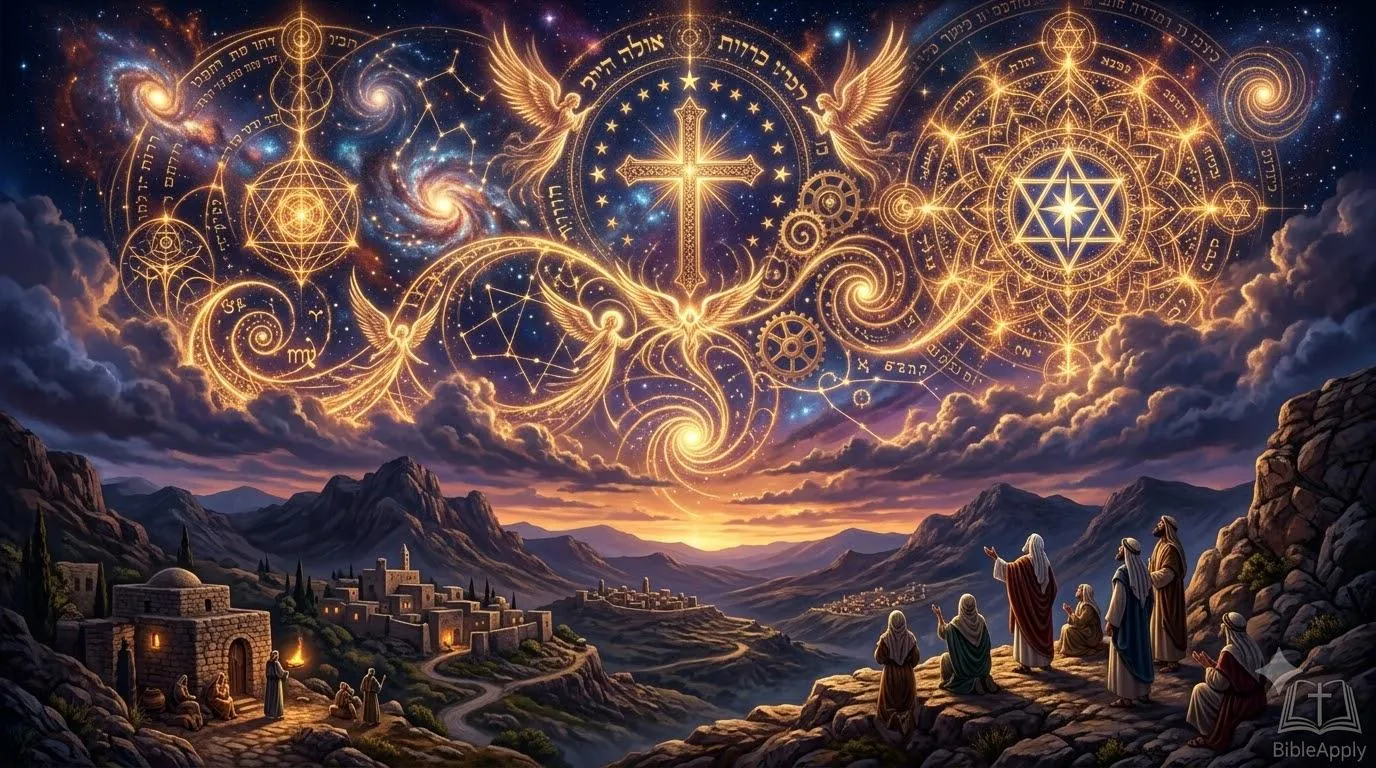
The book of Ezekiel opens in one of the darkest chapters of Israel’s history. It is the fifth year of King Jehoiachin’s exile (roughly 593 BC). The Babylonians, led by King Nebuchadnezzar, had already deported a significant portion of Judah’s elite—including a young priest named Ezekiel—to Babylon. Jerusalem had not yet been completely destroyed (that would happen in 586 BC), but the cultural, political, and spiritual devastation was profound. The exiled Israelites were living along the Chebar canal, a network of irrigation channels branching off the Euphrates River. They were utterly disoriented, asking agonizing questions: Has Yahweh abandoned us? Are the gods of Babylon stronger than the God of Israel? Can God still be worshipped away from the temple in Jerusalem?
Into this despair, God breaks in. Ezekiel 1 records one of the most spectacular, bewildering, and awe-inspiring visions in the entire biblical canon. Rather than a God confined to a geographical location or a man-made temple, Ezekiel encounters the living God on a cosmic chariot-throne, fully mobile, intensely active, and glorious beyond human comprehension. The message was clear and radical: Yahweh is not a localized deity who was defeated by Marduk (the Babylonian god). He is the sovereign Lord of the universe, and His presence can meet His people even in the unclean land of exile.
This opening chapter sets the trajectory for the entire prophetic book. Ezekiel’s vision of the glory of the Lord (Kavod Yahweh) is the anchor for everything that follows—his bizarre prophetic signs, his agonizing warnings of Jerusalem’s fall, and ultimately, his breathtaking promises of a new heart, a new spirit, and a new, eternal temple. Understanding Ezekiel 1 is essential not only for grasping the book of Ezekiel but for cultivating a biblical theology of God’s omnipresence, holiness, and sovereignty.
Historical and Prophetic Context
“Now it came to pass in the thirtieth year, in the fourth month, in the fifth day of the month, as I was among the captives by the river of Chebar, that the heavens were opened, and I saw visions of God.” (Ezekiel 1:1, KJV)
Ezekiel begins by marking the exact time and place of his calling. The “thirtieth year” likely refers to Ezekiel’s own age. In the Mosaic Law, thirty was the age a priest began his official service in the tabernacle or temple (Numbers 4:3). For Ezekiel, turning thirty in a pagan land without a temple to serve in must have been a moment of profound personal crisis and mourning. His life’s vocation seemed ruined.
Yet, precisely when Ezekiel should have been entering the earthly sanctuary in Jerusalem, “the heavens were opened,” and he was granted access to the ultimate, heavenly sanctuary. The Hebrew word for “visions” is mar’ot, indicating not just a dream, but a divine revelation, a pulling back of the curtain of reality. God meets Ezekiel in his deepest disappointment and repurposes his priestly calling into a prophetic one.
The Approaching Storm and the Four Living Creatures
“And I looked, and, behold, a whirlwind came out of the north, a great cloud, and a fire infolding itself, and a brightness was about it, and out of the midst thereof as the colour of amber, out of the midst of the fire.” (Ezekiel 1:4, KJV)
Ezekiel looks toward the north and sees a terrifying storm approaching. In ancient Near Eastern literature, storms are often associated with theophany—the appearance of a deity. The “whirlwind” (Hebrew: suphah) and the self-enfolding “fire” (esh) are classic biblical symbols of God’s unapproachable holiness and judgment (e.g., Mount Sinai in Exodus 19). For the Israelites, judgment historically came from the north (Jeremiah 1:14), as invading armies like Assyria and Babylon attacked from that direction. But this storm is not a Babylonian army; it is the God of Israel Himself.
If this resonates with you, our deep dive into Jeremiah 29:11 Meaning: For I Know the Plans I Have for You explores the scriptural foundation further.
The Cherubim: Guardians of Holiness
As the storm draws closer, Ezekiel perceives four terrifying “living creatures” (chayyot).
“As for the likeness of their faces, they four had the face of a man, and the face of a lion, on the right side: and they four had the face of an ox on the left side; they four also had the face of an eagle.” (Ezekiel 1:10, KJV)
Later in Ezekiel 10, these creatures are explicitly identified as cherubim. In biblical theology, cherubim are the guardians of God’s holy presence. They were placed at the entrance to the Garden of Eden (Genesis 3:24) and their images were woven into the veil of the tabernacle and carved on the Ark of the Covenant.
Their four faces hold profound symbolic weight:
- The Man: Represents intelligence, reason, and humanity, the crown of God’s earthly creation.
- The Lion: The king of wild beasts, representing majesty, strength, and ferocity.
- The Ox: The king of domesticated animals, representing tireless strength, service, and power.
- The Eagle: The king of the birds, representing swiftness, transcendent vision, and the ability to soar above the earth.
Together, these faces encompass the apex of all creation. They declare that all of creation—wild and tame, human and animal, earthbound and airborne—is subordinate to the Creator and exists to bear up His throne. The Early Church Fathers (such as Irenaeus) later saw these four faces as typological symbols of the four Gospels (Matthew as the lion, Mark as the ox, Luke as the man, John as the eagle), representing the full, multi-faceted witness to Jesus Christ.
Wings, Eyes, and Unswerving Motion
Ezekiel notes that they each have four wings—two covering their bodies (in reverence) and two stretched out, touching one another. They move with absolute precision, going “straight forward” wherever the Spirit (Ruach) directed them, without turning (Ezekiel 1:12). This signifies the unwavering, perfectly coordinated execution of God’s will. Unlike human plans which falter and veer, God’s divine purposes march forward with unstoppable, synchronized perfection.
Also Read:
- Joel 1 Summary & Meaning: The Devastating Locust Plague and the Call to Lament
- 2 Thessalonians 1 Summary & Meaning: Patience and Vengeance in Persecution
- 2 Timothy 1 Summary & Meaning: Fanning the Flame of Faith in a Dark World
The Wheels Within Wheels: The Cosmic Chariot
“The appearance of the wheels and their work was like unto the colour of a beryl: and they four had one likeness: and their appearance and their work was as it were a wheel in the middle of a wheel. … As for their rings, they were so high that they were dreadful; and their rings were full of eyes round about them four.” (Ezekiel 1:16, 18, KJV)
This is perhaps the most famous and baffling part of the vision: the “wheel within a wheel” (ophan betoch ophan). These glowing, beryl-colored (chrysolite) wheels touch the earth and are aligned alongside the cherubim.
The structure of intersecting wheels (like a gyroscope) allows the chariot to move instantly in any of the four directions without needing to pivot or turn. This represents God’s omnipresence and the boundless mobility of His sovereignty. God is not stuck in Jerusalem. His throne is a chariot, capable of traveling anywhere in the universe at the speed of lightning (v. 14).
Furthermore, the rims of the wheels are “full of eyes round about.” In the ancient world, eyes were symbols of knowledge and perception. This is a vivid depiction of God’s omniscience. Nothing escapes His gaze. Even in the dark, forgotten exile of Babylon, God sees His people. He sees the secret sins of the elders in Jerusalem, and He sees the tears of the captives by the Chebar canal. The Spirit of God animates the wheels; the physical mechanisms of the universe are perfectly responsive to the divine will.
The Expanse and the Throne
“And the likeness of the firmament upon the heads of the living creature was as the colour of the terrible crystal, stretched forth over their heads above.” (Ezekiel 1:22, KJV)
Above the cherubim and the wheels, Ezekiel sees an “expanse” or “firmament” (Hebrew: raqia, the same word used in Genesis 1 for the sky/heavens). It is described as “terrible crystal” or gleaming ice. This represents the barrier between the Creator and the creation, a floor of blinding, unapproachable purity that separates the holy God from everything beneath Him.
The Appearance of a Man
“And above the firmament that was over their heads was the likeness of a throne, as the appearance of a sapphire stone: and upon the likeness of the throne was the likeness as the appearance of a man above upon it.” (Ezekiel 1:26, KJV)
Ezekiel’s gaze is drawn continually upward. From the storm, to the creatures, to the wheels, to the crystal expanse, he finally looks upon the throne itself, blazing like lapis lazuli (sapphire). And seated on the throne is not a monstrous deity, but “the likeness as the appearance of a man” (demut k’mar’eh adam).
If this resonates with you, our deep dive into Psalm 91 Meaning: He Who Dwells in the Shelter explores the scriptural foundation further.
This is a breathtaking moment of theological anticipation. Why does the glorious God of the universe appear in human form? Theologically, this points backward to Genesis 1—humanity is made in the image of God. But more profoundly, it points forward to the Incarnation. This figure on the throne is a pre-incarnate Christophany—a manifestation of the second person of the Trinity, Jesus Christ. Long before the Word became flesh (John 1:14), the glory of God was intimately associated with human form. When Ezekiel sees the glory of God, he is catching a veiled glimpse of the glorious Christ who rules over all history.
The Rainbow of Covenant Faithfulness
“As the appearance of the bow that is in the cloud in the day of rain, so was the appearance of the brightness round about. This was the appearance of the likeness of the glory of the LORD. And when I saw it, I fell upon my face, and I heard a voice of one that spake.” (Ezekiel 1:28, KJV)
The vision culminates in an explosion of radiant fire, glowing metal, and blinding light, surrounded by a rainbow. The rainbow is a deeply significant theological symbol. First appearing in Genesis 9 after the flood, it is the sign of God’s covenant mercy, a promise that His judgment will not utterly destroy humanity.
Ezekiel was about to be given a ministry of harsh judgment, predicting the destruction of Jerusalem. But here, wrapping the throne of sovereign judgment, is the rainbow of covenant mercy. The visual message is profound: God’s wrath is real, but it is always framed by His enduring mercy and covenant faithfulness. He will punish Israel’s idolatry, but He will not abandon them forever.
Ezekiel’s only possible response is complete prostration. He falls on his face, undone by the holiness of God, ready to listen to the voice of the King.
3 Practical Applications from Ezekiel 1
For the modern believer, Ezekiel’s vision is not just a piece of ancient apocalyptic literature; it is a vital revelation of who God is.
1. God is Never Confined by Our Circumstances
The Israelites thought God was localized to the Jerusalem temple. When they lost the temple, they thought they lost God. Ezekiel 1 destroys this notion. The chariot-throne of God is infinitely mobile; He can show up in Babylon just as powerfully as in Jerusalem. Today, we often feel that God is absent when we are displaced—whether by a job loss, a medical diagnosis, the loss of a relationship, or a spiritual dry season. Ezekiel reminds us that there is no “exile” so remote that the glory of God cannot reach us there. He is the God who meets us by our own “Chebar canals.”
2. We Must Recover a Biblical Awe of God
Modern Christianity often heavily emphasizes the accessibility and friendliness of Jesus, which is true and glorious. However, we can easily lose the complementary truth of His terrifying holiness, sovereignty, and majesty. Ezekiel didn’t casually chat with God; the vision of the cosmic, fiery chariot drove him straight to the dirt in reverence. We need to recapture a high view of God—a God who rides on the storm, whose eyes see every secret, and whose holiness demands our absolute submission. Worship should involve both intimate love and trembling awe.
3. God’s Purposes are Unstoppable
The “wheels within wheels” and the perfectly synchronized movement of the cherubim remind us that history is not spiraling out of control. To the exiles, the world looked like chaos; Babylon seemed to be winning. But behind the veil of visible history, God is sovereignly orchestrating all events according to His perfect will. The chariot moves “straight forward.” When our world feels chaotic, we can rest in the omniscience (the eyes on the wheels) and the omnipotence (the almighty throne) of the One who rules over the kings of the earth. His purposes in your life, and in the world, will not be thwarted.
Also Read
- Galatians 1 Summary & Meaning: No Other Gospel
- 2 Samuel 1 Summary & Meaning: The Lament of the Anointed
- Amos 1 Summary & Meaning: The Lion’s Roar of Universal Justice
Read Ezekiel 1
Dive into the full scripture text for deeper study.
Chapter 2: Ezekiel's Call to Prophesy
He is warned not to fear their defiant words or threatening looks, even though he will dwell among scorpions and briers. God commands him to deliver His message faithfully, regardless of whether they choose to listen. Suddenly, a hand presents Ezekiel with a scroll written on both sides, filled entirely with words of lamentation, mourning, and woe.
Chapter 3: Eating the Scroll and the Watchman
The Spirit lifts Ezekiel, carrying him to the Jewish exiles at Tel-abib, where he sits in stunned silence for seven days. Afterward, God officially appoints him as a watchman over Israel. He is strictly warned that if he fails to warn the wicked, their blood will be on his hands. Finally, God makes him temporarily mute, allowing him to speak only when delivering prophetic words.
Chapter 4: The Siege of Jerusalem Symbolized
To symbolize the punishment of the people, Ezekiel is commanded to lie on his left side for 390 days for Israel, and then on his right side for 40 days for Judah. During this time, he eats only a meager, carefully weighed ration of mixed grains baked into bread. Though God initially commands him to bake it over human dung, He relents and allows cow dung, illustrating the severe defilement and famine awaiting Jerusalem.
Chapter 5: The Razor and the Scattered Hair
One third is burned in the center of his model city, representing those who will die of intense famine and plague. Another third is struck with the sword, symbolizing those who will fall in bloody battle. The final third is scattered to the wind, illustrating the exiles who will be dispersed. Only a tiny remnant is spared, tucked securely into his garment as a sign of future hope.
Chapter 6: Judgment on the Mountains of Israel
The corpses of the Israelites will be scattered around these very idols, utterly defiling the sanctuaries they once revered. As cities are laid waste and the land becomes desolate, God's righteous wrath will be poured out. Yet, in the midst of this destruction, God promises to spare a faithful remnant. The survivors will remember God in exile, loathing themselves for their spiritual adultery.
Chapter 7: The End Has Come
The day of doom arrives like a bursting rod of wickedness. The coming violence will be so complete that wealth will lose all its value; gold and silver will be thrown into the streets as worthless refuse because they cannot save anyone from God's wrath. As panic ensues and the temple is profaned by invaders, the people will desperately seek a vision from a prophet, but it will be too late.
Chapter 8: Visions of Abomination in the Temple
Digging through a wall, Ezekiel uncovers seventy elders of Israel secretly worshipping detestable animal engravings in the dark, foolishly believing God cannot see them. Next, he sees women weeping for Tammuz, a Babylonian fertility god. Finally, in the inner court, twenty-five men stand with their backs to the temple, brazenly bowing down to the sun. Because of these gross abominations, God declares He will deal with them in unyielding fury.
Chapter 9: The Executioners and the Mark
Once the faithful are marked, the executioners are ordered to strike down everyone else without pity, beginning with the corrupt elders at the sanctuary. As the slaughter begins, Ezekiel falls facedown in terror, pleading for the remnant of Israel. Yet God insists that the guilt of the land is exceedingly great and His justice must finally be served.
Chapter 10: God's Glory Departs the Temple
As the cherubim stand by, the awesome glory of the Lord physically departs from the threshold of the temple and moves to rest above them. The sound of their massive wings fills the outer court like the voice of Almighty God. With the wheels turning beside them, the cherubim lift off the ground, carrying the divine presence away from the desecrated sanctuary toward the east gate.
Chapter 11: Judgment and a Promise of Restoration
God responds with a beautiful promise of future hope. Though the Israelites have been scattered among foreign nations, God Himself will be their sanctuary. He promises to gather them, remove their stony hearts, and give them a tender heart of flesh and a new spirit, enabling them to obey His laws. Meanwhile, the glory of God ascends from the city and rests on the mountain to the east.
Chapter 12: The Exile Symbolized
God explains that this symbolizes the tragic fate of King Zedekiah and the people of Jerusalem. The king will attempt to flee through the wall at night, but he will be captured, blinded, and brought to Babylon, where he will die in darkness. Furthermore, God addresses the cynical proverb that prophecies are delayed, asserting that His words will be fulfilled immediately.
Chapter 13: Condemnation of False Prophets
God compares their lies to whitewashing a flimsy wall; when the storm of God's wrath hits, the wall will collapse and crush them. Ezekiel also denounces the false prophetesses who use magic charms and veils to manipulate people, hunting down souls for profit. God promises to tear away their magical bands, rescue His people from their deceptive grasp, and prove that He alone is the Sovereign Lord.
Chapter 14: Idolatry in the Heart
God outlines the absolute certainty of His judgment, stating that even if three incredibly righteous men—Noah, Daniel, and Job—were in the city, their righteousness would only save themselves, not the nation. Whether God sends famine, wild beasts, sword, or plague, Jerusalem will not escape. Yet, a small remnant will survive to comfort the exiles when they see God's justice.
Chapter 15: The Worthless Vine
God points out that once a vine is charred by fire, it becomes utterly worthless. In the exact same way, the unfaithful people of Jerusalem have failed to bear fruit and have become totally useless to God's purposes. Just as fire consumes the discarded vine, God will set His face against them, casting them into the fire of judgment to demonstrate His sovereignty and justice.
Chapter 16: The Unfaithful Bride
Tragically, Jerusalem used her God-given beauty and gifts to act like a brazen prostitute. She built pagan shrines, offered her children as fiery sacrifices to idols, and aggressively courted foreign nations like Egypt, Assyria, and Babylon. God declares He will strip her naked and let her lovers destroy her. Yet, remarkably, He promises to eventually remember His covenant and restore her.
Chapter 17: The Parable of the Two Eagles
However, the vine deceptively turns its roots toward a second eagle (Egypt) seeking water. God explains that Zedekiah broke his solemn oath to the king of Babylon, and therefore he will die as a captive in Babylon. Despite this betrayal, God promises to take a tender sprig from the highest cedar and plant it on a high mountain, a messianic promise of future restoration.
Chapter 18: Individual Accountability for Sin
He outlines three generations—a righteous father, a wicked son, and a righteous grandson—demonstrating that righteousness and wickedness are not inherited. A wicked person who repents will live, and a righteous person who turns to evil will perish. God takes no pleasure in the death of the wicked and pleads with Israel to repent and live.
Chapter 19: A Lament for Israel's Princes
The lioness then rears another cub, King Jehoiachin, who aggressively tears prey and ruins strongholds. He too is hunted by the nations, trapped, and dragged away to Babylon. Finally, Israel is compared to a once-flourishing vine planted by water. Its strong branches are broken off, dried up, and consumed by fire, leaving the vine stranded in a dry and thirsty desert.
Chapter 20: Israel's History of Rebellion
In the wilderness, He gave them His laws and Sabbaths, but they continually profaned them. Even the second generation rebelled against His statutes. Entering the Promised Land, they immediately turned to high places and pagan sacrifices. Because of their persistent idolatry, God vows to purge the rebels through the fire of the Babylonian exile, ultimately promising to gather the purified remnant back to their own land.
Chapter 21: The Sword of Judgment
The sword is polished, sharpened, and flashing like lightning, prepared for slaughter. The king of Babylon stands at the crossroads, using divination to decide whether to attack Rabbah of the Ammonites or Jerusalem. The omens point directly to Jerusalem. Because of Israel's guilt, the profane prince Zedekiah will lose his crown, and the city will be handed over to ruin.
Chapter 22: The Sins of Jerusalem
The city is rampant with extortion, sexual immorality, Sabbath-breaking, and bribery. Because they have entirely forgotten God, He promises to gather them into the city like metal inside a furnace and melt them with the intense fire of His wrath. God looks for just one person to stand in the gap and intercede for the land, but finds no one, sealing their fiery destruction.
Chapter 23: The Parable of Two Sisters
Instead of learning from her sister's demise, Oholibah became even more depraved. She lusted after the Babylonians, embracing their culture and idolatry. When she eventually grew disgusted with them, they turned against her. God declares He will rouse Jerusalem's former lovers to attack her from every side, exposing her nakedness and completely purging the land of its lewdness.
Chapter 24: The Boiling Pot and the Prophet's Wife
Tragically, God also tells Ezekiel that his beloved wife, the 'delight of his eyes,' will die suddenly. He is commanded not to mourn or weep for her publicly. This serves as a grim sign for Israel: when their beloved temple is destroyed, they will be too stunned by the judgment to even mourn.
Chapter 25: Prophecies Against Surrounding Nations
Edom is severely punished for its vengeful, ancient hatred toward Judah, taking cruel advantage of their crisis. Finally, the Philistines are judged for their relentless, spiteful attempts to destroy Israel. God promises to stretch out His hand in furious vengeance against all four nations, executing great judgments so they will definitively know that He is the Lord.
Chapter 26: Prophecy Against Tyre
King Nebuchadnezzar of Babylon will lead the assault, tearing down Tyre's walls and slaughtering its people. The once-glamorous city will be scraped bare like a rock, becoming a desolate place to spread fishing nets. The sheer violence of Tyre's sudden, catastrophic downfall will send shockwaves of terror through the coastal princes, causing them to strip off their royal robes.
Chapter 27: A Lament for Tyre
Tyre’s maritime empire traded with nations across the known world, dealing in ivory, ebony, silver, wheat, honey, and precious stones. However, despite its immense wealth and beauty, this glorious ship is destined for destruction. God prophesies that a fierce east wind will shatter the ship in the heart of the sea. When Tyre sinks with all its massive cargo and crew, the surrounding nations will wail in horrified disbelief.
Chapter 28: The Fall of the King of Tyre
The chapter then shifts into a poetic lament for the king of Tyre, describing him as a seal of perfection who once walked in Eden, adorned with every precious stone. Though initially blameless, his heart was corrupted by his vast trade and beauty. Consequently, God promises to cast him to the ground in fiery ruin. The chapter ends with a promise of Israel’s secure restoration.
Chapter 29: Prophecy Against Egypt
Because Egypt had been a flimsy 'staff of reed' that splintered when Israel leaned on it for support, God will bring a sword upon the land, leaving it desolate for forty years. Afterward, Egypt will be restored, but it will remain a lowly, insignificant kingdom that will never again rule over the nations or be a false hope for Israel.
Chapter 30: A Lament for Egypt
God details the utter destruction of Egypt's major cities, including Memphis, Thebes, and Pelusium. Idols will be smashed, and a dark cloud will cover the land. The Lord declares that He will strengthen the arms of the king of Babylon, placing His own sword in Nebuchadnezzar's hand to strike down Egypt. The groans of Pharaoh will be heard as his power is definitively broken.
Chapter 31: Pharaoh Compared to a Fallen Cedar
However, because of its towering arrogance, God handed this mighty tree over to foreign conquerors who chopped it down and left its branches broken in the valleys. Its descent into the realm of the dead terrified the nations. God warns Pharaoh that despite Egypt's current grandeur, it is destined for the exact same humiliating descent into the grave.
Chapter 32: Pharaoh's Descent into Sheol
In the second lament, Egypt is forcefully dragged down to the grim underworld, Sheol. There, Pharaoh finds himself surrounded by the uncircumcised graves of other fallen, terrifying empires—Assyria, Elam, Meshech, Tubal, and Edom. The once-feared armies are now reduced to silent, humiliated corpses. Pharaoh is comforted only by the miserable fact that he shares in their dreadful doom.
Chapter 33: The Watchman and the Fall of Jerusalem
Soon after, a fugitive from Jerusalem arrives with the devastating news: 'The city has fallen.' Though Ezekiel’s mouth is opened to speak, he warns the remaining survivors in the land that their persistent idolatry will lead to further desolation. Furthermore, God reveals that the exiles enjoy listening to Ezekiel's prophecies like a beautiful song, but stubbornly refuse to obey them.
Chapter 34: The True Shepherd of Israel
Because of this, God declares He is against the shepherds and will personally rescue His flock. In a beautiful promise, God vows to search for His lost sheep, bring them back to rich pastures, and bind up their wounds. He will place one Shepherd over them—His servant David (the Messiah)—who will feed and protect them. God will make a covenant of peace, showering His people with blessings and absolute security.
Chapter 35: Prophecy Against Edom
Because Edom shed the blood of the Israelites and arrogantly boasted against the Lord, God promises to turn Mount Seir into an absolute wasteland. While the rest of the earth rejoices in future restoration, Edom will be made a perpetual desolation. Their mountains will be filled with the slain, serving as a stark reminder of God's justice and His fierce protection over His chosen people.
Chapter 36: A New Heart and Spirit
To achieve this, God promises a radical internal transformation. He will sprinkle clean water on His people to cleanse them from their idolatry. He will remove their stubborn heart of stone and replace it with a responsive heart of flesh. By placing His Spirit within them, God will finally enable them to walk in His statutes. The ruined land will become like the glorious Garden of Eden.
Chapter 37: The Valley of Dry Bones
Ezekiel prophesies to the breath, and the Spirit enters the bodies, raising up a vast, living army. God explains this is His promise to resurrect the nation of Israel and bring them home. Ezekiel is then told to join two wooden sticks together—one for Judah and one for Joseph—symbolizing that God will reunite the divided kingdom under one King, the Messianic David, forever.
Chapter 38: Prophecy Against Gog
Driven by greed, this heavily armed horde will swarm the land like a dark cloud to plunder the unprotected villages. However, Gog’s attack is entirely orchestrated by God to display His supreme holiness to the nations. As Gog’s armies step onto the mountains of Israel, God’s blazing wrath will be ignited, triggering a devastating global earthquake and unleashing terrible judgments upon the invaders.
Chapter 39: The Destruction of Gog
The destruction is so immense that Israel will spend seven years burning the discarded weapons for fuel, and seven months burying the dead in the Valley of Hamon-gog to cleanse the land. Through this ultimate victory, God proves that Israel went into exile for their sins, not His weakness, and He promises never to hide His face from them again.
Chapter 40: Vision of the New Temple
The guide meticulously measures the dimensions of a magnificent, perfectly symmetrical new temple complex. He measures the massive outer wall, the intricate gateways with their guardrooms, the outer courtyard with its thirty chambers, and the gates leading to the inner court. The precise measurements convey a profound sense of divine order, holiness, and the intentional separation of the sacred from the profane.
Chapter 41: Measuring the Inner Sanctuary
They proceed to the Most Holy Place, the inner sanctuary, measuring its sacred dimensions. The guide also details the multi-tiered side chambers built into the outer wall of the temple, designed for the priests. Ezekiel observes the wooden altar of incense standing before the Lord. The overwhelming symmetry and careful design highlight the absolute purity required in the presence of God.
Chapter 42: The Holy Chambers for the Priests
Because of the intense holiness of the inner court, the priests must change out of their ministering garments in these chambers before stepping out to mingle with the people. Finally, the guide measures the entire outer perimeter of the temple area, revealing a massive square wall. This strict boundary emphasizes the vital separation between the holy sanctuary and the common, unholy ground outside.
Chapter 43: The Glory of the Lord Returns
As the glory fills the temple, God speaks from within, declaring that this is the place of His throne where He will dwell among Israel forever, demanding they put away their idolatry. Ezekiel is instructed to describe the temple's design to the people so they will be ashamed of their sins. The chapter concludes with precise instructions for the altar of sacrifice.
Chapter 44: Ordinances for the Priests
God decrees that the Levites who previously strayed into idolatry will be demoted to performing menial temple duties. However, the faithful priests, the sons of Zadok, are granted the exclusive privilege of ministering before the Lord. God gives strict regulations for these priests regarding their linen garments, their marriages, and their crucial duty to teach the people.
Chapter 45: The Holy District and the Prince
God severely warns the future princes of Israel to stop oppressing the people and to practice honest weights and measurements. The prince is tasked with providing the required animals, grain, and oil for the national feasts, Sabbaths, and daily offerings, ensuring the continuous spiritual rhythm of the nation is perfectly maintained.
Chapter 46: Rules for Worship and Inheritance
To maintain order and reverence, worshippers entering the temple through the north gate must exit through the south, and vice versa; no one may turn around. The prince is also given rules about inheritance, ensuring he does not steal land from the common people to give to his sons. Finally, Ezekiel is shown the holy kitchens where the priests must boil the guilt offerings.
Chapter 47: The River of Healing
This life-giving river flows into the desolate Arabah and empties into the stagnant Dead Sea, miraculously turning its toxic salt waters fresh and teeming with fish. Along the riverbanks grow supernatural trees that bear fresh fruit every month and have leaves for healing. God then defines the specific borders of the restored Promised Land.
Chapter 48: The Division of the Land
In the center is the sacred district, containing the temple, the priests' lands, the Levites' lands, and the city. The remaining southern tribes—Benjamin, Simeon, Issachar, Zebulun, and Gad—receive their portions below the holy district. The book concludes with a description of the city's twelve gates, named after the tribes, and reveals its magnificent new name: 'The LORD Is There.'
Conclusion
We hope this chapter-by-chapter summary of Ezekiel has helped you better understand God's Word. To continue your study, explore our other Bible Chapter Summaries or read our detailed Verse Meanings.