Exodus Chapter Summaries
A complete, chapter-by-chapter guide to the Book of Exodus. Read deep dives into the meaning, historical context, and modern application of every chapter.
Jump to Chapter
Welcome to our complete guide to the Book of Exodus. Below you will find a chapter-by-chapter summary that flows through the entire narrative, helping you understand the context, meaning, and application of this profound book.
Chapter 1: The Oppression of a Growing Nation
Introduction: Setting the Stage for Redemption
The Book of Exodus (from the Greek ἔξοδος, meaning “departure” or “way out”) opens not with a triumphant march, but with a profound transition. It serves as the vital connective tissue between the patriarchal narratives of Genesis and the formation of the nation of Israel. Historically, Exodus begins exactly where Genesis ends—with the family of Jacob (Israel) settling in the fertile land of Goshen in Egypt to escape a severe regional famine. In Genesis, God’s dealings were primarily with individuals and families—Abraham, Isaac, Jacob, and Joseph. However, as we open the scroll of Exodus, the scope dramatically widens. Over the course of approximately 400 years, this small, insular family of seventy individuals miraculously multiplies into a vast multitude, fulfilling the grand Abrahamic covenant that God would make Abraham into a great nation (Genesis 12:2).
Culturally and historically, this period represents a massive shift in the geopolitical landscape of the Ancient Near East. While the Israelites were initially welcomed as honored guests because of Joseph’s administrative brilliance and life-saving foresight, time has a way of erasing memory. A dynastic change in Egypt—likely the rise of the native Egyptian New Kingdom after the expulsion of the foreign Hyksos rulers—brought sweeping paranoia. The new regime viewed this rapidly growing, distinct ethnic group not as descendants of a national hero, but as a severe national security threat. The geopolitical atmosphere shifted from hospitality to intense hostility.
In Exodus 1, we see the collision of two opposing forces: the unstoppable, covenantal blessing of God upon His people, and the brutal, systemic oppression of a worldly empire. This chapter masterfully sets the stage for the greatest redemptive event in the Old Testament. It poses a vital theological question: Will the oppressive power of Pharaoh successfully thwart the promises of Yahweh? As we examine Exodus 1, we will discover that God’s sovereignty is most brilliantly displayed against the dark backdrop of human tyranny, and that even in the most crushing circumstances, He is actively at work preserving His remnant.
The Unstoppable Blessing of God (Exodus 1:1-7)
The text begins by carefully listing the names of the sons of Israel who entered Egypt. This genealogical bridge is not mere historical filler; it is deeply theological. The Hebrew title for the Book of Exodus is Shemot (שְׁמוֹת), which literally translates to “Names,” derived from the opening phrase, “These are the names…” By listing these names, the author (Moses) inextricably links the story of Exodus to the promises of Genesis. God knows His people by name, and He is about to act on their behalf. The transition from a family (the seventy souls) to a nation is formally underway.
The Fulfillment of the Cultural Mandate
“And the children of Israel were fruitful, and increased abundantly, and multiplied, and waxed exceeding mighty; and the land was filled with them.” (Exodus 1:7, KJV)
Verse 7 is one of the most structurally dense and theological statements in the chapter. The author piles up five distinct Hebrew verbs of growth to describe the population explosion of the Israelites:
- Parah (פָּרָה) - To be fruitful.
- Sharats (שָׁרַץ) - To swarm or teem (often used of fish or insects, denoting massive proliferation).
- Rabah (רָבָה) - To multiply or increase.
- Atsam (עָצַם) - To grow mighty or numerous.
- Male (מָלֵא) - To fill.
This exact linguistic cluster is an intentional, unmistakable echo of Genesis 1:28—the original Cultural Mandate given to Adam and Eve: “Be fruitful and multiply, and fill the earth.” What Adam failed to do, and what Noah’s descendants struggled to do, the family of Abraham is now doing precisely in the midst of a pagan land. This is the unmistakable fingerprint of God’s blessing. The multiplication of Israel is not a biological accident; it is the deliberate, sovereign fulfillment of the covenant promise made to Abraham, Isaac, and Jacob. No environment, no matter how hostile, can arrest the life-giving power of Yahweh.
This topic connects with Jeremiah 29:11 Meaning: For I Know the Plans I Have for You, one of the most-searched biblical questions today.
The Rise of a Paranoid Tyrant (Exodus 1:8-14)
The narrative takes a sharp and terrifying turn in verse 8. The memory of Joseph’s salvation of Egypt is lost to the political winds of time, paving the way for systemic persecution.
“Now there arose up a new king over Egypt, which knew not Joseph. And he said unto his people, Behold, the people of the children of Israel are more and mightier than we: Come on, let us deal wisely with them; lest they multiply, and it come to pass, that, when there falleth out any war, they join also unto our enemies, and fight against us, and so get them up out of the land.” (Exodus 1:8-10, KJV)
The Politics of Fear and Historical Revisionism
The phrase “knew not Joseph” implies more than mere historical ignorance; it suggests a deliberate disassociation or a refusal to acknowledge the historical debt owed to Joseph’s administration. Joseph had literally saved Egypt from utter destruction during a seven-year famine, centralizing the wealth and power of the nation under the Pharaoh. The new Pharaoh’s “forgetfulness” is a calculated political revisionism. When societies decide to turn against God’s people, they often begin by rewriting or ignoring history, stripping away the positive contributions of believers to justify their new animosity. Pharaoh’s reaction is birthed out of intense paranoia. He looks at the blessing of God (the multitude of Israelites) and interprets it as a curse and a threat. This is a classic hallmark of worldly empires: what God calls “good,” the world often labels as “dangerous.”
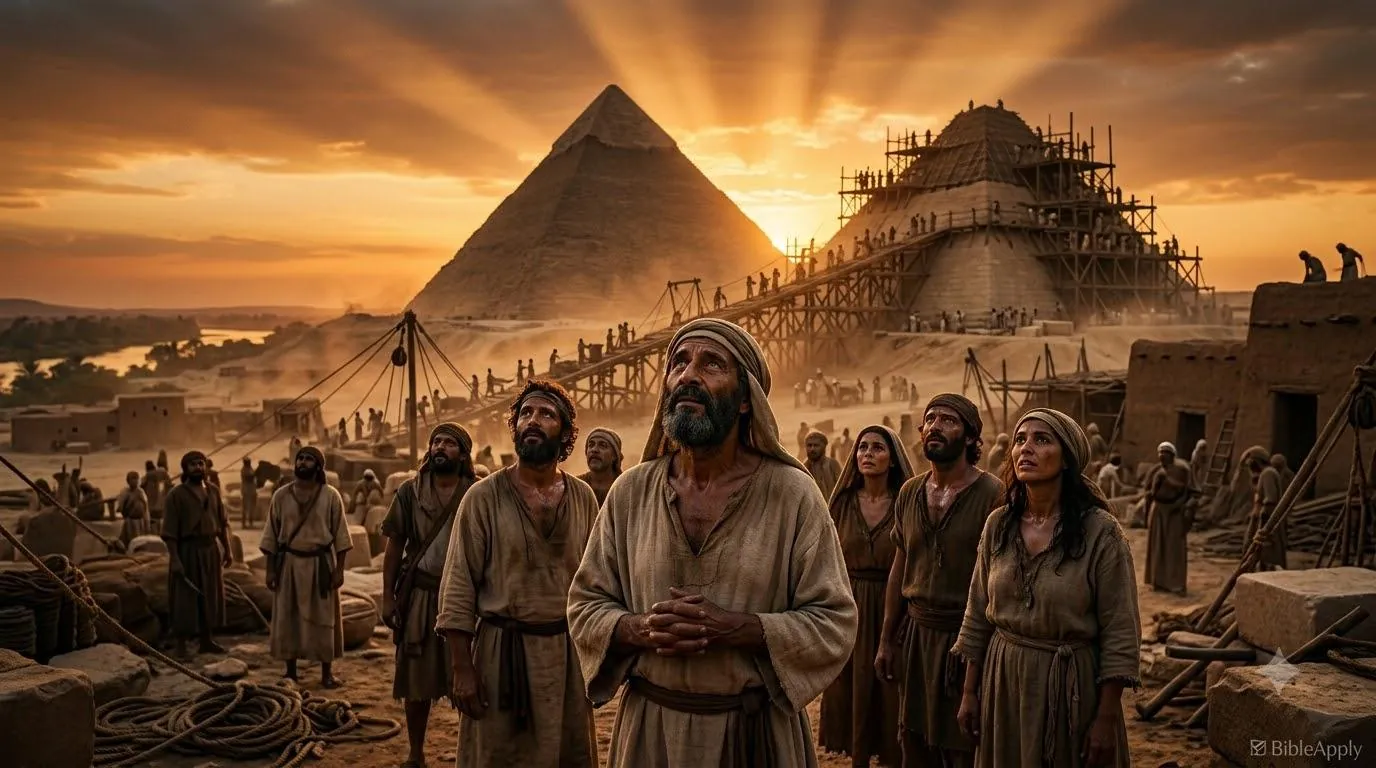
Pharaoh proposes to “deal wisely” (Hebrew: chakam, חָכַם) with the Israelites. However, this is not divine wisdom; it is demonic cunning. It is a shrewd, calculated, and systematic program of marginalization and state-sponsored slavery. The goal is to break the spirit of the Israelites, strip them of their wealth, and curb their population through backbreaking, exhausting labor. The building of the store cities, Pithom and Raamses, was designed to crush their morale and utilize them as expendable assets of the state.
The Irony of Affliction
“But the more they afflicted them, the more they multiplied and grew. And they were grieved because of the children of Israel.” (Exodus 1:12, KJV)
Herein lies the profound theological irony of Exodus 1. Pharaoh’s attempt to suppress God’s covenant people achieves the exact opposite result. The Hebrew word for “afflicted” is anah (עָנָה), meaning to humble, oppress, or bow down. Yet, the text states that the more they were oppressed, the more they multiplied. The world’s crushing weight acts only as a fertilizer for the seed of God’s promise. You cannot bury a seed that God intends to grow. The Egyptians’ grief and dread only intensified as they watched their oppressive strategies fail completely.
The Egyptians subjected the Israelites to avodah kashah (עֲבֹדָה קָשָׁה)—hard, rigorous service or bondage. The word avodah (work/service) becomes a central, defining theme in the entire Book of Exodus. The ultimate conflict between Pharaoh and Yahweh is over who receives the avodah of Israel. Pharaoh demands their bitter slavery; God demands their holy worship (which shares the exact same Hebrew root word). God intends to liberate His people from the forced avodah of Egypt so that they might freely offer avodah (worship) to Him in the wilderness at Mount Sinai.
Also Read:
The Courage of Shiphrah and Puah (Exodus 1:15-22)
When systematic slavery and hard labor fail to stop the supernatural population growth, Pharaoh escalates his cruelty to horrific heights: state-mandated infanticide. He commands the Hebrew midwives to secretly kill every newborn male child upon the birthstool.
If you want to explore this further, our in-depth guide on isaiah 41 10 breaks this down verse by verse.
“And the king of Egypt spake to the Hebrew midwives, of which the name of the one was Shiphrah, and the name of the other Puah… But the midwives feared God, and did not as the king of Egypt commanded them, but saved the men children alive.” (Exodus 1:15, 17, KJV)
The Theology of Civil Disobedience
Shiphrah and Puah are two of the most unsung heroes in biblical history. It is highly significant, and perhaps deeply ironic, that the author deliberately records the names of these two lowly, marginalized women, while the “great and mighty” Pharaoh of Egypt remains nameless throughout the entire book. In God’s economy, the names of the faithful are inscribed in eternity, while the names of tyrants are blotted out into historical obscurity.
These women exhibit what the Bible calls “the fear of God” (Hebrew: yirat Elohim, יִרְאַת אֱלֹהִים). The fear of God is not a paralyzing, cowering terror, but a profound, reverential awe of Yahweh that supersedes the fear of any earthly monarch or consequence. They weighed the chilling command of the most powerful man on earth against the moral law of the Creator, and they chose to obey God. This stands as one of the earliest and clearest biblical examples of righteous civil disobedience. When the laws of men directly and unambiguously contradict the laws of God, the believer’s highest allegiance belongs to heaven.
The Gospel Connection: The True Israel
As we read of Pharaoh’s decree to slaughter the male infants, we are immediately drawn forward into the New Testament narrative. This dark decree mirrors the future actions of King Herod, who, threatened by the birth of the Messiah, ordered the slaughter of the innocents in Bethlehem (Matthew 2:16-18). In both instances, a tyrannical ruler attempts to exterminate God’s promised deliverer. Yet, just as Moses was supernaturally preserved from Pharaoh’s wrath to become the mediator of the Old Covenant, Jesus Christ was preserved from Herod’s wrath to become the Mediator of the New Covenant. Jesus is the true and better Israel, succeeding where the nation failed, and emerging from Egypt to lead a global exodus from the ultimate bondage of sin and death.
If this resonates with you, our deep dive into Psalm 91 Meaning: He Who Dwells in the Shelter explores the scriptural foundation further.
The Reward of Faith
“Therefore God dealt well with the midwives: and the people multiplied, and waxed very mighty. And it came to pass, because the midwives feared God, that he made them houses.” (Exodus 1:20-21, KJV)
Because the midwives bravely protected the families of Israel at great personal risk, God built up “houses” (families, dynasties, and legacies) for them. God always honors those who honor Him. His eyes roam the earth seeking those whose hearts are fully committed to Him, even in the darkest cultural moments.
The chapter concludes with Pharaoh’s desperate, public, and horrific edict: commanding all his people to cast every newborn Hebrew boy into the Nile River (Exodus 1:22). This sets a deeply ominous tone for the nation. The very river that was the source of life and economic prosperity for Egypt was to become a watery grave for the Hebrews. Yet, it also perfectly positions the narrative for the miraculous birth and salvation of Moses in Chapter 2, who ironically will be saved through the very waters Pharaoh intended for destruction.
3 Practical Applications from Exodus 1
The profound historical and theological truths of Exodus 1 echo loudly into our modern lives. The God who oversaw the multiplication of Israel in the bitter kilns of Egypt is the same God who guides, protects, and grows His Church today. Here are three highly practical takeaways for the modern believer:
1. The Blessing of God Cannot Be Stopped by Human Opposition
When we face intense cultural pushback, systemic oppression, or personal hardship, we often fall into the trap of fearing that God’s plan has been derailed. Exodus 1 teaches us a vital spiritual law: God’s promises are entirely independent of favorable circumstances. Just as the Israelites multiplied more when they were oppressed, the Church often thrives most deeply under intense pressure. We must fundamentally trust that no modern Pharaoh, political ideology, or cultural trend can thwart the ultimate, victorious purposes of Yahweh. The gates of hell will not prevail against His people.
2. We Must Cultivate a Holy “Fear of God” Above the Fear of Man
The midwives, Shiphrah and Puah, faced a terrifying life-or-death scenario. Defying Pharaoh meant risking their own brutal execution. Yet, their reverence for God was larger than their fear of the king. In our modern context, we are frequently pressured to compromise biblical ethics to appease secular mandates, workplace cultures, or societal norms. We must regularly ask ourselves: Whose approval are we living for? Cultivating a true, healthy fear of the Lord empowers us to act with bold, righteous courage even when it costs us dearly. True faith always requires a willingness to stand apart from the crowd.
3. God Works Through the Faithfulness of the “Insignificant”
Pharaoh possessed massive armies, golden chariots, and absolute political power. Yet, God bypassed all of that and used two humble, working-class midwives to completely subvert the machinery of an empire. You do not need a massive platform, immense wealth, or cultural influence to be used mightily by God. Everyday obedience in the shadows—choosing to protect the vulnerable, speaking truth in a small setting, or faithfully doing what is right when no one is looking—is precisely how God builds His kingdom. He delights in using the weak things of the world to confound the mighty (1 Corinthians 1:27). Your quiet faithfulness has eternal significance.
Also Read
- Philemon 1 Summary & Meaning: The Radical Call of Christian Brotherhood
- Nahum 1 Summary & Meaning: The Majesty and Wrath of a Jealous God
- 2 Corinthians 1 Summary & Meaning: The God of All Comfort and the ‘Yes’ in Christ
Read Exodus 1
Dive into the full scripture text for deeper study.
Chapter 2: The Deliverer is Born and Exiled
Growing up in the royal court, Moses eventually witnesses the harsh beatings of his fellow Hebrews. In a burst of righteous anger, he kills an Egyptian taskmaster and hides the body. When he realizes his crime is known, Moses flees for his life to the land of Midian. There, he rescues the daughters of Jethro, marries Zipporah, and settles into the quiet life of a shepherd while Israel continues to groan in slavery.
Chapter 3: The Burning Bush and the Divine Name
When Moses hesitates, asking what name he should give the Israelites when they ask who sent him, God reveals His eternal name: 'I AM WHO I AM' (Yahweh). He assures Moses that the elders will listen, but warns that Pharaoh will fiercely resist until struck by God's mighty hand.
Chapter 4: Signs, Doubts, and a Return to Egypt
With his family and the staff of God in hand, Moses departs Midian for Egypt. On the journey, a mysterious encounter underscores the vital importance of covenant obedience, prompting Zipporah to circumcise their son. Moses and Aaron reunite in the wilderness and gather the elders of Israel, who believe and worship God upon seeing the miraculous signs.
Chapter 5: Bricks Without Straw
In retaliation for their request, Pharaoh drastically increases the slaves' workload. He decrees that they will no longer be provided straw to make bricks, yet they must maintain their previous daily quota. The Israelite foremen are beaten when they inevitably fail. In despair, the foremen blame Moses and Aaron for making them a stench in Pharaoh's eyes, leading a deeply discouraged Moses to cry out to God for an explanation.
Chapter 6: The Promise of Deliverance Renewed
Moses delivers this message of hope to the Israelites, but their spirits are so crushed by cruel bondage that they refuse to listen. God then commands Moses and Aaron to go back to Pharaoh, establishing the lineage of Levi to confirm the authority of these two chosen deliverers.
Chapter 7: The First Strike: Blood in the Nile
The next morning, Moses meets Pharaoh by the Nile River and initiates the first plague. Aaron strikes the water with his staff, and the entire river turns to blood. The fish die, the water becomes undrinkable, and a foul stench covers the land. Even so, the Egyptian magicians manage to replicate this sign with their secret arts, and Pharaoh's heart remains stubbornly hardened, just as God had spoken.
Chapter 8: Frogs, Gnats, and Flies
The third plague follows without warning as Aaron strikes the dust, turning it into gnats that torment people and animals. The magicians fail to replicate this, confessing it is 'the finger of God,' yet Pharaoh ignores them. A fourth plague of flies is sent, swarming the Egyptians but miraculously sparing the land of Goshen where the Israelites live. Pharaoh feigns a compromise but once again hardens his heart when the flies are removed.
Chapter 9: Plagues on Livestock, Skin, and Crops
God sends a devastating seventh plague: a catastrophic hailstorm mixed with lightning, the worst in Egypt's history. It destroys unprotected men, animals, and crops. Terrified, Pharaoh confesses his sin, acknowledging God's righteousness. But as soon as Moses prays and the storm ceases, Pharaoh brazenly retracts his promise and continues his defiance.
Chapter 10: Locusts and Thick Darkness
After a superficial apology from Pharaoh and the removal of the locusts, God sends the ninth plague: a thick, tangible darkness that envelops Egypt for three days, paralyzing the nation. The Israelites, however, have light in their dwellings. Pharaoh offers to let the people go if they leave their flocks behind, but Moses refuses. Enraged, Pharaoh banishes Moses under threat of death.
Chapter 11: The Final Warning
Moses then delivers a chilling final warning to Pharaoh: at midnight, Yahweh Himself will move through Egypt, and every firstborn son will die—from the firstborn of Pharaoh on the throne to the firstborn of the slave girl at the mill, along with all the firstborn of the cattle. A great wailing will echo throughout the land, distinguishing God's people from the Egyptians. Moses leaves Pharaoh's presence burning with anger as the stage is set for deliverance.
Chapter 12: The Passover and the Exodus
A great cry rises in Egypt as death strikes every household. A broken Pharaoh finally summons Moses and Aaron, urging them to leave immediately with all they possess. The Israelites depart quickly, taking the wealth of Egypt with them. After 430 years of captivity, a mixed multitude of roughly two million people marches out in triumph, embarking on the great Exodus.
Chapter 13: Consecration and the Pillar of Cloud
Instead of leading the people along the shorter, heavily guarded coastal route through Philistine territory, God guides them on a desert road toward the Red Sea to avoid premature warfare. Fulfilling an ancient promise, Moses brings the bones of Joseph with them. The Lord intimately guides their journey, going ahead of them in a towering pillar of cloud by day and a radiant pillar of fire by night, providing constant direction and assurance.
Chapter 14: The Parting of the Red Sea
Moses tells them to stand firm and watch God's deliverance. The pillar of cloud moves behind them, plunging the Egyptians into darkness while giving light to Israel. Moses stretches out his hand, and a strong east wind parts the waters, creating a dry path. After Israel crosses safely, the waters crash down upon the pursuing Egyptian army, utterly destroying them and proving Yahweh's supreme power.
Chapter 15: The Song of Deliverance and Bitter Waters
The jubilation is soon tested. Journeying into the Desert of Shur for three days without finding water, they arrive at Marah, only to discover the water is hopelessly bitter. The people grumble against Moses. God instructs Moses to throw a specific piece of wood into the water, miraculously making it sweet. God then promises that if they obey Him, He will be their healer.
Chapter 16: Bread from Heaven
God uses the manna to test their obedience. They are to gather only what they need for each day; any excess hoarded rots and breeds worms. However, on the sixth day, they must gather a double portion, which miraculously stays fresh through the Sabbath, establishing a holy day of rest. An omer of manna is preserved in a jar for future generations to see God's provision.
Chapter 17: Water from the Rock and the Defeat of Amalek
Shortly after, the Amalekites launch an unprovoked attack on Israel. Joshua leads the army into battle while Moses stands on a hill with the staff of God. As long as Moses's hands are raised, Israel prevails; when they lower, Amalek advances. Aaron and Hur support Moses's hands until sunset, securing a complete victory. God vows to utterly blot out the memory of Amalek.
Chapter 18: Jethro's Wisdom for the Wilderness
The next day, Jethro observes Moses sitting from morning till evening to settle disputes for the entire nation. Recognizing this is unsustainable, Jethro wisely advises Moses to delegate authority. He suggests appointing capable, God-fearing men as leaders over thousands, hundreds, fifties, and tens to handle minor issues, leaving only the most difficult cases for Moses. Moses humbly accepts the counsel, lightening his heavy burden of leadership.
Chapter 19: The Arrival at Mount Sinai
God commands the people to consecrate themselves for three days. On the third day, the Lord descends upon Mount Sinai in a terrifying display of fire, thick smoke, thunder, lightning, and a deafening trumpet blast. The mountain shakes violently. God warns Moses to strictly enforce the boundaries so the people do not perish by breaking through to gaze at His holy presence.
Chapter 20: The Ten Commandments
The terrifying manifestation of God's presence—thunder, lightning, and a smoking mountain—leaves the people trembling with fear. They beg Moses to act as their mediator, afraid that hearing God directly will kill them. Moses reassures them that God is testing them to instill a holy fear that keeps them from sin. Moses then approaches the thick darkness where God dwells to receive further instructions.
Chapter 21: The Book of the Covenant: Laws of Justice
The laws heavily emphasize justice and the sanctity of human life. Capital punishment is prescribed for premeditated murder, kidnapping, and striking or cursing one's parents. The principle of 'eye for an eye, tooth for a tooth' is instituted to ensure punishments are strictly proportionate to the crime and not excessively cruel. Detailed regulations are also provided for personal injuries caused by negligence, such as an ox goring a person or someone falling into an uncovered pit.
Chapter 22: Laws of Property and Social Responsibility
The text shifts to profound social responsibilities. God strictly forbids the mistreatment of foreigners, widows, and orphans, warning that His wrath will burn against anyone who exploits the vulnerable. Charging interest to the poor is outlawed, and pledges taken for loans must not endanger a person's life. Finally, the Israelites are commanded to honor God with their firstfruits and firstborn, dedicating themselves to living as a holy people.
Chapter 23: Justice, Sabbaths, and the Angel's Guidance
The annual pilgrimage festivals are instituted: Unleavened Bread, Harvest, and Ingathering. God concludes this section of the covenant by promising to send His Angel ahead of them to conquer the Canaanites and bring them to the Promised Land. He warns them not to rebel against this Angel and strictly forbids them from making covenants with the inhabitants or bowing down to their gods.
Chapter 24: The Covenant Sealed with Blood
Following this, Moses, Aaron, Nadab, Abihu, and seventy elders ascend the mountain. In a stunning display of grace, they see a vision of the God of Israel standing on a pavement of sapphire, and they eat and drink in His presence unharmed. God then summons Moses further up the mountain to receive the stone tablets. Moses enters the cloud of God's consuming fire, remaining there for forty days and nights.
Chapter 25: The Ark and the Table
The first item detailed is the Ark of the Covenant, a gold-plated wooden chest meant to hold the stone tablets. It is covered by the Atonement Cover (Mercy Seat), featuring two golden cherubim, where God will meet with Moses. God also provides detailed instructions for a gold-plated table for the Bread of the Presence and an ornate, pure gold lampstand (Menorah) shaped like a blossoming almond tree.
Chapter 26: The Curtains and Frames of the Tabernacle
The structural framework consists of upright frames made of acacia wood overlaid with gold, resting in silver bases and secured with golden crossbars. A beautifully embroidered veil is to separate the Holy Place from the Most Holy Place (Holy of Holies). The Ark of the Covenant will sit behind the veil, while the table and lampstand will be positioned in the Holy Place.
Chapter 27: The Bronze Altar and the Courtyard
The Tabernacle is to be surrounded by a rectangular courtyard enclosed by finely twisted linen curtains supported by bronze pillars and silver hooks. The entrance to the courtyard will be a beautifully embroidered curtain facing east. Finally, God commands that the Israelites must supply pure, clear olive oil to keep the lamps in the Holy Place burning continuously from evening till morning as a lasting ordinance.
Chapter 28: The Sacred Garments of the Priesthood
Attached to the ephod is the Breastpiece of Decision, embedded with twelve precious stones representing the twelve tribes, and containing the Urim and Thummim used for seeking God's guidance. The garments also include a blue robe with bells and pomegranates on the hem, a woven tunic, and a turban featuring a pure gold plate engraved with the words, 'Holy to the Lord,' symbolizing Aaron bearing the guilt of the Israelites.
Chapter 29: The Ordination of the Priests
The ritual requires a series of sacrifices: a bull for a sin offering to purify the altar, a ram for a burnt offering symbolizing total dedication, and a second ram for an ordination offering. Blood from the second ram is applied to the right ear, thumb, and big toe of the priests, signifying their bodies are fully devoted to God's service. The chapter concludes with the institution of the daily burnt offerings—one lamb in the morning and one at twilight—promising that God will dwell among His people.
Chapter 30: The Altar of Incense and the Atonement Money
God mandates a census tax: every man twenty years and older must pay a half-shekel ransom for his life to avoid a plague, emphasizing that rich and poor are equal before God. Instructions are also given for a large bronze basin for the priests to wash their hands and feet before entering the sanctuary. The chapter concludes with precise recipes for the sacred anointing oil and the holy incense, which are strictly forbidden for common use.
Chapter 31: Artisans Called and the Sabbath Rest
Before concluding His instructions, God heavily emphasizes the observance of the Sabbath. The Sabbath is declared a critical sign of the covenant between God and Israel; anyone who desecrates it by working must be put to death. After finishing His communion with Moses, God hands him the two tablets of the Testimony, inscribed by the very finger of God.
Chapter 32: The Golden Calf and Moses' Intercession
Descending the mountain, Moses is infuriated by the idolatry. He shatters the stone tablets, destroys the calf, grinds it to powder, and forces the Israelites to drink it. The Levites rally to Moses and execute three thousand rebels. Moses then returns to the Lord, offering his own life as an atonement for the people's grievous sin.
Chapter 33: The Tent of Meeting and God's Glory
Moses boldly pleads with God, arguing that without God's direct presence, they are no different from any other nation on earth. God relents, promising that His Presence will go with them. Emboldened, Moses asks to see God's glory. God agrees to show His goodness but protects Moses in the cleft of a rock, allowing him to see only His back, as no one can see God's face and live.
Chapter 34: New Tablets and a Radiant Face
God formally renews the covenant, warning Israel again to destroy pagan altars in Canaan and to observe the sacred feasts. Moses fasts on the mountain for another forty days while writing down the covenant. When he descends, Moses is completely unaware that his face is shining radiantly from speaking with God. This divine glow frightens the Israelites, prompting Moses to wear a veil when speaking with them.
Chapter 35: The Freewill Offering and Skillful Hands
The response is overwhelming. Men and women willingly bring their jewelry and raw materials, while skilled women spin yarn and cloth. Moses officially introduces Bezalel and Oholiab, emphasizing that God has filled them with the Spirit, giving them the skill, intelligence, and knowledge required for all the intricate craftsmanship. Furthermore, God has given them the ability to teach and lead the other artisans in this massive construction project.
Chapter 36: Construction Begins on the Sanctuary
Moses issues a command restraining the people from bringing any more offerings, as the materials are more than sufficient. The artisans meticulously craft the inner structure of the Tabernacle. They weave the ten inner curtains of fine linen with embroidered cherubim, fashion the outer coverings of goat hair and ram skins, and construct the gold-plated acacia wood frames and silver bases that will uphold the sacred tent.
Chapter 37: Crafting the Ark, Table, and Menorah
He continues by crafting the gold-plated table for the Bread of the Presence, complete with its pure gold plates, dishes, and bowls. Bezalel then hammers the magnificent lampstand (Menorah) out of a single piece of pure gold, styling its cups like almond blossoms. Finally, he constructs the gold-plated Altar of Incense to be placed before the veil, and prepares the sacred anointing oil and pure, fragrant incense according to the art of the perfumer.
Chapter 38: The Altar, Courtyard, and Inventory of Metals
They construct the courtyard, enclosing it with finely twisted linen curtains hung on bronze pillars with silver hooks. At the end of the chapter, an exact inventory is recorded of all the metals used in the construction, overseen by Ithamar, son of Aaron. The massive amounts of gold, silver, and bronze gathered from the offerings and the census tax highlight the immense wealth and dedication invested into God's sanctuary.
Chapter 39: The Priestly Garments Completed
They make the blue robe of the ephod, complete with alternating bells and woven pomegranates along the hem. The tunics, turbans, and sashes are also finished, along with the pure gold plate engraved with 'Holy to the Lord.' When all the work is finished, the Israelites bring everything to Moses. Moses inspects every detail, confirming that they have done exactly as the Lord commanded, and he blesses them.
Chapter 40: The Tabernacle Erected and the Glory of the Lord
Moses then anoints the Tabernacle and its furnishings with oil to consecrate them, and he washes and clothes Aaron and his sons for the priesthood. Once Moses finishes all the work, a magnificent cloud covers the Tent of Meeting, and the radiant glory of the Lord physically fills the Tabernacle. God's presence is so overwhelming that even Moses cannot enter. The cloud remains over the Tabernacle by day and fire by night, guiding the Israelites on all their journeys.
Conclusion
We hope this chapter-by-chapter summary of Exodus has helped you better understand God's Word. To continue your study, explore our other Bible Chapter Summaries or read our detailed Verse Meanings.