1 Peter Chapter Summaries
A complete, chapter-by-chapter guide to the Book of 1 Peter. Read deep dives into the meaning, historical context, and modern application of every chapter.
Welcome to our complete guide to the Book of 1 Peter. Below you will find a chapter-by-chapter summary that flows through the entire narrative, helping you understand the context, meaning, and application of this profound book.
1 Peter Chapter 1 Summary
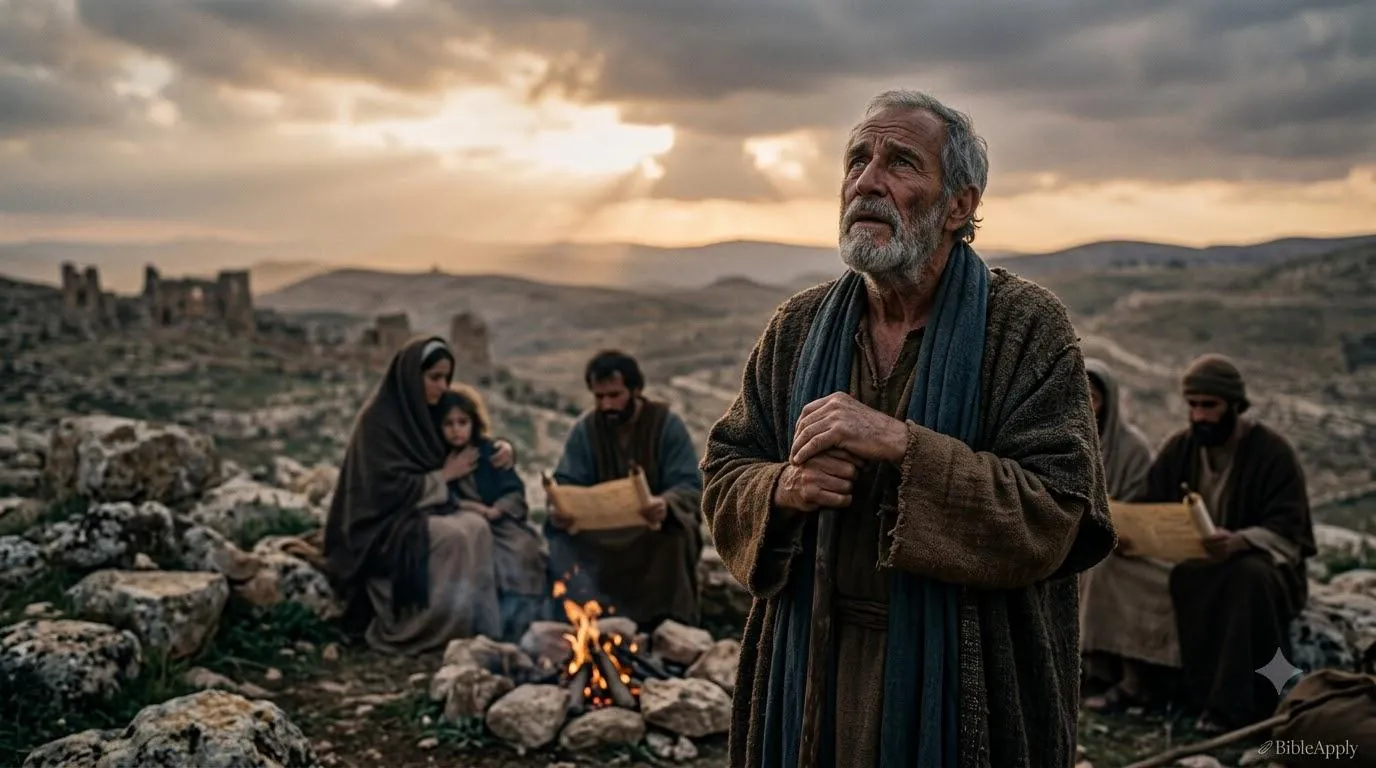
The First Epistle of Peter is a masterpiece of apostolic encouragement, penned by the Apostle Peter—the fisherman turned fisher of men, the denier who became a pillar of the early church. Written around AD 62–64, shortly before the outbreak of intense, state-sponsored persecution under Emperor Nero, this letter is addressed to “elect exiles of the Dispersion” (1 Peter 1:1). These were believers scattered across Pontus, Galatia, Cappadocia, Asia, and Bithynia—regions in modern-day Turkey. They were predominantly Gentile Christians who were beginning to experience significant social ostracism, slander, and localized hostility because their newfound allegiance to Jesus Christ put them at odds with Greco-Roman culture.
To believers feeling the crushing weight of alienation and suffering, Peter does not offer hollow platitudes or immediate promises of earthly rescue. Instead, he drops a profound theological anchor. In Chapter 1, Peter sets the stage by completely redefining their identity and their reality. He insists that their suffering is not a sign of God’s abandonment, but rather a temporary, refining fire that prepares them for an eternal, unfading inheritance. Before he gives them a single moral command, Peter spends the first half of the chapter overwhelming them with the staggering realities of what God the Father, God the Son, and God the Holy Spirit have accomplished on their behalf.
In a world that marginalized them, Peter reminds these early Christians that they are the chosen center of cosmic history, recipients of a salvation that Old Testament prophets painstakingly searched for and that angels currently long to behold. First Peter Chapter 1 is a clarion call to look past the temporal pain of exile and fix our eyes entirely on the grace that is to be brought to us at the revelation of Jesus Christ. It bridges the gap between deep, robust theology and the gritty reality of living faithfully in a hostile world.
The Trinitarian Election of Exiles (1 Peter 1:1–2)
Peter opens his letter by instantly establishing the dual citizenship of his readers. On earth, they are parepidēmois—a Greek word meaning “sojourners,” “aliens,” or “exiles.” They are temporary residents in a foreign land, which explains why the world rejects them. However, in the spiritual realm, they are the “elect” (chosen).
“Elect according to the foreknowledge of God the Father, through sanctification of the Spirit, unto obedience and sprinkling of the blood of Jesus Christ: Grace unto you, and peace, be multiplied.” (1 Peter 1:2, KJV)
This greeting is one of the most concentrated Trinitarian statements in the New Testament. Peter shows that a believer’s salvation is the synchronized work of the entire Godhead:
- The Foreknowledge of God the Father: This is not mere prescience (knowing facts before they happen), but a prior, relational, determining love. God chose them before the foundation of the world.
- The Sanctification of the Spirit: The Holy Spirit actively sets believers apart, making the Father’s eternal decree a historical reality in their lives.
- The Sprinkling of the Blood of Jesus Christ: This evokes Exodus 24, where the old covenant was ratified by sprinkling blood on the people. Christ’s blood inaugurates the New Covenant, cleansing the believer and securing their obedience.
By grounding their identity in the Triune God, Peter assures these suffering Christians that their current hardships are not an accident; they are safely held in the sovereign plan of a God who knew them and chose them from eternity past.
A Living Hope and an Imperishable Inheritance (1 Peter 1:3–5)
Following the greeting, Peter erupts into a doxology—a hymn of praise. He blesses God for the mechanism of their salvation: the new birth.
“Blessed be the God and Father of our Lord Jesus Christ, which according to his abundant mercy hath begotten us again unto a lively hope by the resurrection of Jesus Christ from the dead, To an inheritance incorruptible, and undefiled, and that fadeth not away, reserved in heaven for you…” (1 Peter 1:3-4, KJV)
The Greek word for “begotten us again” or “caused us to be born again” is anagennēsas. This rebirth is not achieved by human effort but flows strictly from God’s “abundant mercy.” The result of this new birth is a “living hope.” Biblical hope is not a wishful desire (e.g., “I hope it doesn’t rain today”); it is a confident expectation of a guaranteed future. It is a living hope because it is anchored to a living Savior—it was secured “by the resurrection of Jesus Christ from the dead.”
If this resonates with you, our deep dive into Jeremiah 29:11 Meaning: For I Know the Plans I Have for You explores the scriptural foundation further.
Because the Savior conquered death, the believer’s inheritance is immune to death and decay. Peter describes this inheritance with three powerful, alpha-privative Greek adjectives:
- Aphtharton (incorruptible/imperishable): It cannot be destroyed by external forces, rust, or time.
- Amianton (undefiled): It cannot be polluted by sin or moral decay.
- Amaranton (unfading): It will never lose its glory, like a flower that withers.
While the believers are suffering on earth, their inheritance is safely “reserved in heaven,” and conversely, they themselves are “kept by the power of God through faith” (v. 5) until that final salvation is revealed.
The Crucible of Joy: Suffering as a Refining Fire (1 Peter 1:6–9)
Having established their glorious future, Peter turns to their painful present. He acknowledges a profound Christian paradox: simultaneous joy and grief.
“Wherein ye greatly rejoice, though now for a season, if need be, ye are in heaviness through manifold temptations: That the trial of your faith, being much more precious than of gold that perisheth, though it be tried with fire, might be found unto praise and honour and glory at the appearing of Jesus Christ…” (1 Peter 1:6-7, KJV)
Peter does not minimize their pain; they are truly “grieved” (lypēthentes) by “various trials.” However, he bounds their suffering with two limitations: it is only “for a season” (temporary), and it is “if need be” (purposeful). God is not a cosmic sadist; He allows suffering to achieve a specific end.
That end is the proving of their faith. Peter uses the metallurgical imagery of refining gold. Gold is precious, but it is ultimately perishable. When gold is subjected to fire, the dross and impurities are burned away, leaving only pure metal. In the same way, the fiery trials of life burn away our self-reliance, idolatry, and temporal attachments, proving the genuineness of our faith.
The ultimate goal of this tested faith is that it will result in “praise, honor, and glory” when Jesus returns. Even though they have not physically seen Jesus, they love Him, and they experience a joy that is “inexpressible and filled with glory” (v. 8), knowing they are receiving the final salvation of their souls.
The Marvel of the Cosmos: Prophets and Angels (1 Peter 1:10–12)
Lest the readers think their salvation is a minor, historical footnote, Peter zooms out to a sweeping redemptive-historical perspective.
Also Read:
“Of which salvation the prophets have enquired and searched diligently, who prophesied of the grace that should come unto you: Searching what, or what manner of time the Spirit of Christ which was in them did signify, when it testified beforehand the sufferings of Christ, and the glory that should follow.” (1 Peter 1:10-11, KJV)
Peter reveals that the Old Testament prophets who wrote of the coming Messiah did not fully comprehend the timeline of their own prophecies. They wrote under the inspiration of the “Spirit of Christ,” predicting two seemingly contradictory realities: a Suffering Servant (e.g., Isaiah 53, Psalm 22) and a Conquering King of glory. They diligently searched to understand who this would be and when this would happen. God revealed to them that they were not serving themselves, but future generations—the very believers Peter is now addressing.
Peter crowns this section with an astonishing statement: these are “things the angels desire to look into” (v. 12). The Greek word used here for “look into” is parakypsai, which means to stoop down, bend over, and peer intently. The angelic host, who dwell in the presence of unapproachable light, stand on the balcony of heaven, craning their necks to observe the unfolding drama of human redemption. The gospel of grace is the greatest spectacle in the universe, and these marginalized exiles are the direct beneficiaries of it.
The Call to Holiness and Holy Reverence (1 Peter 1:13–21)
At verse 13, a major shift occurs in the epistle. Having laid a massive theological foundation, Peter pivots to application, marked by the word “Therefore.” Because of all that God has done, there is a way believers must now live.
“Wherefore gird up the loins of your mind, be sober, and hope to the end for the grace that is to be brought unto you at the revelation of Jesus Christ; As obedient children, not fashioning yourselves according to the former lusts in your ignorance: But as he which hath called you is holy, so be ye holy in all manner of conversation.” (1 Peter 1:13-15, KJV)
“Gird up the loins of your mind” is an ancient idiom. Men in the ancient Near East wore long robes. To run, fight, or work, they had to pull up the hem of their robe and tuck it into their belt. Peter is telling believers to eliminate mental flabbiness. They must prepare for intellectual and spiritual action by fixing their hope entirely on the return of Christ.
He then commands them to break the mold of their past life. They must no longer be shaped by the “former lusts” (desires) they had in their ignorance. Instead, their new standard of living is the very character of God. Quoting Leviticus 11:44, Peter issues the mandate: “Be holy, for I am holy.” Holiness means being distinct, set apart, and morally pure in “all manner of conversation” (every aspect of daily conduct).
How are they motivated to live this way? By remembering the astronomical cost of their redemption.
“Forasmuch as ye know that ye were not redeemed with corruptible things, as silver and gold, from your vain conversation received by tradition from your fathers; But with the precious blood of Christ, as of a lamb without blemish and without spot.” (1 Peter 1:18-19, KJV)
The word “redeemed” (elutrōthēte) was commonly used in the slave market, referring to the price paid to buy a captive’s freedom. Believers were not bought out of their empty, inherited way of life with cheap, perishable commodities like silver or gold. They were bought with the ultimate currency: the precious blood of the sinless Son of God, the ultimate Passover Lamb. Recognizing this infinite cost should produce a healthy, reverential “fear” (awe and holy respect) during the time of their exile (v. 17).
Believers seeking more clarity will appreciate our full study on Psalm 91 Meaning: He Who Dwells in the Shelter.
The Imperishable Word and Fervent Love (1 Peter 1:22–25)
In the final section of Chapter 1, Peter links their theological rebirth and their call to holiness with a highly practical outcome: how they treat one another.
If you want to explore this further, our in-depth study on romans 8 28 breaks this down verse by verse.
“Seeing ye have purified your souls in obeying the truth through the Spirit unto unfeigned love of the brethren, see that ye love one another with a pure heart fervently: Being born again, not of corruptible seed, but of incorruptible, by the word of God, which liveth and abideth for ever.” (1 Peter 1:22-23, KJV)
Holiness is not meant to result in isolated monasticism; it must result in community. Because they have been purified by obeying the truth of the gospel, they are now capable of “unfeigned” (hypocrisy-free) brotherly love (philadelphia). But Peter pushes them further, commanding them to love one another “fervently” (ektenōs - a word meaning to stretch to the limit, like an athlete straining for the finish line) with unconditional agapē love.
This deep, enduring love is possible because of the nature of their new birth. They were born of an “imperishable seed”—the living Word of God. Peter concludes the chapter by contrasting human frailty with the eternal nature of Scripture, quoting Isaiah 40:6-8. All human glory, empires, and persecutors are like grass that withers and flowers that fall. But the Word of the Lord, the very gospel preached to them, remains forever. Therefore, the believers’ new life and new community are as indestructible as the Word that birthed them.
3 Practical Applications from 1 Peter 1
1. Embrace Your Identity as an Exile
If you feel increasingly out of step with the morals, priorities, and ideologies of modern culture, do not be surprised. Peter reminds us that this world is not our ultimate home; we are spiritual exiles and sojourners. Stop trying to find total comfort and total acceptance in a world that is fundamentally opposed to your King. Expect friction, but let your exile status free you to live exclusively for the approval of heaven.
2. Do Not Waste Your Suffering
When trials, sickness, slander, or hardships come, the natural human reaction is to ask God to remove them immediately. 1 Peter 1 challenges us to view our trials through the lens of a refiner’s fire. God uses the heat of suffering to burn away our reliance on money, status, relationships, and self, proving the absolute genuineness of our faith. When you are in the furnace, ask God not merely for deliverance, but to purify your faith so that it yields praise and glory when Jesus returns.
3. “Gird Up” Your Mind by Anchoring Hope in the Future
Spiritual victory begins in the mind. If we casually consume the fear, anxiety, and empty desires of the culture around us, our spiritual robes will get tangled, and we will stumble. We must actively “gird up” our minds by taking every thought captive and forcing our perspective onto the future grace we will receive at Christ’s return. When your hope is fully fixed on your imperishable, unfading inheritance in heaven, the temporal temptations and sufferings of today lose their grip on your heart.
Also Read
- Zechariah 1 Summary & Meaning: The Call to Return and the Comforting Visions
- Luke 1 Summary & Meaning: The Dawn of Redemption and the Breaking of Silence
- Ephesians 1 Summary & Meaning: The Believer’s Cosmic Identity
Read 1 Peter 1
Dive into the full scripture text for deeper study.
1 Peter Chapter 2 Summary
A detailed narrative summary for 1 Peter 2 is currently being prepared by our theologians.
1 Peter Chapter 3 Summary
A detailed narrative summary for 1 Peter 3 is currently being prepared by our theologians.
1 Peter Chapter 4 Summary
A detailed narrative summary for 1 Peter 4 is currently being prepared by our theologians.
1 Peter Chapter 5 Summary
A detailed narrative summary for 1 Peter 5 is currently being prepared by our theologians.
Conclusion
We hope this chapter-by-chapter summary of 1 Peter has helped you better understand God's Word. To continue your study, explore our other Bible Chapter Summaries or read our detailed Verse Meanings.