Zephaniah Chapter Summaries
A complete, chapter-by-chapter guide to the Book of Zephaniah. Read deep dives into the meaning, historical context, and modern application of every chapter.
Welcome to our complete guide to the Book of Zephaniah. Below you will find a chapter-by-chapter summary that flows through the entire narrative, helping you understand the context, meaning, and application of this profound book.
Chapter 1: The Coming Day of the Lord
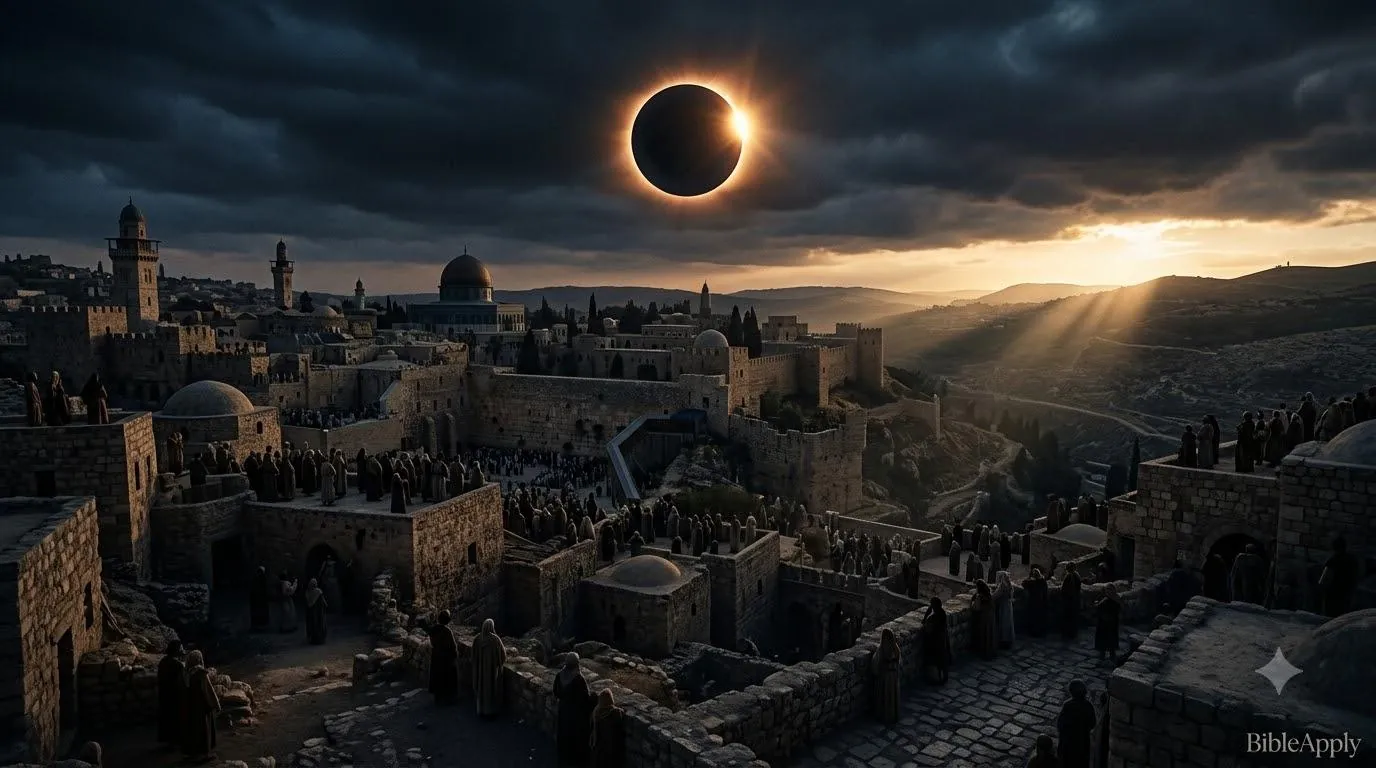
The book of Zephaniah opens with a startling, almost breathless announcement of universal devastation. To understand the gravity of Zephaniah chapter 1, we must first step into the historical and cultural context of ancient Judah during the late 7th century BC. Zephaniah ministered during the reign of King Josiah (640–609 BC), a period historically marked by both profound spiritual darkness and, eventually, a sweeping national revival. However, when Zephaniah first begins to prophesy, Josiah’s reforms have either not yet begun or have not yet penetrated the hardened hearts of the populace. The nation of Judah had been plunged into unprecedented depths of idolatry and syncretism by Josiah’s predecessors, Manasseh and Amon.
The spiritual climate was suffocating. The people had not completely abandoned Yahweh; instead, they had adopted a deadly syncretism, worshiping the God of Israel alongside Canaanite fertility gods and Assyrian astral deities. Into this compromised, complacent society, Zephaniah’s voice crashes like a thunderclap. The prophet’s very name, Tsephanyah in Hebrew, meaning “Yahweh has hidden” or “Yahweh has protected,” introduces a quiet undercurrent of hope that will surface later in the book, but chapter 1 is almost exclusively devoted to a terrifying, imminent reality: the Yom Yahweh, the “Day of the Lord.”
Chapter 1 sets the stage for the entire book by establishing the absolute sovereignty and uncompromising holiness of God. It is a chapter that systematically dismantles the false securities of Judah—their wealth, their political alliances, their syncretic religious practices, and their spiritual apathy. As we journey through this opening chapter, we are confronted with the terrifying reality of divine justice, a vivid undoing of creation, and ultimately, our desperate need for a Savior who can endure the Day of the Lord on our behalf.
The Decree of Universal Decreation (Zephaniah 1:2-3)
Zephaniah does not ease his audience into his message. He begins with a shocking pronouncement of universal, cosmic judgment that extends far beyond the borders of Judah.
“I will utterly consume all things from off the land, saith the LORD. I will consume man and beast; I will consume the fowls of the heaven, and the fishes of the sea, and the stumblingblocks with the wicked; and I will cut off man from off the land, saith the LORD.” (Zephaniah 1:2-3, KJV)
A Reversal of Genesis 1
To the ancient Hebrew ear, these opening verses would sound hauntingly familiar, but in a terrifyingly inverted way. Zephaniah uses language that intentionally mirrors the creation account in Genesis 1 and the flood narrative in Genesis 6-7. In Genesis, God created humanity, beasts, birds, and fish. Here, God announces the systematic un-creation of the world, listing the spheres of creation in reverse order of their dominion. The Hebrew verb asaph (often translated as “consume” or “sweep away”) conveys a complete gathering up for destruction.
This is not a localized disaster; it is an eschatological decreation. The scope of human sin is so severe that it has polluted the very fabric of the created order. The “stumblingblocks with the wicked” likely refers to the idols that had caused humanity to stumble. God is declaring that He will purge the earth of its idolatry and the idolaters alike. This sweeping judgment sets the theological baseline: God is the sovereign Creator, and because He is perfectly just, He must judge the rebellion of His creation.
Judgment Begins at the House of God (Zephaniah 1:4-6)
After casting a vision of universal judgment, the prophetic lens suddenly zooms in with agonizing precision on Judah and its capital, Jerusalem. The universal Judge is also the covenant Lord, and He holds His own people to the highest standard.
Many believers also ask Jeremiah 29:11 Meaning: For I Know the Plans I Have for You — and the Bible gives us a clear, powerful answer.
“I will also stretch out mine hand upon Judah, and upon all the inhabitants of Jerusalem; and I will cut off the remnant of Baal from this place, and the name of the Chemarims with the priests; And them that worship the host of heaven upon the housetops; and them that worship and that swear by the LORD, and that swear by Malcham;” (Zephaniah 1:4-5, KJV)
The Sin of Syncretism
The phrase “stretch out mine hand” is often used in the Exodus narrative to describe God’s judgment against the Egyptians. Shockingly, God is now stretching out His hand against His own covenant people. The reason is explicitly detailed: rampant, deeply entrenched idolatry and syncretism.
Zephaniah systematically lists the objects of God’s wrath in Jerusalem. First, the “remnant of Baal”—the persistent worship of the Canaanite storm and fertility god. Second, the Chemarim, a specific Hebrew term used for idolatrous, illegitimate priests who operated alongside the corrupt Levitical priesthood. Third, the astral worshipers who bowed to the “host of heaven” on their rooftops, an Assyrian practice that had infiltrated Judah during Manasseh’s reign.
But perhaps the most insidious group is mentioned in verse 5: those who “swear by the LORD, and that swear by Malcham” (or Milcom, the national god of the Ammonites). This is the fatal disease of syncretism. The people of Judah had not formally rejected Yahweh; they had simply added other gods to their pantheon. They wanted the covenant blessings of Yahweh while hedging their bets with the fertility and prosperity gods of the surrounding nations. Zephaniah’s message is clear: God demands exclusive allegiance. A divided heart is entirely unacceptable to the holy God of Israel.
The Apathetic Apostates
“And them that are turned back from the LORD; and those that have not sought the LORD, nor enquired for him.” (Zephaniah 1:6, KJV)
The judgment also falls on the apostate and the apathetic. These are individuals who may not be actively bowing to Baal on the rooftops, but they live in practical atheism. They have “turned back” from following God, demonstrating no desire to seek His face or inquire of His will. In God’s eyes, spiritual apathy is just as damnable as blatant idolatry.
The Silence of the Sacrifice (Zephaniah 1:7-13)
As the reality of this judgment sets in, Zephaniah commands absolute silence before the Sovereign Lord.
“Hold thy peace at the presence of the Lord GOD: for the day of the LORD is at hand: for the LORD hath prepared a sacrifice, he hath bid his guests.” (Zephaniah 1:7, KJV)
The Day of the Lord (Yom Yahweh)
Here we encounter the central theological theme of the book: the Day of the Lord (Yom Yahweh in Hebrew). In popular Israelite theology, the Day of the Lord was eagerly anticipated as a day of vindication, a time when God would destroy Israel’s enemies and exalt His people. But the prophets, beginning with Amos and continuing powerfully with Zephaniah, radically inverted this expectation. The Day of the Lord is indeed a day of divine intervention, but because Judah has become like the pagan nations in their sin, the Day of the Lord will be a day of judgment against them.
Also Read:
Zephaniah uses a chilling metaphor: God has prepared a sacrifice, and He has invited His guests. In a shocking twist, the sacrificial victim is not an animal on the altar; the victim is the rebellious nation of Judah. The “guests” invited to consume the sacrifice are the invading Babylonian armies whom God will use as the instruments of His wrath.
Judgment on the Elites and the Complacent
The judgment will be comprehensive, sweeping through all strata of society. The royal officials and the king’s sons (who were adopting foreign customs and clothing) will be punished for their pride and cultural compromise (1:8). The merchants and the wealthy in the Maktesh (the market district of Jerusalem) will wail as their economic foundations are destroyed (1:10-11).
“And it shall come to pass at that time, that I will search Jerusalem with candles, and punish the men that are settled on their lees: that say in their heart, The LORD will not do good, neither will he do evil.” (Zephaniah 1:12, KJV)
God promises to search Jerusalem with lamps, leaving no dark corner unexposed. He specifically targets those who are “settled on their lees.” This is a vivid metaphor drawn from winemaking. If wine is left sitting on its dregs (its lees) for too long without being poured from vessel to vessel, it becomes thick, syrupy, and stagnant. Zephaniah is describing spiritual stagnation. These people are entirely complacent, comfortably numbed by their wealth. Their practical theology is summed up in their inner dialogue: “The LORD will not do good, neither will he do evil.” They view God as impotent, distant, and irrelevant to their daily lives. Zephaniah shatters this deistic illusion, promising that their wealth will become plunder and their houses a desolation (1:13).
The Great Day of Wrath (Zephaniah 1:14-18)
The chapter crescendos into one of the most terrifying descriptions of divine judgment in all of Scripture.
“The great day of the LORD is near, it is near, and hasteth greatly, even the voice of the day of the LORD: the mighty man shall cry there bitterly. That day is a day of wrath, a day of trouble and distress, a day of wasteness and desolation, a day of darkness and gloominess, a day of clouds and thick darkness…” (Zephaniah 1:14-15, KJV)
The Dies Irae
These verses form the basis for the famous medieval Latin hymn, the Dies Irae (Day of Wrath). Zephaniah piles on Hebrew words describing distress, ruin, and darkness. The repetition emphasizes the inescapable and overwhelming nature of this event. The “mighty man” (the valiant warrior) will be reduced to bitter weeping because his strength is utterly useless against the Creator of the universe.
The description of “darkness and gloominess” again hearkens back to decreation. The light of Genesis 1 is being extinguished as judgment falls.
Believers seeking more clarity will appreciate our full study on Psalm 91 Meaning: He Who Dwells in the Shelter.
“Neither their silver nor their gold shall be able to deliver them in the day of the LORD’S wrath; but the whole land shall be devoured by the fire of his jealousy: for he shall make even a speedy riddance of all them that dwell in the land.” (Zephaniah 1:18, KJV)
The chapter concludes by stripping away the final false security of the wealthy. When the Day of the Lord arrives, silver and gold will be absolutely worthless. Financial portfolios, economic stability, and hoarded wealth offer zero protection against the “fire of his jealousy.” God’s jealousy here is not a petty human emotion; it is the righteous, burning zeal of a Husband for the exclusive love and fidelity of His covenant bride. Because they have prostituted themselves with idols, the land will be consumed.
Theological Analysis and the Gospel Connection
At first glance, Zephaniah 1 appears to be entirely devoid of hope. It is a relentless, suffocating pronouncement of doom. How do we reconcile this terrifying depiction of God’s wrath with the love and grace revealed in the New Testament?
First, we must understand that God’s wrath is the necessary corollary to His goodness. Because God is perfectly good, perfectly holy, and perfectly just, He must react with violent opposition to everything that destroys His creation and degrades His image-bearers. If God did not judge sin, oppression, idolatry, and evil, He would not be good.
But the true theological depth of Zephaniah 1 is found when we look forward to the ultimate Day of the Lord at Calvary. On the cross, the sky grew dark at midday (Matthew 27:45)—a literal fulfillment of the “day of darkness and gloominess” that Zephaniah prophesied. At the cross, Jesus Christ, the true and better Israel, became the sacrificial victim. He absorbed the full weight of the Dies Irae. The fierce anger of the Lord, the fire of His jealousy, was poured out upon the Son of God so that it would not have to be poured out upon us.
Zephaniah’s name means “Yahweh has hidden” or “protected.” The terrifying message of Zephaniah 1 is meant to drive us to the only safe hiding place in the universe. We cannot hide in our wealth, our religious rituals, or our apathy. Our only hiding place is in Christ. When we are hidden in Him, the Day of the Lord transforms from a day of terror into a day of ultimate salvation and vindication.
3 Practical Applications from Zephaniah 1
While Zephaniah was writing to an ancient audience facing the Babylonian invasion, the spiritual principles echo powerfully into our modern lives as we await the final Day of the Lord at Christ’s [second coming](/questions/can-the-date-of-jesus-return-be-calculated/).
If you want to explore this further, our in-depth study on romans 8 28 breaks this down verse by verse.
- Eradicate Syncretism from Your Life: The people of Judah tried to worship Yahweh on the Sabbath and Baal during the week. Modern syncretism looks different, but it is just as deadly. Are you trying to blend allegiance to Christ with the worship of modern idols like career success, political ideologies, money, or comfort? God demands an undivided heart. Take a ruthless inventory of your life and dismantle any altars you have built alongside your worship of God.
- Guard Against Spiritual Complacency: Zephaniah’s warning to those “settled on their lees” is a stark wake-up call to the modern church. It is dangerously easy to become comfortable, spiritually stagnant, and practically atheistic—living as though God is distant and will not intervene in our daily affairs. We must stir up our affections for Christ through daily repentance, robust prayer, and deep immersion in Scripture so that our faith remains vibrant and active.
- Rest in Christ as Your Only Shelter: The great Day of the Lord is approaching. Zephaniah 1 makes it abundantly clear that no amount of money, status, or self-righteousness will deliver us on that day. Let the terrifying reality of God’s holy justice drive you to the cross. Place your complete trust in Jesus Christ, the one who absorbed the wrath of God on your behalf. In Him, you are safely hidden and perfectly protected for eternity.
Also Read
- 1 Timothy 1 Summary & Meaning: Guarding the Gospel and the Grace of God
- Philippians 1 Summary & Meaning: Joy, Chains, and the Unstoppable Gospel
- Deuteronomy 1 Summary & Meaning: The Tragedy of Unbelief
Read Zephaniah 1
Dive into the full scripture text for deeper study.
Chapter 2: A Call to Repentance and Judgment on the Nations
Philistia will be utterly forsaken, its cities of Gaza, Ashkelon, and Ekron left desolate and eventually inherited by the remnant of Judah. Moab and Ammon will become a wasteland like Sodom and Gomorrah for their pride and taunts against God's chosen nation. The judgment stretches even further, striking the Cushites to the south and the mighty Assyrian empire to the north, leaving its proud capital, Nineveh, an abandoned ruin for wild animals. God makes it clear that He is sovereign over all the earth.
Chapter 3: Rebellion, Purification, and a Song of Joy
God will remove the proud and arrogant from Jerusalem, leaving behind a meek and humble remnant who will trust in the Lord and speak no deceit. The book concludes with a beautiful, triumphant song of joy. God commands Israel to sing and rejoice because He has taken away their judgments and cast out their enemies. In a breathtaking image of divine love, the Lord is pictured in their midst as a mighty savior who rejoices over His people with gladness and quiets them with His love, promising to restore their fortunes and make them a praise among all the earth.
Conclusion
We hope this chapter-by-chapter summary of Zephaniah has helped you better understand God's Word. To continue your study, explore our other Bible Chapter Summaries or read our detailed Verse Meanings.