

Quick Answer: The strongest biblical evidence points to the Church being rescued prior to the Great Tribulation. God repeatedly promises to deliver believers from His appointed wrath.
When headlines broadcast wars, pandemics, or natural disasters, believers instinctively turn to the books of Revelation and Daniel. The anxiety is real. Are we approaching the end times? Will the Church have to endure the horrors of the Great Tribulation?
This question touches our instinct for survival and our desire for assurance in an unpredictable future. Many Christians picture terrifying imagery of the Antichrist, the Mark of the Beast, and unparalleled persecution.
A theological tension exists here. We know God rescues His children, yet church history proves Christians are not exempt from suffering and martyrdom. To reconcile this, we must distinguish between general suffering in a fallen world and the specific era of divine judgment known as the Great Tribulation.
We need to look closely at the original languages and the Jewish context of prophetic timelines. Tracing the distinction between the Church and Israel helps clarify what God’s Word actually promises.
A Pastoral Note: It breaks my heart how much panic the book of Revelation stirs up in our pews. People spend more time worrying about apocalyptic timelines than loving their neighbors. We aren’t called to build doomsday bunkers or hoard supplies out of terror. Whether we are pulled out before the fire or asked to walk through it, our hope is anchored to a resurrected King, not a survival strategy. Keep your eyes on Him.
Defining the “Great Tribulation”
We first need to define what this period actually is. General suffering should not be conflated with this specific prophetic timeframe.
Jesus was clear that believers would face hardships. In John 16:33, He said, “In the world ye shall have tribulation: but be of good cheer; I have overcome the world.” The Greek word for tribulation here is θλῖψις (thlipsis), meaning pressure or affliction.
Since the first century, the Church has endured relentless thlipsis. But the Great Tribulation is a distinct, unprecedented event.
The “Time of Jacob’s Trouble”
The Old Testament gives us the foundational context. The prophet Jeremiah refers to this period not as Church judgment, but as a time focused on Israel:
“Alas! for that day is great, so that none is like it: it is even the time of Jacob’s trouble; but he shall be saved out of it.” (Jeremiah 30:7, KJV)
Daniel was given a precise timeline concerning the future of the Jews and Jerusalem. In Daniel 9:24-27, we read about the “Seventy Weeks” decreed for Israel. While 69 of these prophetic weeks were fulfilled leading up to the crucifixion, the 70th week remains unfulfilled.
This final seven-year period is what we commonly call the Tribulation. The Great Tribulation specifically refers to the latter half (the final 3.5 years), characterized by intensified judgment.
The Words of Jesus
Jesus affirmed this framework in His Olivet Discourse. He described the severity of this future era:
“For then shall be great tribulation, such as was not since the beginning of the world to this time, no, nor ever shall be.” (Matthew 24:21, KJV)
The Tribulation has a twofold focus. First, to bring Israel to national repentance and recognize Jesus as Messiah (Zechariah 12:10). Second, to pour out righteous judgment upon a Christ-rejecting world (Revelation 6-18).
General Suffering vs. Divine Wrath
A pivotal concept in eschatology is the distinction between the wrath of man and the wrath of God. The Church is promised persecution from the world and the devil. However, believers are explicitly promised deliverance from God’s wrath.
The Greek word for wrath, ὀργή (orge), denotes God’s settled indignation against sin. It is entirely different from the trials of daily life. Notice the explicit promises given to the Church by Paul:
“Much more then, being now justified by his blood, we shall be saved from wrath through him.” (Romans 5:9, KJV)
“And to wait for his Son from heaven, whom he raised from the dead, even Jesus, which delivered us from the wrath to come.” (1 Thessalonians 1:10, KJV)
“For God hath not appointed us to wrath, but to obtain salvation by our Lord Jesus Christ,” (1 Thessalonians 5:9, KJV)
The events of Revelation 6-18 are explicitly identified as the wrath of the Lamb (Revelation 6:16-17; Revelation 15:1). Because the Great Tribulation is the ultimate outpouring of God’s unmitigated orge, the promise that the Church is not appointed to wrath provides massive support for a pre-tribulation rescue.
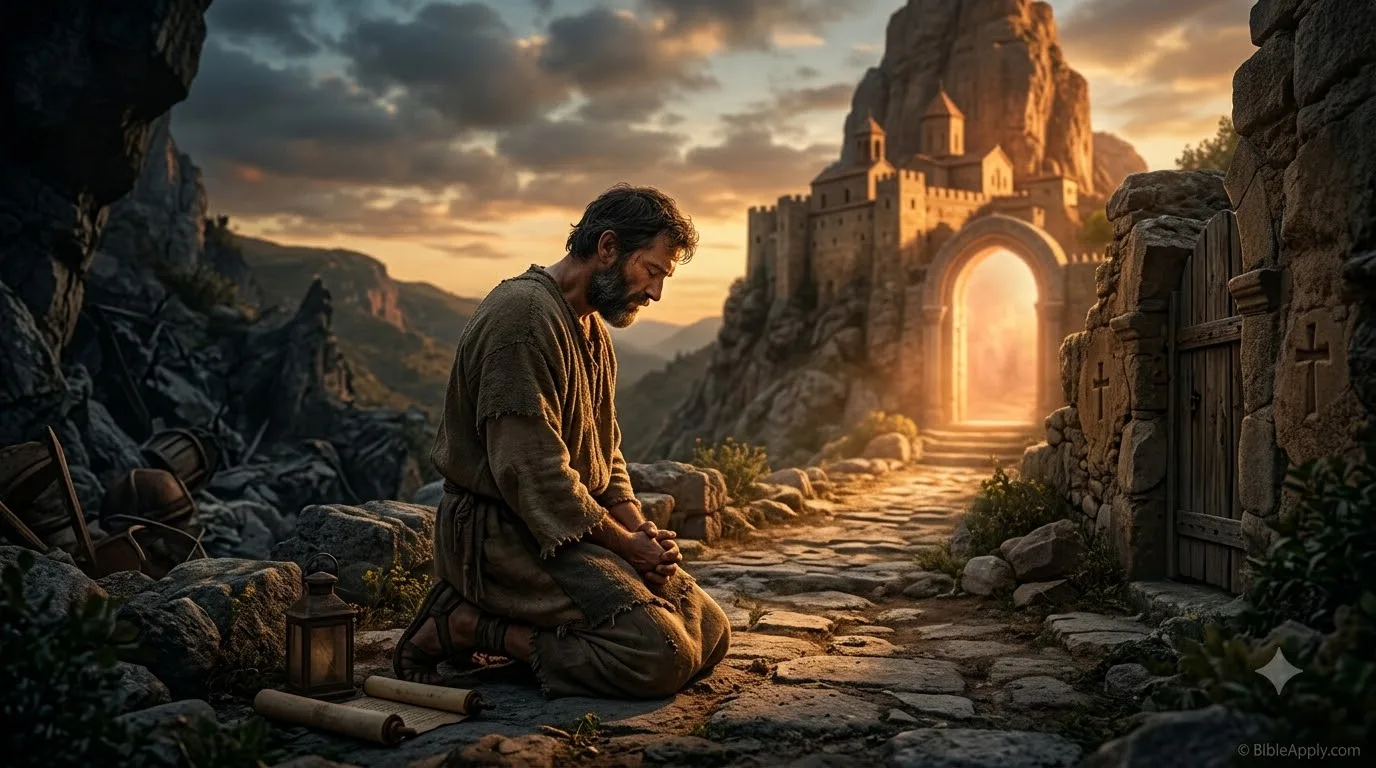
The Rapture: The Great Escape
How will believers be spared from this global judgment? The biblical answer is the Rapture.
In 1 Thessalonians 4:16-17, Paul reveals a profound mystery:
“For the Lord himself shall descend from heaven with a shout, with the voice of the archangel, and with the trump of God: and the dead in Christ shall rise first: Then we which are alive and remain shall be caught up together with them in the clouds, to meet the Lord in the air: and so shall we ever be with the Lord.” (KJV)
What Does “Rapture” Mean?
People often point out that the word Rapture isn’t in the Bible. While the English word doesn’t appear in standard translations, the concept is undeniably there.
The phrase “caught up” in 1 Thessalonians 4:17 comes from the Greek word ἁρπάζω (harpazo). It means to snatch away by force or carry off suddenly. When Jerome translated the Greek New Testament into Latin, he used the verb rapiemur, from which we get “Rapture.” It denotes the sudden rescue of the Church from the earth.
The Case for a Pre-Tribulation Rapture
The debate around the Rapture’s timing usually falls into three camps: Pre-Tribulation, Mid-Tribulation, and Post-Tribulation.
Strong biblical and contextual evidence points to a Pre-Tribulation Rapture. This means the true Church will not endure the Great Tribulation.
1. The Structure of Revelation
Revelation provides a chronological roadmap of the end times. The Greek word for church, ἐκκλησία (ekklesia), appears 19 times in chapters 1-3. Yet, from Revelation chapter 6 through 18—the detailed account of the Tribulation—the word ekklesia is entirely absent.
Where is the Church? In Revelation 4:1, John hears a voice saying, “Come up hither,” and he is transported to heaven. We see the twenty-four elders representing the glorified Church seated around the throne before a single seal of judgment is broken. The Church is missing on earth because she has been relocated to heaven.
2. The Role of the Restrainer
Paul addressed early believers who were terrified that the Day of the Lord had already begun. He explained that the Antichrist cannot be revealed until the “Restrainer” is removed:
“And now ye know what withholdeth that he might be revealed in his time. For the mystery of iniquity doth already work: only he who now letteth will let, until he be taken out of the way. And then shall that Wicked be revealed…” (2 Thessalonians 2:6-8, KJV)
The most biblically sound identity of this Restrainer is the Holy Spirit indwelling the Church. The Church has acted as salt and light, holding back the full manifestation of satanic evil. Before the Antichrist can unleash global devastation, this restraining force must be removed.
3. Rapture vs. Second Coming
If the Rapture and the Second Coming happen simultaneously, several logical issues arise. The two events look very different in Scripture.
In the Rapture, Christ comes for His saints in the air (1 Thess 4:17), taking believers from earth to heaven (John 14:3). In the Second Coming, Christ comes with His saints to the earth (Zechariah 14:5), descending to the Mount of Olives to establish His kingdom.
If all living believers are raptured and transformed at the end of the Tribulation, and all unbelievers are destroyed at Christ’s return, who repopulates the earth during the Millennial Kingdom? A Pre-Tribulation Rapture answers this. The Church is glorified in heaven, while Tribulation saints who survive on earth enter the Millennium in natural bodies.
4. God’s Historical Deliverance
God has a consistent pattern of rescuing the righteous before pouring out wrath upon the wicked.
Before the flood, Enoch was translated so he wouldn’t see death (Hebrews 11:5)—a prophetic picture of the Rapture. Before sulfur rained on Sodom, angels literally pulled Lot out of the city. They stated, “I cannot do any thing till thou be come thither” (Genesis 19:22). God’s wrath could not fall until the righteous were safe.
Addressing Common Objections
Some objections are frequently raised by those holding Mid- or Post-Tribulation views.
Objection 1: “Jesus prayed we wouldn’t be taken out of the world.”
In John 17:15, Jesus said: “I pray not that thou shouldest take them out of the world, but that thou shouldest keep them from the evil.” Some argue this disproves the Rapture.
Context is everything. Jesus was praying for His immediate disciples and their earthly ministry. He was not giving eschatological teaching about the Tribulation. In fact, in John 14:3, Jesus promised the opposite for the end times: “I will come again, and receive you unto myself; that where I am, there ye may be also.”
Objection 2: “Revelation mentions saints on earth during the Tribulation.”
Revelation 13:7 says the Beast makes war with the saints. If the Church is gone, who are they?
People will still come to faith during the Tribulation. The Holy Spirit will draw a massive multitude from every nation (Revelation 7:9-14) alongside 144,000 Jewish evangelists. These “Tribulation Saints” are believers, but they are distinct from the Church entity born at Pentecost and raptured prior.
A Blessed Hope
The weight of biblical evidence and God’s explicit promises of deliverance point to the Church bypassing the Great Tribulation. Believers will be caught up to meet the Lord before the time of Jacob’s trouble begins.
Paul did not write about the end times to induce panic. He concluded his Rapture teaching by saying, “Wherefore comfort one another with these words” (1 Thessalonians 4:18). Anticipate the coming of our Savior as a “blessed hope,” not a terrifying future.
Practical Applications
Knowing the Church is destined for rescue should shape how we live today.
1. Live with an Eternal Perspective
Christ could return at any moment. Do not cling tightly to the fading things of this world. Let the promise of His sudden return motivate you to store up treasures in heaven and pursue holiness every single day.
2. Prioritize the Great Commission
If the Church leaves before the Great Tribulation, those left behind will face horrific times. Let this reality break your heart for the lost. Share the Gospel with your family and neighbors today while the door of grace remains open.
3. Cultivate Hope, Not Fear
When you watch the news and see global chaos, refuse to let fear paralyze your faith. God is sovereign, and His prophetic clock is perfectly on time. Prepare your heart for the Rapture with joyous expectation instead of terror.
Related
- What Is the Rapture?
- Are We Living in the End Times?
- Who Are the 144,000 Mentioned in Revelation?