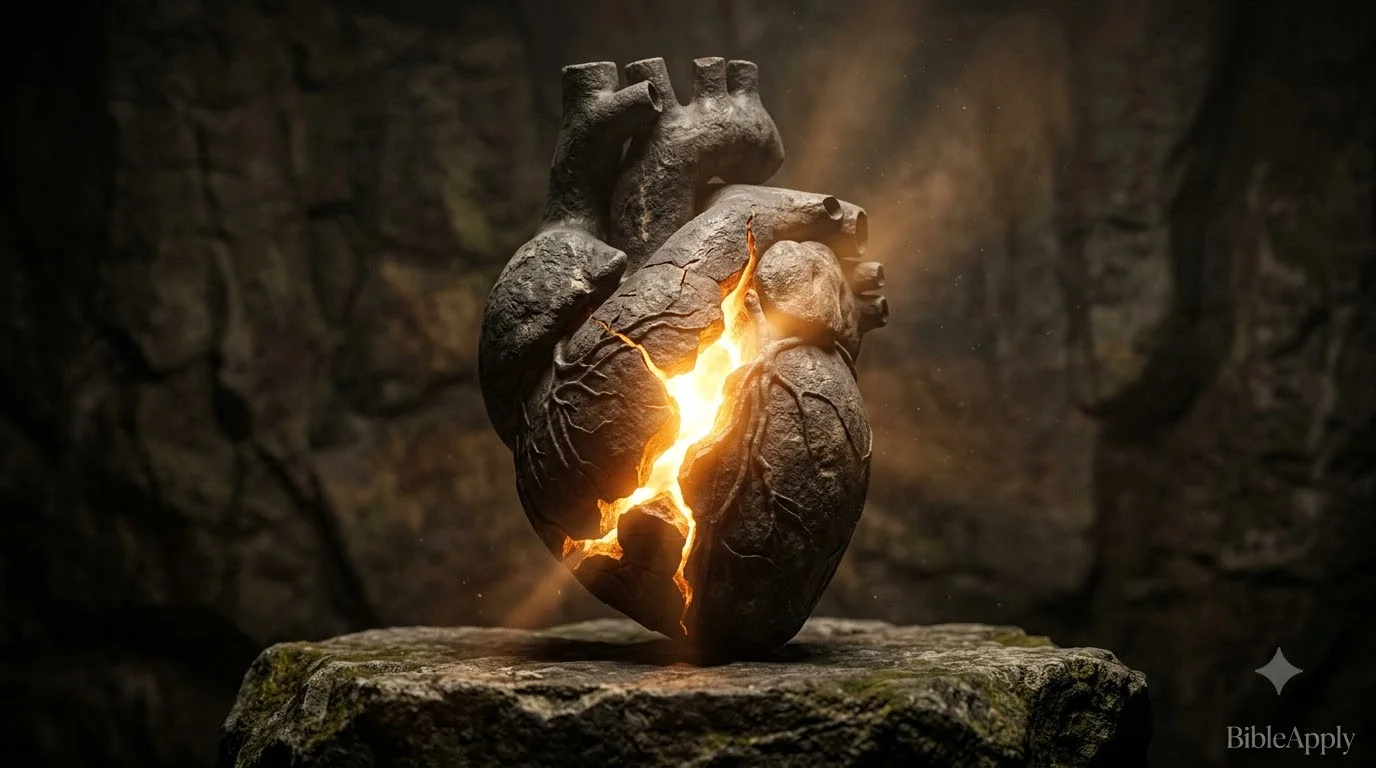
It is the oldest and most agonizing question in human history. When a child falls ill, a marriage crumbles, or a natural disaster levels a city, we instinctively look up. We demand to know why.
If God is entirely good and all-powerful, the presence of profound evil feels like an irreconcilable contradiction. Skeptics use this reality as proof that God does not exist. Believers wrestle with it in the dark hours of the night.
We cannot afford to sanitize this pain. Offering shallow platitudes or religious clichés helps no one. We have to look the brutality of a broken world straight in the eye.
The Bible does not shy away from suffering. It offers a robust framework for understanding it, enduring it, and finding hope on the other side.
The Epicurean Paradox
Philosophers have debated the “Problem of Evil” for centuries. It usually boils down to a seemingly impossible triangle. God is all-powerful, God is all-good, and yet evil exists.
The Greek philosopher Epicurus formulated this dilemma long before the time of Christ. Critics argue that a good God would want to stop suffering. They claim an all-powerful God would be able to stop it.
Since suffering continues unabated, they conclude God must lack either goodness or power. If He lacks neither, then He must not exist at all.
This logic feels airtight on the surface. It appeals to our innate sense of justice. It assumes, however, that human beings possess the infinite wisdom required to understand cosmic purposes.
We are finite creatures locked in a specific moment of time. God operates outside of time with an eternal perspective. A toddler cannot understand why a parent allows a doctor to administer a painful vaccine.
The pain is real, but it serves a greater purpose the child cannot yet comprehend. Just because we cannot see a reason for suffering does not mean a reason does not exist.
The Reality of a Fallen World
God did not originally create a world filled with cancer, violence, and heartbreak. The early chapters of Genesis depict a creation that was whole, safe, and flourishing. It was designed for unbroken fellowship between God and humanity.
The fracture happened when humanity rebelled. Sin entered the human story, bringing a catastrophic curse upon the entire cosmos. Death and decay became the inescapable background radiation of our existence.
We are now living in the ruins of Eden. Much of the suffering we experience is the direct collateral damage of human rebellion. We hurt each other through malice, greed, and profound selfishness.
This corruption goes deeper than human choices. The creation itself is fractured. Natural disasters, disease, and genetic mutations are symptoms of a world groaning under the weight of this ancient rebellion.
Natural Evil vs. Moral Evil
Theologians often categorize suffering into two distinct camps. Moral evil is the pain caused by human agents. This includes war, murder, abuse, and theft.
Natural evil refers to the suffering caused by the natural world. This encompasses earthquakes, tsunamis, cancer, and famines.
Moral evil is easier to trace back to human agency. We understand that a dictator’s greed causes mass casualties. We see how a drunk driver’s recklessness shatters a family.
Natural evil feels much harder to reconcile. There is no human villain to blame when a hurricane destroys a coastline. The Bible teaches that this, too, is a symptom of the Fall.
The earth was cursed along with humanity. The physical world is experiencing a kind of cosmic decay. It is longing for the day when God will restore it to its original, unbroken state.
The Heavy Price of Free Will
God could have created a universe where evil was entirely impossible. He could have made humans like biological robots. We could have been pre-programmed to only do what is right.
A forced choice is not a real choice. Love cannot exist without freedom. For humanity to have the capacity to genuinely love God and each other, we had to possess the ability to choose otherwise.
Free will is a profound and terrifying gift. The consequence of that freedom is the very real possibility of evil. When humans consistently choose themselves over God, suffering is the inevitable result.
God values genuine relationship so highly that He allowed the possibility of rebellion. He deemed the risk of a broken world worth the reward of a redeemed people.
Is Suffering God’s Punishment?
When tragedy strikes, our minds often jump to a punishing God. We wonder what we did to deserve the pain. We assume God is striking us down for a secret sin.
Jesus directly addressed this misconception. In the Gospel of Luke, a tower collapsed in Siloam, killing eighteen people. Jesus told the crowds that these victims were no worse sinners than anyone else.
Sometimes suffering is the natural consequence of our own foolish choices. A life of chronic addiction will bring physical and relational devastation. That is not divine lightning; it is cause and effect.
Much of our suffering has no direct correlation to our personal sin. We suffer because we live in a broken world surrounded by broken people. God does not use cancer as a tactical weapon to punish your mistakes.
The Mystery of God’s Sovereignty
God is not the architect of sin. He does not delight in human misery. The Scriptures repeatedly affirm His flawless character, declaring that in Him there is no darkness at all.
Yet, God remains sovereign over all things. Nothing slips past His notice. Nothing occurs outside of His ultimate permission.
This tension is where we often struggle the most. Reformed theology insists on a God who is completely in control, while maintaining that humans are fully responsible for their sinful choices.
God permits evil for a season, but He is never passive. He is actively orchestrating all things toward a final, redemptive conclusion.
The Role of Spiritual Warfare
The Bible pulls back the curtain on a reality beyond the physical world. We are caught in the crossfire of a cosmic conflict. There is an active, malevolent spiritual force at work in the world.
Satan is described as a thief who comes only to steal, kill, and destroy. He hates God and actively seeks to ruin God’s creation. Much of the evil we witness is driven by this demonic opposition.
God has allowed the enemy a temporary lease on this earth. The devil operates on a leash, permitted to cause chaos for a designated time.
This does not remove human responsibility. It does, however, explain the sheer magnitude and sadistic nature of the evil we see in human history.
How God Uses Evil for Good
Think of the story of Joseph in the book of Genesis. He was betrayed by his brothers, sold into slavery, and unjustly imprisoned. It was a parade of horrific injustice.
Years later, looking into the eyes of the men who ruined his early life, Joseph offered a startling conclusion. He told them, “You meant evil against me, but God meant it for good.”
God does not waste our pain. He is able to weave the darkest threads of human history into a masterpiece of grace. He hijacks the enemy’s plans and uses them for His own glory.
The Apostle Paul echoes this in Romans 8. He promises that God works all things together for the good of those who love Him. This is not a guarantee of an easy life. It is an ironclad promise that our suffering is never meaningless.
Soul-Making in the Crucible
Suffering is often the very tool God uses to forge our character. Faith that is never tested remains fragile. Hardship burns away our self-reliance and exposes our desperate need for a Savior.
C.S. Lewis famously wrote that God whispers to us in our pleasures, but shouts in our pains. Pain is His megaphone to rouse a deaf world. It shatters the illusion that we are in control.
The book of James tells believers to count it joy when they meet trials. This is not a command to celebrate tragedy. It is an invitation to recognize the endurance and spiritual maturity that suffering produces.
God is more concerned with our holiness than our temporary happiness. He uses the crushing weight of adversity to shape us into the image of Christ.
The Lessons of Job
The book of Job is the Bible’s deepest meditation on suffering. Job loses his children, his wealth, and his health in a matter of days. He demands an audience with God to state his case.
When God finally shows up in a whirlwind, He does not offer Job a neat theological explanation. He does not tell Job about the cosmic wager with Satan. Instead, God asks Job a series of unanswerable questions about the creation of the universe.
God overwhelms Job with the sheer magnitude of divine wisdom. The message is clear. If Job cannot understand the mechanics of the constellations, he cannot possibly understand the moral architecture of the universe.
Job is brought to a place of silent reverence. He learns to trust the character of God even when the actions of God remain entirely shrouded in mystery.
The Cross Answers Our Pain
When we demand to know why God hasn’t done something about the evil in the world, the Christian gospel points directly to a Roman execution stake. God has done something. He stepped into the suffering Himself.
Jesus Christ, the Son of God, experienced the ultimate injustice. He was mocked, beaten, and crucified by corrupt men. On that cross, He bore the wrath and agony of a fractured world.
God does not watch us suffer from a safe distance. He came down into the dirt and the blood. He is the Man of Sorrows, intimately acquainted with our deepest griefs.
The cross proves that God’s allowance of evil is not rooted in apathy. He was willing to endure the worst of it to secure our rescue. He knows what it means to bleed.
The Ultimate Defeat of Evil
Because of the resurrection of Jesus, suffering does not get the final word. Death has been defeated from the inside out. The tomb is empty, and the King is alive.
We do not have a complete answer to the origin of every tragedy. We do know exactly how the story ends. Jesus will return to eradicate evil permanently.
A day is coming when God will wipe away every tear from every eye. Death, crying, and pain will be thrown into the fire. Creation will be restored to its original design.
Until that day, we wait with gritty hope. We anchor our souls to the promise that our current afflictions are producing an eternal glory that will outweigh them all.
A Pastoral Note
I do not know the specific hell you are walking through right now, but I know it hurts to breathe. Please do not let anyone tell you to just pray harder or smile through the tears. Jesus wept at the grave of His friend, and He weeps with you now. You are allowed to be angry, confused, and broken. Cling to Him in the dark, even if all you have left is a whisper.
Related
- Where is God in the Midst of Depression?
- How Do I Trust God When My Life is Falling Apart?
- What is the Gospel and Why Does it Matter?