

Quick Answer: Justification is the one-time event where God declares you righteous. Sanctification is the lifelong process of becoming righteous in your daily life.
Many Christians walk through life with a hum of spiritual anxiety. They know they are saved by grace. Yet when they stumble into sin, fear creeps in. Am I truly accepted by God?
On the flip side, some lean so heavily on grace that they slide into spiritual apathy. They reason that if heaven is guaranteed, how they live on earth doesn’t matter much.
Both extremes—the performance treadmill of legalism and the careless drift of license—stem from confusion. We must understand the difference between two critical biblical concepts: justification and sanctification.
Culturally, we live in a world built on merit. You get the job after proving your competence. You earn promotions through sustained effort.
When we force this human paradigm onto the gospel, it creates dissonance. We struggle to accept a love granted entirely apart from our performance. Simultaneously, we are called to rigorous transformation.
Understanding the dividing line between these two realities provides the believer with eternal security. It also fuels daily spiritual growth. It is the difference between serving God out of the fearful dread of a slave, and obeying Him with the joyful gratitude of a child.
A Pastoral Note: People walk into my office all the time terrified that God is finally done with them because they’ve fallen into the same sin again. I always remind them that their struggle with sin doesn’t mean they are unsaved—it actually proves they are fighting. That grief is evidence the Holy Spirit is actively at work in their life. You must remember that God’s love isn’t based on your current progress, but is securely anchored in Christ’s finished work.
The Core Difference: An Overview
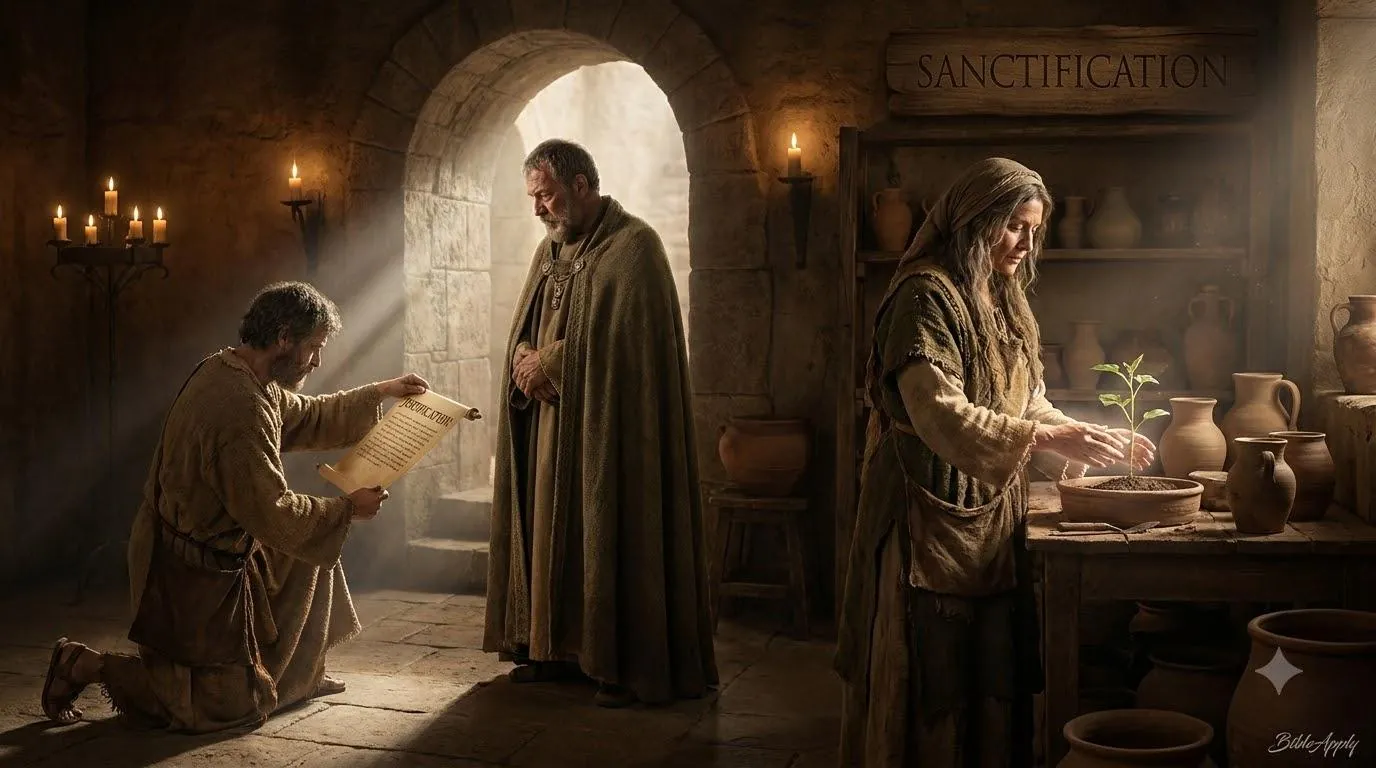
Justification is an event. It is a legal declaration by God pardoning the sinner and declaring them perfectly righteous. This is based entirely on the finished work of Jesus Christ. It is about our standing before God. It happens once, is complete, and cannot be undone.
Sanctification is a process. It is the continuous, lifelong work of the Holy Spirit. In cooperation with the believer, we are gradually transformed into the image of Christ and separated from the power of sin. It is about our daily practice. It is ongoing, ebbs and flows, and is only perfected when we see Jesus in eternity.
Think of it like a marriage. The wedding ceremony is justification. In a single moment, vows are exchanged and the legal status changes permanently. You cannot be “more married” ten years down the road.
However, learning to actually live like a married couple—growing in intimacy and overcoming selfish habits—is sanctification. It takes a lifetime of effort, struggle, and grace.
Justification: The Legal Declaration of Righteousness
To grasp justification, look at the original language of the New Testament. The Greek word for justify is dikaioō (δικαιόω). In the Greco-Roman world, this was a legal term. It meant to acquit someone in a court of law, declaring them not guilty.
The Great Exchange
God is perfectly holy, and human beings are sinful. A just judge cannot simply sweep crimes under the rug. If God ignored our sin, He would cease to be just.
The gospel answers this dilemma through substitution. When a person places their faith in Jesus Christ, a “great exchange” takes place. Christ takes our sin upon Himself on the cross and suffers the penalty we deserved. God then takes the flawless righteousness of Christ and credits it to our account.
“For our sake he made him to be sin who knew no sin, so that in him we might become the righteousness of God.” (2 Corinthians 5:21, ESV)
We do not earn righteousness, nor are we infused with a righteousness of our own making. We “become” the righteousness of God because Christ’s righteousness is imputed—transferred or credited—to us.
Faith Alone
Because justification is entirely based on the merit of Christ, human works play no part in achieving it. It is a gift of God’s grace, received through faith.
“For by grace you have been saved through faith. And this is not your own doing; it is the gift of God, not a result of works, so that no one may boast.” (Ephesians 2:8-9, ESV)
In the act of justification, God is the sole worker. We contribute nothing but the sin that made it necessary. The verdict is instantaneous. The moment you believe, you are as justified as you will be on your millionth day in heaven.

Sanctification: The Transformative Process
If justification is the removal of the penalty of sin, sanctification is the gradual removal of the power of sin in our daily lives.
The Greek word often translated as sanctification or holiness is hagiasmos (ἁγιασμός). It means to be set apart or made holy for God’s purposes. The New Testament uses this term to describe the progressive journey of becoming practically holy.
The Engine of Change
We are not left to our own willpower to become holy. At the moment of justification, the Holy Spirit takes up residence within the believer. The Spirit is the engine of sanctification, continually working to reshape our desires and convict us of sin.
“But I say, walk by the Spirit, and you will not gratify the desires of the flesh.” (Galatians 5:16, ESV)
This ongoing submission to the Spirit results in the fruit of the Spirit: love, joy, peace, patience, kindness, goodness, faithfulness, gentleness, and self-control. This fruit is cultivated through seasons of trial and obedience.
Working Out Your Salvation
Unlike justification, progressive sanctification requires our active participation. God provides the power and grace, but we are commanded to actively fight sin and pursue holiness.
“Therefore, my beloved… work out your own salvation with fear and trembling, for it is God who works in you, both to will and to work for his good pleasure.” (Philippians 2:12-13, ESV)
We do not “work for” our salvation. We “work out” our salvation. We take the reality of our new birth and apply it aggressively to every area of our lives. We are commanded to “put to death the deeds of the body” (Romans 8:13). Sanctification involves sweat, discipline, and regular repentance.
The Inseparable Link
While we must distinguish between justification and sanctification, it is dangerous to separate them. Some believe a person can accept Jesus as Savior for a ticket to heaven, but never submit to Him as Lord.
Scripture rejects this notion. Justification and sanctification are distinct, but never divorced. Whom God justifies, He always sanctifies. If there is no evidence of a changed life, there is no real evidence that justification ever took place.
“So also faith by itself, if it does not have works, is dead… Show me your faith apart from your works, and I will show you my faith by my works.” (James 2:17, 18b, ESV)
James is not contradicting Paul’s doctrine of justification by faith alone. He is clarifying the nature of justifying faith. Genuine faith is alive, and living faith invariably produces the fruit of sanctification. Justification is the root; sanctification is the fruit.
Addressing Common Misconceptions
Navigating salvation theology often kicks up waves of confusion. Here are the most common misconceptions believers face.
Misconception 1: “How I live doesn’t matter.”
Antinomianism means “against the law.” It is the belief that because grace is infinite, our continued sin doesn’t matter. Paul anticipated this exact objection.
“What shall we say then? Are we to continue in sin that grace may abound? By no means! How can we who died to sin still live in it?” (Romans 6:1-2, ESV)
Using grace as a license to sin fundamentally misunderstands salvation. In justification, the old self died, and we were raised to a new life. A true Christian cannot be comfortable habitually swimming in sin.
Misconception 2: “I sinned; I lost my salvation.”
When believers fall back into a besetting sin, they often assume God has revoked their justified status. This stems from mixing sanctification into justification.
Our standing before God is based on Christ’s perfect performance, not our fluctuating daily obedience. When you sin as a Christian, you do not lose your justification. You grieve the Holy Spirit and disrupt your fellowship with the Father.
“There is therefore now no condemnation for those who are in Christ Jesus.” (Romans 8:1, ESV)
You do not need to get re-saved. You need to repent, confess your sin, and restore intimacy with God. Your legal standing in heaven remains unshakeable.
Misconception 3: “God loves me more when I do well.”
We subconsciously believe that God’s love rises and falls with our daily sanctification. We feel close to God when we pray and avoid sin, but distant when we fail.
While God is pleased by our obedience, His fundamental love for you was settled at the cross. He cannot love you any more than He does right now, because He loves you in Christ. Your sanctification is about reflecting God’s character, not earning His smile.
Practical Applications
Understanding this difference alters how we live out our faith daily. Here are three practical ways to apply these truths.
1. Rest in Your Status, Strive in Your Growth
The Christian life is a paradox of deep rest and intense effort. Because of your justification, you can sleep soundly at night. If you were to die, you would stand before God clothed in the perfect righteousness of Christ.
When you wake up, that profound rest should fuel an energetic pursuit of holiness. Knowing you are eternally secure frees you to boldly attack the sin in your life without fear of condemnation.
2. Use Repentance Correctly
When you fail, do not spiral into an identity crisis. Do not let the enemy convince you that you are no longer a child of God. Sin is a failure in your ongoing sanctification, not a revocation of your justification.
Use repentance as a grace-filled tool to realign your heart with God. Run boldly to the throne of grace. Confess your sin quickly, receive God’s forgiveness, and get back in the fight.
3. View Others With Grace
The church is filled with justified people at vastly different stages of sanctification. When a fellow believer acts immaturely, remember that their sanctification is incomplete.
Extend the same grace that God extends to you. Hold them accountable for their behavior while affirming their secure identity in Christ. This fosters a culture committed to holiness, yet steeped in patience and forgiveness.