

Quick Answer: The seals, trumpets, and bowls are 21 escalating judgments in Revelation. Most biblical scholars view them as future events tied to the Tribulation, not disasters happening today.
Every time a pandemic strikes or war erupts in the Middle East, search engines light up. People anxiously ask if the book of Revelation is unfolding before our eyes. Are the prophetic seals, trumpets, and bowls happening right now?
It’s a natural human reaction to chaos. When our predictable lives are shaken, we look for a divine roadmap to explain the suffering. We want to know where we are on God’s timeline, hoping that understanding the “when” will bring peace to the “now.”
Culturally, we’re bombarded with apocalyptic imagery in movies and news media. This constant exposure primes our minds to interpret every natural disaster as a sign of the end.
For Christians, this often translates into an urgent attempt to map current events onto John’s symbolic visions in the book of Revelation. We read about wars, famines, and plagues, making it tempting to point at the daily news and declare, “That is the second seal.”
Grasping the biblical meaning of these judgments takes more than matching headlines with Bible verses. We have to understand the apocalyptic genre and how the first-century audience heard John’s writing.
Instead of getting caught up in sensationalism, we need to look at the structure and theological purpose behind these three sequences of judgment.
A Pastoral Note: Early in 2020, my phone blew up with terrified church members convinced the seal judgments had begun. One older woman sat weeping in my office, certain she had been left behind. I threw my prophecy charts in the trash that afternoon. When people are shaking with fear, they don’t need complicated timeline graphs—they need to know Jesus is actually holding the scroll.
Four Ways to Read Revelation
To understand how these judgments fit into human history, we need to look at how Christians have interpreted Revelation. Over the centuries, four primary frameworks have emerged. Your answer heavily depends on which interpretive lens you bring to the text.
1. Historicism: The Long Unfolding
Historicists view Revelation as a continuous roadmap of church history, stretching from the first century until Christ returns. In this view, the seals, trumpets, and bowls have been slowly unfolding over the last two millennia.
Early Reformers like Martin Luther held this view. A historicist might identify the fall of the Roman Empire as the trumpet judgments. If this framework holds, some of these judgments are in our past, some are happening now, and some are still to come.
2. Preterism: Already Fulfilled
The Preterist view argues that the vast majority of Revelation’s prophecies were fulfilled in the first century. They point specifically to the destruction of Jerusalem and the Jewish temple in A.D. 70.
For the Preterist, the seals, trumpets, and bowls represent God’s judgment upon apostate Israel and the pagan Roman Empire. They argue that these judgments are not happening now. They happened entirely in the past.
3. Idealism: Spiritual and Symbolic
The Idealist view argues that Revelation does not predict specific historical events. Instead, it is a symbolic poem about the ongoing, timeless battle between good and evil.
In this view, the seals, trumpets, and bowls are not chronological events. They are symbolic representations of the suffering and persecution the church will experience until Christ returns. If you are an Idealist, these judgments are happening now and always will happen until the end.
4. Futurism: The Final Tribulation
The Futurist view is currently the most widely held interpretation in evangelical churches. Futurists believe that everything from Revelation chapter 4 onward describes events that are strictly in the future.
They argue that the seals, trumpets, and bowls represent a specific period of divine wrath poured out right before the Second Coming of Jesus Christ. For a Futurist, the answer is definitive: these twenty-one judgments are not happening now. They are exclusively future.
The Biblical Structure of the Seals, Trumpets, and Bowls
The theological progression of the seals, trumpets, and bowls reveals a massive prophetic architecture. Rather than disconnected catastrophes, these three series of judgments unfold with escalating severity.
They are structurally linked. Commentators often describe them as “telescopic”—meaning the seventh seal contains the seven trumpets, and the seventh trumpet contains the seven bowls.
Summary Comparison
| Judgment Series | Scriptural Focus | Scope & Devastation | Primary Character |
|---|---|---|---|
| The Seven Seals | Revelation 6:1–8:5 | 1/4 of the earth | Escalating “birth pains,” human warfare, famine, and cosmic precursors |
| The Seven Trumpets | Revelation 8:6–11:19 | 1/3 of the earth | Supernatural warnings and plagues echoing the Exodus, calling for repentance |
| The Seven Bowls | Revelation 15:1–16:21 | Total / Universal | The unmixed wrath (thumos) of God poured out; final judgment completed |
The Seven Seals (Revelation 6-8)
The opening of the scroll begins with the seals. The first four introduce the famous “Four Horsemen” bringing conquest, war, famine, and death.
These judgments closely resemble the natural consequences of human depravity. Wars cause famines, and famines cause plagues and death.
In Matthew 24:4-8, Jesus describes similar events. He lists wars, famines, and earthquakes, explicitly calling them the “beginning of birth pains” (Greek: odin).
“All these are the beginning of birth pains.” (Matthew 24:8, BSB)
The Greek word odin refers to the sharp, intense pains of childbirth. Birth pains happen before the actual delivery, increasing in frequency and intensity. The seal judgments appear to be severe, escalating birth pains leading to the final delivery of God’s wrath.
The Seven Trumpets (Revelation 8-11)
When the seventh seal is broken, there is silence in heaven for half an hour. Then, seven angels are given seven trumpets.
In the Old Testament, trumpets were sounded to call an assembly, warn of impending danger, or announce a king. The trumpet judgments are supernatural and devastating, destroying one-third of the earth’s vegetation, oceans, fresh water, and light.
These judgments directly echo the plagues of Egypt in Exodus. Just as God judged the false gods of Egypt, He judges the idols of the earth. Yet the destruction is limited to one-third. They are severe warnings, meant to call humanity to repentance before final ruin.
The Seven Bowls (Revelation 15-16)
The bowl judgments represent the climax of God’s wrath. While the seals were driven by human conflict and the trumpets were partial, the bowls are universal and final.
Revelation 15:1 says that with these plagues, God’s wrath is “finished” or “completed” (etelethē).
“Then I saw another great and marvelous sign in heaven: seven angels with the seven final plagues, with which the wrath of God is completed.” (Revelation 15:1, BSB)
The New Testament uses two primary words for wrath: orge and thumos. Orge is a settled, controlled opposition to evil. Thumos is a passionate, erupting, boiling-over anger.
In the bowl judgments, God’s wrath is repeatedly described using thumos. The time for warning has passed. The bowls are poured out rapidly, resulting in total darkness, agonizing sores, and the battle of Armageddon.
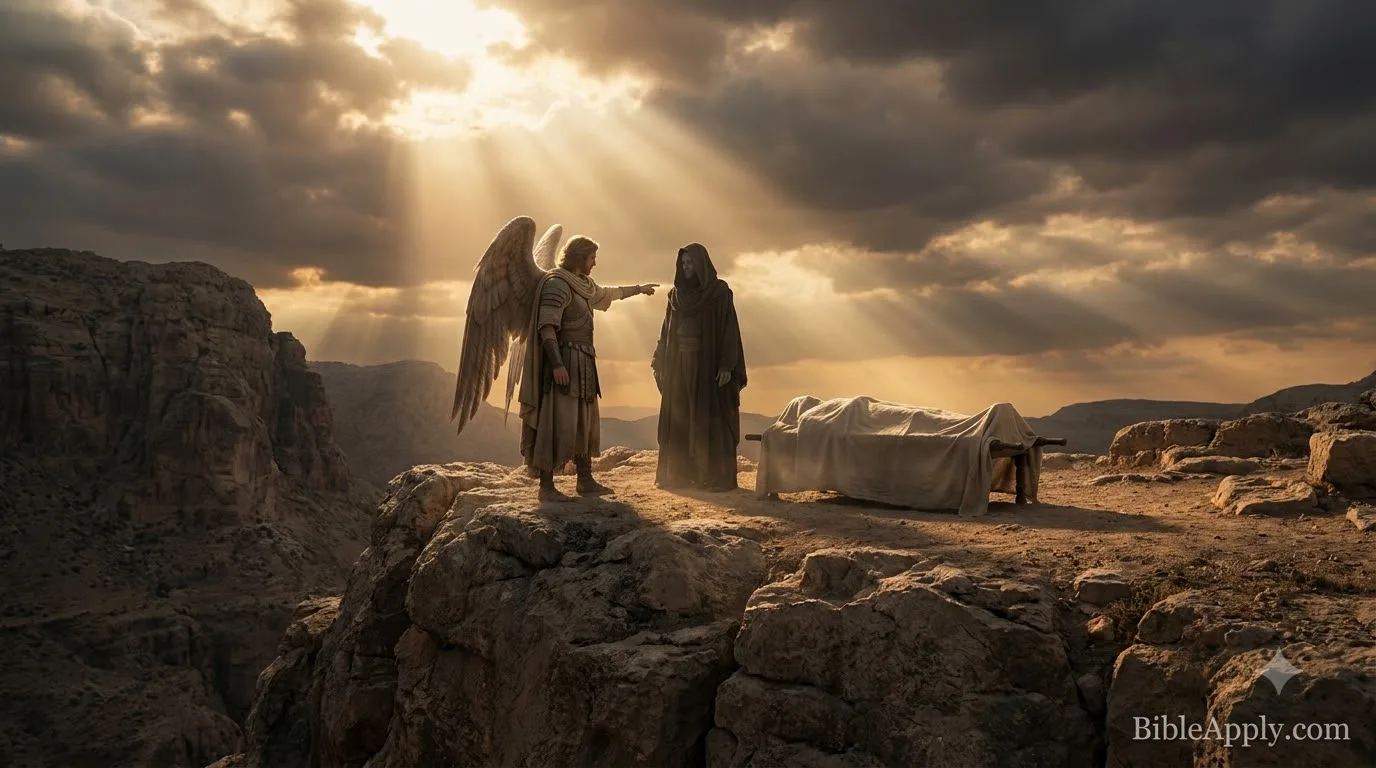
Are We Seeing These Judgments Today?
Given these biblical descriptions, we return to the core question: are the seals, trumpets, and bowls happening right now?
If we read the text plainly as a Futurist, the answer is no. These judgments are reserved for a future tribulation.
Our world is undeniably experiencing wars, pandemics, and natural disasters. But these current events are what Jesus called the “birth pains.” They are part of the groaning of a fallen creation anticipating redemption.
When the actual judgments of Revelation begin, they will not be up for debate. When a third of the sea turns to blood, or the sun scorches humanity with intense heat, it won’t require a theological panel to decode. The sheer magnitude of these events will be unmistakable.
Mistaking current, localized tragedies for the trumpet or bowl judgments diminishes the biblical text. It leads to unnecessary date-setting and fear-mongering.
The Apostle Paul makes it clear in 1 Thessalonians 5:9 that believers are not destined for this final outpouring of divine wrath:
“For God has not appointed us to suffer wrath, but to obtain salvation through our Lord Jesus Christ.” (1 Thessalonians 5:9, BSB)
Whether you hold to a Pre-Tribulation rapture or a Post-Tribulation view, the theological truth remains the same. The final, unmixed wrath of God is reserved for an unrepentant world, not for His children.
The Purpose of the Judgments
It is easy to get lost in the terrifying imagery of locusts and blood-red seas. But why does God pour out these judgments at all?
These judgments are not capricious outbursts from an erratic deity. They are the holy, just response of the Creator to a world that has violently rejected Him.
Even in the midst of the apocalypse, God’s mercy is evident. The trumpet judgments are limited to one-third. They are designed to shock humanity out of its spiritual stupor as the ultimate wake-up call.
Tragically, the text records the staggering stubbornness of the human heart:
“The rest of mankind who were not killed by these plagues still did not repent… they did not stop worshiping demons… Nor did they repent of their murders, their magic arts, their sexual immorality or their thefts.” (Revelation 9:20-21, BSB)
Even during the terrifying bowl judgments, humanity refused to repent. Instead, they “blasphemed the name of God, who had control over these plagues” (Revelation 16:9).
Suffering alone does not produce repentance. Without the softening work of the Holy Spirit, the human heart will harden itself against God, even while being crushed by His judgment.
3 Practical Takeaways
When studying eschatology, we should avoid idle speculation. Prophecy should always lead to practical holiness and urgent mission.
1. Live With Mission
The knowledge that God’s wrath is coming upon a rebellious world should break our hearts. It should compel us to share the Gospel with urgency. Every person without Christ is currently under the threat of future judgment. We are not called to build survival bunkers, but to boldly declare the message of salvation.
2. Don’t Panic Over News Headlines
Jesus warned us that wars, famines, and earthquakes would happen. When the news is filled with geopolitical instability, do not panic. These are birth pains. Instead of letting fear dictate your reactions, let these events remind you that Christ’s return is drawing nearer. History is firmly in the hands of the Lamb.
3. Hate Your Sin
The judgments of Revelation vividly display how God views sin. We often tolerate “respectable” sins like pride, greed, lust, and bitterness. Reading about the devastating consequences of humanity’s rebellion should cause us to drop to our knees in repentance.
The book of Revelation was not given to frighten the church, but to comfort her. Evil will not win. Justice will be served. Creation will be redeemed, and the King of Kings will return to make all things new.