Ezra Chapter Summaries
A complete, chapter-by-chapter guide to the Book of Ezra. Read deep dives into the meaning, historical context, and modern application of every chapter.
Welcome to our complete guide to the Book of Ezra. Below you will find a chapter-by-chapter summary that flows through the entire narrative, helping you understand the context, meaning, and application of this profound book.
Chapter 1: The Decree of Cyrus
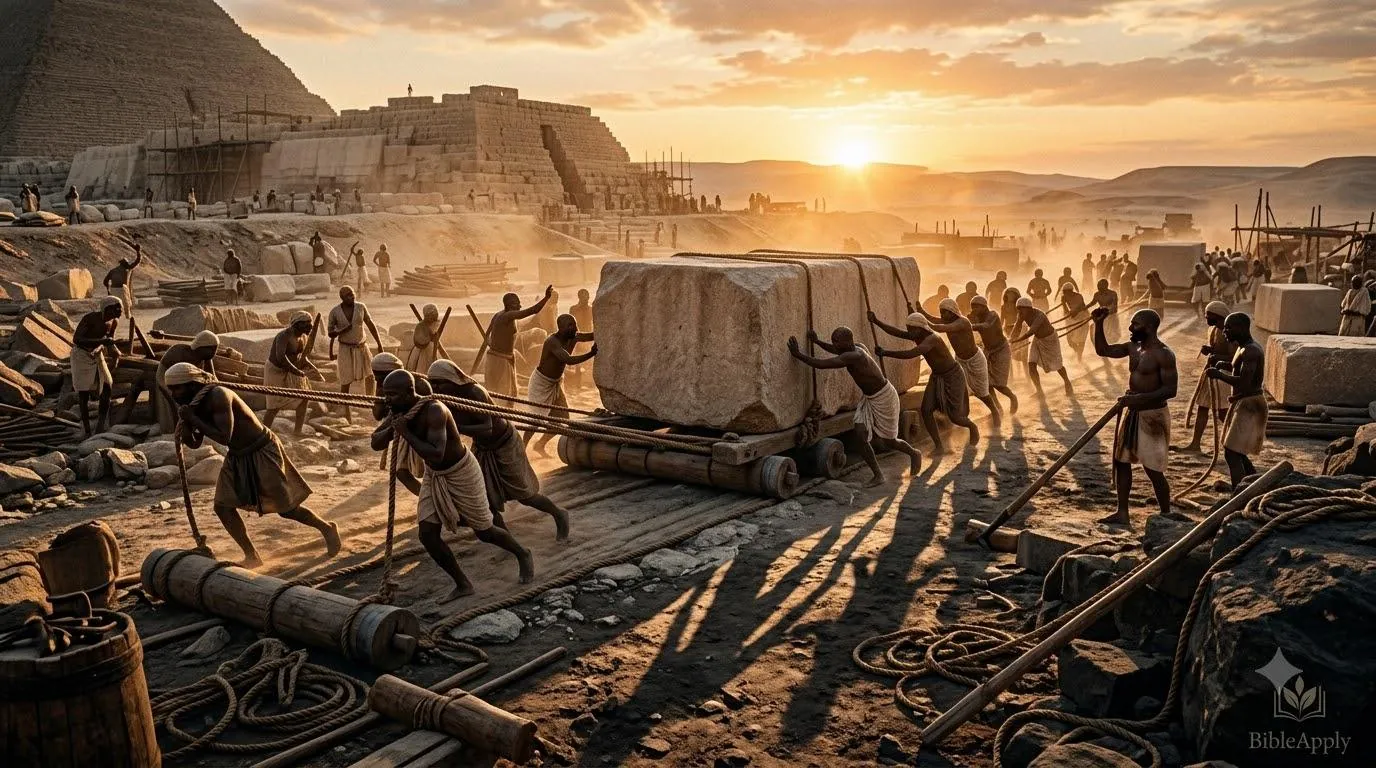
!ezra 1 explained
The Book of Ezra opens not with a triumphant military victory by the Israelites, but with an astonishing decree from a pagan king. For seventy long years, the people of Judah had languished in Babylonian captivity, their homeland desolated, and Solomon’s magnificent temple lying in ruins. They were a people seemingly forgotten by history, scattered as exiles in a foreign land. Yet, behind the scenes of imperial politics and the rise and fall of ancient Near Eastern empires, the invisible hand of Yahweh was orchestrating the redemption of His covenant people.
Ezra 1 sets the stage for one of the most remarkable eras in biblical history: the post-exilic return and restoration. It bridges the gap between the prophetic warnings of the pre-exilic prophets and the tangible fulfillment of God’s unbreakable promises. The chapter serves as a profound theological thesis for the rest of the book—demonstrating that no king is too powerful, no exile too long, and no ruin too devastating to thwart the redemptive purposes of the living God.
As we dive into this opening chapter, we witness a stunning convergence of historical reality and divine providence. We see prophecy validated, a remnant awakened, and the initial, hopeful steps of a people journeying back to the heart of their worship—Jerusalem.
Historical Context: The Dawn of the Persian Era
To fully grasp the magnitude of Ezra 1, we must understand the geopolitical shifts of the 6th century BC. The Babylonian Empire, which had ruthlessly sacked Jerusalem under Nebuchadnezzar in 586 BC, was suddenly and decisively conquered by the Medo-Persian Empire under Cyrus the Great in 539 BC.
Unlike the Babylonians and Assyrians, whose policies involved mass deportations to break the national identity of conquered peoples, Cyrus adopted a radically different approach. Historical artifacts like the famous Cyrus Cylinder reveal his policy of repatriation and religious tolerance. He allowed exiled peoples to return to their homelands and rebuild their sanctuaries, hoping to win their loyalty and secure the favor of their local gods.
Yet, while secular history records this as a shrewd political maneuver by a brilliant emperor, the biblical author of Ezra pulls back the curtain to reveal the true Prime Mover. It was not merely Persian foreign policy at work; it was the sovereign God of the universe directing the heart of a king to fulfill a divine timeline.
If this resonates with you, our deep dive into Jeremiah 29:11 Meaning: For I Know the Plans I Have for You explores the scriptural foundation further.
Section 1: The Sovereign God and the Decree of Cyrus (Ezra 1:1-4)
“Now in the first year of Cyrus king of Persia, that the word of the LORD by the mouth of Jeremiah might be fulfilled, the LORD stirred up the spirit of Cyrus king of Persia, that he made a proclamation throughout all his kingdom, and put it also in writing…” (Ezra 1:1, KJV)
Fulfilling the Word of the Lord
The opening verse immediately anchors the events in prophetic fulfillment. The author specifically names Jeremiah, who had prophesied decades earlier that the Babylonian captivity would last exactly seventy years (Jeremiah 25:11-12; 29:10). The exactness of this fulfillment is a staggering testimony to the reliability of God’s Word. When God places a timestamp on His promises, time itself bows to His decree.
This fulfillment is not just a chronological milestone; it is a profound pastoral comfort. For the Jewish exiles who had wept by the rivers of Babylon (Psalm 137), the realization that their suffering had an expiration date prescribed by a loving God was everything. It teaches us a vital theological truth: God’s discipline is always measured, purposeful, and bounded by His covenant faithfulness.
The God Who Stirs Hearts
The text states that “the LORD stirred up the spirit of Cyrus.” The Hebrew word used here is ‘ur (עוּר), which means to awaken, to rouse, or to incite to action. It is the same word used for waking someone from a deep sleep.
This is a breathtaking reality. Cyrus was a polytheistic conqueror, arguably the most powerful man on earth at the time. Yet, in the hands of Yahweh, his heart was like channels of water, turned wherever God wished (Proverbs 21:1). God did not need to raise an Israelite army to defeat Persia; He simply awakened the spirit of the Persian king to do His bidding. This echoes the prophecy of Isaiah, who named Cyrus as God’s “anointed” (Messiah) and “shepherd” nearly 150 years before Cyrus was even born (Isaiah 44:28; 45:1).
The Edict of Restoration
“Thus saith Cyrus king of Persia, The LORD God of heaven hath given me all the kingdoms of the earth; and he hath charged me to build him an house at Jerusalem, which is in Judah.” (Ezra 1:2, KJV)
Cyrus’s decree acknowledges “the LORD God of heaven” (Yahweh). While historians debate the depth of Cyrus’s genuine faith in Israel’s God—he often spoke respectfully of the gods of all nations he conquered—his use of God’s covenant name and his acknowledgment of a divine “charge” is striking.
The edict has a twofold command: a permission for the Jewish people to return to Jerusalem, and an exhortation for their neighbors to support them with silver, gold, goods, beasts, and “freewill offerings” (nedabah) for the house of God. This royal decree essentially reversed the curse of the exile, transforming an oppressed minority into a royally sponsored rebuilding commission.
Also Read:
Section 2: The Response of the Remnant (Ezra 1:5-6)
“Then rose up the chief of the fathers of Judah and Benjamin, and the priests, and the Levites, with all them whose spirit God had raised, to go up to build the house of the LORD which is in Jerusalem.” (Ezra 1:5, KJV)
The Divine Awakening of the Remnant
Just as God stirred (‘ur) the spirit of Cyrus to issue the decree, He also stirred the spirits of the Jewish remnant to respond to it. Returning to Jerusalem was not the easy, logical choice. Over seventy years, many Israelites had built comfortable lives, established businesses, and planted roots in Babylon. Jerusalem was a ruined city, surrounded by hostile neighbors, requiring a dangerous 900-mile journey through the desert.
To leave the comfort of Babylon for the rubble of Jerusalem required a profound work of the Holy Spirit. Here we see a beautiful synergy in biblical theology: God provides the external open door through the sovereign decree of a king, but He also provides the internal motivation through the awakening of the human heart. Salvation and obedience always begin with the initiative of God.
Provision for the Journey
“And all they that were about them strengthened their hands with vessels of silver, with gold, with goods, and with beasts, and with precious things, beside all that was willingly offered.” (Ezra 1:6, KJV)
Those who did not return physically were still called to participate financially. The surrounding community “strengthened their hands” by providing immense wealth and resources for the journey and the rebuilding project.
This scene deliberately echoes the Exodus from Egypt, when the Israelites left with the wealth of the Egyptians (Exodus 12:35-36). Just as the first Exodus marked the birth of the nation and the building of the Tabernacle, this “Second Exodus” from Babylon marked the rebirth of the nation and the rebuilding of the Temple. It is a powerful reminder that when God calls His people to a monumental task, He orchestrates the provision to see it accomplished.
Section 3: The Restoration of the Holy Vessels (Ezra 1:7-11)
“Also Cyrus the king brought forth the vessels of the house of the LORD, which Nebuchadnezzar had brought forth out of Jerusalem, and had put them in the house of his gods…” (Ezra 1:7, KJV)
Reclaiming What Was Lost
The chapter concludes with a meticulous inventory of the sacred vessels from the temple. When Nebuchadnezzar sacked Jerusalem, he took the gold and silver basins, censers, and bowls and placed them in the temple of his gods in Babylon. In the ancient Near East, taking the cultic objects of a conquered nation’s god and placing them in the temple of your own god was the ultimate theological flex—it was a way of declaring, “My god has defeated your god.”
Related to this, you may want to read Psalm 91 Meaning: He Who Dwells in the Shelter for additional biblical perspective.
For seventy years, these sacred vessels had been treated as trophies of war, most notably desecrated by Belshazzar on the eve of Babylon’s fall (Daniel 5). But Yahweh had not forgotten them. The detailed listing of these 5,400 vessels is not mere ancient bookkeeping; it is a theological statement of complete restoration. What was stolen by pride was returned by providence. God was reversing the humiliation of His people and reclaiming His own glory.
Sheshbazzar, the prince of Judah (likely a descendant of David), is entrusted with bringing these vessels back. They represent the continuity of worship. The new temple would not be an entirely new religion, but a continuation of the faith of their fathers, using the very same vessels sanctified for holy use generations prior.
Christological Connection: The True Temple
How does Ezra 1 point to Jesus Christ? The return from exile and the rebuilding of the physical temple is a foreshadowing of the ultimate redemption accomplished by Christ.
First, Cyrus stands as a “messianic” figure (a christ), an anointed deliverer who sets the captives free and commands the rebuilding of God’s dwelling place. Yet Cyrus was only a flawed, temporary, and political deliverer. Jesus Christ is the true and greater Deliverer who frees us not from a physical Babylon, but from the eternal captivity of sin and death (Colossians 1:13).
Second, the intense focus on the temple vessels points toward the deep human need for mediated worship. The physical temple in Jerusalem was the locus of God’s presence on earth. But Jesus would later declare, “Destroy this temple, and in three days I will raise it up,” speaking of the temple of His body (John 2:19-21). Jesus Himself is the ultimate meeting place between God and humanity. Today, because of Christ’s finished work, believers themselves are constituted as the temple of the Holy Spirit (1 Corinthians 3:16), living vessels sanctified for the Master’s use.
3 Practical Applications from Ezra 1
-
Trust in God’s Absolute Sovereignty Over History When we look at the political landscape, the power of nations, or the cultural shifts of our day, it is easy to despair. Ezra 1 reminds us that “the king’s heart is a stream of water in the hand of the LORD; he turns it wherever he will” (Proverbs 21:1). God is sovereign over elections, empires, and economies. Even leaders who do not know Him are ultimately subjected to His divine purposes. We can rest in the knowledge that God’s redemptive plan is never threatened by human power.
-
Respond When God “Stirs” Your Heart The exiles had a choice: remain in the comfort of Babylon or undertake a difficult journey for the glory of God. It was only because God “stirred their spirits” that they were able to obey. When you sense the Holy Spirit convicting you of sin, drawing you to deeper prayer, or calling you to step out in difficult obedience, do not suppress it. The same God who awakens your spirit will provide the strength and resources you need to fulfill His calling.
-
Rest in the Certainty of God’s Promises God spoke through Jeremiah that the exile would end after seventy years, and He kept His Word precisely. You may be in a season of waiting, suffering, or feeling like you are in a spiritual “exile.” Remember that God’s promises in Scripture are ironclad. He who promised is faithful (Hebrews 10:23). His timing may not align with our impatience, but His timeline is perfect. Hold fast to His Word, knowing that the God of restoration will finish the work He has started in you.
Also Read
- 1 Chronicles 1 Summary & Meaning: Tracing God’s Redemptive Plan Through the Generations
- 1 Corinthians 1 Summary & Meaning: The Folly of the Cross and True Wisdom
- Jonah 1 Summary & Meaning: Running from the Relentless Grace of God
Read Ezra 1
Dive into the full scripture text for deeper study.
Chapter 2: The Exiles Return
The list also accounts for the priests, Levites, singers, gatekeepers, and temple servants, ensuring that the religious infrastructure can be properly restored. Some returning families face the challenge of being unable to prove their Israelite descent, and certain priests are temporarily excluded from serving until a priest with Urim and Thummim can consult the Lord. In total, the congregation numbers 42,360, not including their servants and singers. Upon arriving at the ruins of the Lord’s house in Jerusalem, the heads of the families offer generous freewill offerings to rebuild the temple on its original site.
Chapter 3: Rebuilding the Altar and Temple Foundation
In the second year of their return, the monumental work on the temple itself commences. The Levites are appointed to supervise the construction. When the builders finally lay the foundation of the Lord's temple, a grand ceremony ensues. The priests don their apparel and blow trumpets, while the Levites clash cymbals, praising God with the refrain, "He is good; his steadfast love endures forever." Yet, amidst the thunderous shouts of joy, the older generation, who remembered the glory of Solomon's original temple, weep aloud. The sounds of joyful shouting and sorrowful weeping mingle together, echoing far into the distance.
Chapter 4: Opposition to the Rebuilding
Rebuffed, the local inhabitants resort to relentless intimidation and discouragement, bribing officials to frustrate the Israelites' plans throughout the reigns of Cyrus and Darius. Years later, during the reigns of Ahasuerus and Artaxerxes, this opposition escalates. The adversaries draft a malicious letter to King Artaxerxes, falsely accusing Jerusalem of being a historically rebellious and troublesome city. They warn the king that if the city and its walls are rebuilt, he will lose his revenue and dominion in the region. Alarmed by these claims, Artaxerxes issues a decree ordering the construction to cease. Armed with this royal edict, the adversaries forcefully halt the work, and the rebuilding of God’s house in Jerusalem comes to a standstill until the second year of King Darius.
Chapter 5: The Prophets Encourage the Builders
Their renewed activity immediately draws the scrutiny of Tattenai, the governor of the province Beyond the River, and his associates. They challenge the Jewish leaders, demanding to know who authorized the construction and requesting the names of the men responsible. However, the eye of God watches over the elders of the Jews, and they are not forced to stop while a report is sent to King Darius. Tattenai’s letter to the king accurately relays the Jews' claim that they are rebuilding the temple by the original decree of Cyrus, and he respectfully requests that the royal archives in Babylon be searched to verify if such a decree was truly issued.
Chapter 6: The Temple Completed and Dedicated
Bolstered by the decree and the continued prophesying of Haggai and Zechariah, the Jewish elders make rapid progress. The temple is gloriously finished on the third day of the month of Adar, in the sixth year of King Darius. The Israelites—priests, Levites, and returning exiles—celebrate the dedication of the house of God with immense joy, offering hundreds of sacrifices. They organize the priests and Levites for service according to the Book of Moses. The following month, the exiles joyously celebrate the Passover, having purified themselves, feasting with gladness because the Lord had turned the heart of the king of Assyria to strengthen their hands in the work of the house of God.
Chapter 7: Ezra Arrives in Jerusalem
Because the gracious hand of God is upon him, King Artaxerxes grants Ezra all his requests, commissioning him to lead a second wave of exiles back to Jerusalem. The king issues a remarkable decree, providing Ezra with massive financial resources from the royal treasury and freewill offerings to buy sacrifices and beautify the temple. Furthermore, Artaxerxes authorizes Ezra to appoint magistrates and judges to administer justice according to the Law of God throughout the province Beyond the River, and to teach the law to those who do not know it. Overwhelmed by this divine providence, Ezra blesses the Lord for putting such glory into the king's heart and gathers leading men of Israel to journey with him.
Chapter 8: The Journey and the Sacred Treasure
Ezra entrusts the vast fortune of silver, gold, and sacred vessels to twelve leading priests, strictly charging them to guard the holy freewill offerings until they are weighed out in the chambers of the temple in Jerusalem. God answers their prayers, delivering them from ambushes and enemies along the way. Upon arriving safely in Jerusalem, they rest for three days before meticulously weighing and delivering the treasure to the priests in the temple. The returned exiles offer magnificent burnt offerings to the God of Israel, and Ezra delivers the king's commissions to the royal satraps, who subsequently provide crucial support to the people and the house of God.
Chapter 9: Ezra's Prayer of Confession
At the time of the evening offering, Ezra rises from his fasting, falls on his knees, and spreads out his hands to the Lord. He offers a profoundly moving prayer of national confession, identifying himself with the sins of the people. He acknowledges God’s righteous judgment that led to their historical exile and marvels at the sheer grace that allowed a remnant to return and rebuild. Ezra confesses that they have brazenly forsaken God's commandments once again by entering into forbidden marriages. He concludes his agonizing prayer without making excuses, standing before a just God in guilt, acknowledging that they have no right to stand before Him because of their profound unfaithfulness.
Chapter 10: The Covenant of Repentance
Ezra rises and extracts an oath from the leading priests, Levites, and all Israel to act on this proposal. A proclamation is issued demanding all returned exiles gather in Jerusalem within three days; anyone who fails to appear will forfeit their property and be expelled from the assembly. Gathering in heavy rain and trembling with fear, the people agree to Ezra's demand to separate themselves. Due to the vast number of people involved and the inclement weather, a systematic process is established. Officials and judges examine the cases over several months, resulting in a lengthy registry of the men—including priests and leaders—who had married foreign women, concluding a painful but necessary chapter of national purification.
Conclusion
We hope this chapter-by-chapter summary of Ezra has helped you better understand God's Word. To continue your study, explore our other Bible Chapter Summaries or read our detailed Verse Meanings.