2 Samuel Chapter Summaries
A complete, chapter-by-chapter guide to the Book of 2 Samuel. Read deep dives into the meaning, historical context, and modern application of every chapter.
Welcome to our complete guide to the Book of 2 Samuel. Below you will find a chapter-by-chapter summary that flows through the entire narrative, helping you understand the context, meaning, and application of this profound book.
Chapter 1: A Lament for the Fallen
The Historical and Cultural Context of 2 Samuel 1
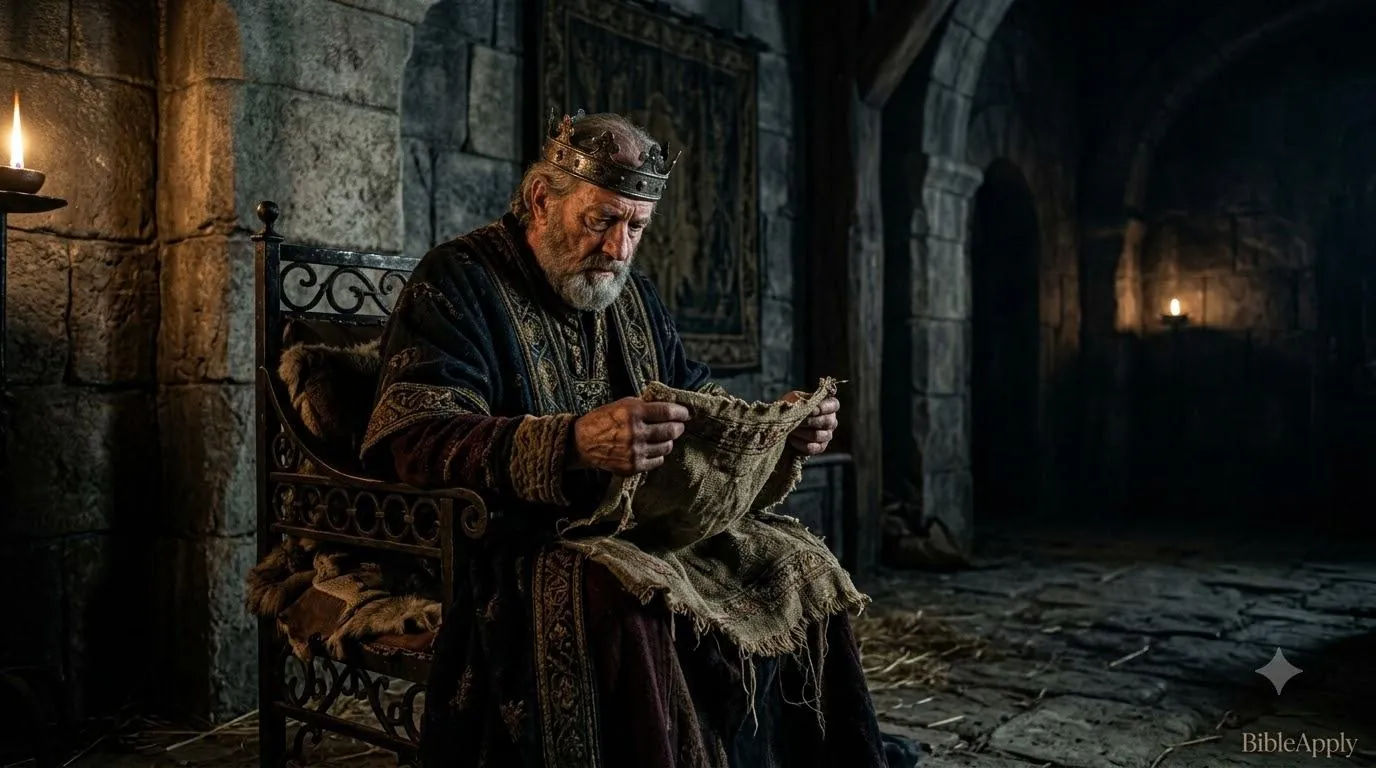
The book of 2 Samuel seamlessly continues the historical narrative exactly where 1 Samuel abruptly ended: the tragic and bloody defeat of the Israelites on the slopes of Mount Gilboa. To fully grasp the opening chapter of 2 Samuel, one must understand the profound transition occurring in biblical redemptive history. The era of King Saul—a king chosen according to the flesh, reflecting the people’s sinful desire to be “like all the other nations” (1 Samuel 8)—has come to a devastating close. Saul and his sons, including David’s beloved covenant friend Jonathan, have fallen in battle against the uncircumcised Philistines. The monarchy is in a state of unprecedented crisis, the nation is engulfed in mourning, and the throne of Israel lies vacant, awaiting its true king.
Against this backdrop of national catastrophe, we find David stationed in the Philistine-controlled town of Ziklag. He has just returned from a spectacular, miraculous victory over the Amalekites, having successfully rescued his wives, children, and property. While David has been living for years as a desperate fugitive, hunted relentlessly through the wilderness by a paranoid and demonically oppressed Saul, he has steadfastly refused to lift his hand against the king. David understood a profound theological truth that governed his entire life: God had placed Saul on the throne, and therefore, only God had the sovereign right to remove him. Thus, 2 Samuel 1 is not merely a historical record of a changing of the guard; it is a masterclass in righteous grief, divine sovereignty, and the unparalleled character of a man after God’s own heart.
When the devastating news of Saul’s death finally reaches David, the narrative brilliantly forces a critical question: How will the exiled, long-suffering king-in-waiting respond to the violent death of his greatest earthly enemy? The ancient Near Eastern standard of the day would anticipate a raucous celebration—a victory feast to mark the demise of a bitter rival and the immediate, ruthless seizure of power. Yet, David’s response shatters worldly expectations, revealing a heart deeply aligned with the heart of God. Chapter 1 sets the thematic stage for David’s entire reign, emphasizing that his coming kingdom will be built on covenant faithfulness, profound humility, and a deep reverence for the Lord’s anointed, rather than bloodshed and opportunism.
The Amalekite’s Opportunism and Irony (2 Samuel 1:1-10)
The chapter opens dramatically with the arrival of a solitary messenger on the third day after David’s victorious return to Ziklag. The man arrives bearing the universal ancient Near Eastern signs of mourning and disaster: his clothes are torn, and he has dirt upon his head.
Many believers wrestle with questions like jeremiah 29 11 — and Scripture has profound answers.
“And David said unto him, From whence comest thou? And he said unto him, Out of the camp of Israel am I escaped. And David said unto him, How went the matter? I pray thee, tell me. And he answered, That the people are fled from the battle, and many of the people also are fallen and dead; and Saul and Jonathan his son are dead also.” (2 Samuel 1:3-4, KJV)
When pressed for specific details of the battle, the young man reveals himself to be an Amalekite. He recounts a harrowing story that notably and deliberately contradicts the inspired historical account found in 1 Samuel 31. In the previous chapter’s objective record, we read that Saul, critically wounded by Philistine archers, asked his armor-bearer to execute him to prevent torture. When the terrified armor-bearer refused, Saul fell on his own sword, committing suicide. However, the Amalekite boldly claims to David that he happened upon Saul leaning heavily on his spear. He asserts that at the bleeding king’s explicit request, he delivered the fatal blow because Saul’s “life was yet whole in him.” To prove his story, the Amalekite presents David with Saul’s royal crown and the bracelet from his arm.
The Theology of Deception and Unmortified Sin
Why the glaring discrepancy between the two accounts? Biblical scholars overwhelmingly agree that the Amalekite was lying to curry favor with David. He likely scavenged the bloody battlefield, found the royal regalia on Saul’s corpse, and concocted a self-serving narrative portraying himself as the man who mercifully ended the life of David’s arch-nemesis. He expected a handsome financial reward and political promotion for handing the kingdom over to David on a silver platter.
If this resonates with you, our deep dive into Jeremiah 29:11 Meaning: For I Know the Plans I Have for You explores the scriptural foundation further.
There is a profound and chilling theological irony embedded here. The Amalekites were the ancient, generational enemies of Israel (Exodus 17). Decades earlier, God had commanded King Saul to completely and utterly destroy the Amalekites in 1 Samuel 15. Saul directly disobeyed that divine mandate, keeping King Agag alive along with the best of the livestock. Because of that specific rebellion, God tore the kingdom away from Saul. Now, in a striking twist of divine providence, it is an Amalekite—a member of the very nation Saul refused to put to death—who brings the news of Saul’s demise and steals his crown. This perfectly illustrates the puritan theological principle formulated by John Owen: “Be killing sin, or it will be killing you.” The sins we tolerate and refuse to ruthlessly put to death will ultimately return to destroy our lives and our legacy.
The young man’s fatal flaw was projecting his own mercenary, fleshly worldview onto David. He assumed David operated according to the flesh—that he would rejoice at the death of a rival. The Amalekite represents the spirit of worldly opportunism: twisting the truth and exploiting human tragedy for personal gain. However, he drastically underestimated David’s unyielding respect for the sovereignty of God.
The Righteous Grief of David (2 Samuel 1:11-16)
David’s reaction to the news is swift, visceral, and utterly authentic. He does not throw a victory banquet, nor does he immediately march on Jerusalem. Instead, he institutes a period of intense, communal mourning.
“Then David took hold on his clothes, and rent them; and likewise all the men that were with him: And they mourned, and wept, and fasted until even, for Saul, and for Jonathan his son, and for the people of the LORD, and for the house of Israel; because they were fallen by the sword.” (2 Samuel 1:11-12, KJV)
Fasting and weeping were the appropriate biblical responses to divine judgment and national tragedy. David was not merely mourning the loss of his friend Jonathan; he was mourning for the “people of the Lord,” recognizing that the defeat at Gilboa was a horrific blow to God’s covenant people and a temporary triumph for pagan idolatry.
A Word Study: The Lord’s Anointed (Mashiach)
After the time of intense weeping, David turns his attention back to the opportunistic Amalekite. He asks a chilling, piercing question: “How wast thou not afraid to stretch forth thine hand to destroy the LORD’s anointed?” (2 Samuel 1:14).
The Hebrew word used here for “anointed” is mashiach, which translates to “Messiah” in English or “Christos” (Christ) in Greek. In the Old Testament economy, sacred anointing oil was literally poured over the heads of prophets, priests, and kings to signify that they were uniquely set apart and empowered by the Holy Spirit for a specific, holy task. David understood a profound theological reality: to strike the mashiach was to strike at God Himself, because it was a direct assault on God’s chosen representative.
Even though Saul had lost the presence of the Holy Spirit, acted wickedly for years, slaughtered innocent priests, and been officially rejected by God, the office he held remained sacred. David believed that judgment and vengeance belonged to the Lord alone (Romans 12:19). Because the Amalekite condemned himself with his own mouth—confessing to the treasonous murder of the sovereign king—David ordered his immediate execution. “Thy blood be upon thy head; for thy mouth hath testified against thee,” David declares. This swift, uncompromising justice demonstrated to all of Israel that David was not a usurper, nor was he secretly complicit in the death of King Saul.
Also Read:
- Ruth 1 Summary & Meaning: A Journey from Bitterness to Covenant Loyalty
- Psalms 1 Summary & Meaning: The Gateway to the Two Paths
- Joshua 1 Summary & Meaning: Stepping into God’s Promises
The Song of the Bow: A Masterpiece of Lament (2 Samuel 1:17-27)
The emotional and literary climax of the chapter is David’s poetic lament, commonly called “The Song of the Bow.” David officially ordered that this elegy be taught to all the children of Judah, ensuring that the complex legacy of Saul and Jonathan would not be forgotten by future generations. It is preserved here and was originally recorded in the lost “Book of Jashar.” It is a stunning, unparalleled piece of Hebrew poetry, marked by raw, bleeding emotion and a deliberate, holy refusal to speak ill of the dead.
If you want to explore this further, our in-depth guide on isaiah 41 10 breaks this down verse by verse.
“The beauty of Israel is slain upon thy high places: how are the mighty fallen! Tell it not in Gath, publish it not in the streets of Askelon; lest the daughters of the Philistines rejoice, lest the daughters of the uncircumcised triumph.” (2 Samuel 1:19-20, KJV)
Grieving Without Bitterness or Resentment
What is most remarkable about The Song of the Bow is what it purposely omits. There is absolutely no mention of Saul’s demonic madness, his repeated, spear-throwing attempts on David’s life, his slaughter of the eighty-five priests at Nob, or his occultic consultation of the witch of Endor just days prior. In his death, David chooses by grace to remember Saul at his absolute best—as a mighty warrior, a swift eagle, and a strong lion who clothed the daughters of Israel in scarlet and brought wealth and stability to a fractured nation.
This reflects the staggering grace of God and the pure heart of radical forgiveness. David perfectly practiced Proverbs 24:17 long before Solomon ever penned the words: “Rejoice not when thine enemy falleth, and let not thine heart be glad when he stumbleth.” David genuinely, painfully wept for the very man who had made his life a living hell for over a decade.
The Covenant Love (Hesed) of Jonathan
The emotional crescendo of the lament centers on Jonathan, David’s closest companion and covenant brother.
“I am distressed for thee, my brother Jonathan: very pleasant hast thou been unto me: thy love to me was wonderful, passing the love of women.” (2 Samuel 1:26, KJV)
Modern, secular commentators sometimes attempt to read a romantic or inappropriate relationship into this verse, fundamentally misunderstanding both ancient Near Eastern culture and rigorous biblical theology. The Hebrew concept underlying their relationship is intimately tied to hesed—covenantal loyalty, steadfast love, and unwavering, promise-keeping faithfulness.
The love Jonathan had for David was extraordinary because it was entirely selfless and structurally inverted. Jonathan was the rightful heir to the throne by royal blood, yet he willingly surrendered his royal prerogatives, handed over his royal robe and weapons, and risked his own life to protect David. Jonathan recognized that God had chosen David to rule, and he submitted to God’s will at his own expense.
This topic connects with Psalm 91 Meaning: He Who Dwells in the Shelter, one of the most-searched biblical questions today.
When David says this love “passed the love of women,” he is speaking to the cultural reality of his day. In the ancient world, royal marriages were often political arrangements made for convenience, military alliance, or procreation, frequently lacking deep, voluntary personal devotion. Jonathan’s love for David was purely voluntary, profoundly sacrificial, and rooted entirely in a shared devotion to Yahweh. It is the ultimate biblical picture of brotherly love (phileo) and covenant fidelity.
Gospel Connections: Christ the Greater David
2 Samuel 1 is rich with profound Christological significance. As the ultimate “Son of David,” Jesus Christ perfectly embodies the virtues displayed by David in this chapter, but to an infinitely greater and salvific degree.
- The Suffering, Patient King: David spent years suffering unjustly in the barren wilderness, waiting patiently for God to establish his kingdom without forcing his own way. Similarly, Jesus was the true Anointed King (Messiah) who suffered rejection, persecution, and death at the hands of the very people He came to rule. Christ did not seize earthly power by force or call down legions of angels, but completely submitted to the Father’s timeline through the agony of the cross.
- Radical Love for Enemies: David’s genuine, tearful grief over Saul points us directly to Christ’s radical kingdom command to “love your enemies, bless them that curse you, do good to them that hate you, and pray for them which despitefully use you” (Matthew 5:44). Jesus perfectly modeled this when He openly wept over the rebellious, hard-hearted city of Jerusalem (Luke 19:41) and when He laid down His life while we were yet sinners, actively functioning as enemies of God (Romans 5:8-10). “Father, forgive them, for they know not what they do” (Luke 23:34).
- The Ultimate Covenant Friend: Jonathan’s sacrificial love for David points us to the ultimate friend of sinners. Jesus said, “Greater love hath no man than this, that a man lay down his life for his friends” (John 15:13). Christ is the true and better Jonathan, who willingly gave up the unimaginable glories of heaven, stripped Himself of His divine privileges (Philippians 2), and shed His own blood to bring rebellious sinners into an eternal covenant of grace.
3 Practical Applications from 2 Samuel 1
- Do Not Rejoice in the Downfall of Your Enemies: It is a natural, toxic, and fleshly impulse to feel vindicated, smug, or secretly happy when someone who has hurt us, slandered us, or opposed us experiences failure or disaster. David’s profound response to Saul’s death challenges us to cultivate a supernatural heart of grace. We are called as Christians to mourn tragic loss and spiritual ruin, even when it happens to those who have bitterly opposed us. Pray for a heart that breaks for what breaks God’s heart, systematically replacing human bitterness with genuine, Christ-like compassion.
If you want to explore this further, our in-depth guide on joshua 1 9 breaks this down verse by verse.
-
Wait on God’s Timing and Honor Established Authority: David could have easily killed Saul on multiple occasions (such as in the cave at En Gedi or the camp at Hachilah), but he steadfastly refused to bypass God’s sovereign timeline. Are you currently trying to force an outcome, manipulate a situation, or cut ethical corners to get the promotion, the relationship, or the vindication you desire? Trust that God is perfectly capable of promoting you and removing obstacles in His own perfect time. Do not resort to the fleshly, deceptive opportunism of the Amalekite. Rest in the sovereignty of God.
-
Cultivate Deep, Covenantal Friendships: In an age characterized by shallow social media connections and superficial relationships, the fierce friendship of David and Jonathan stands as a timeless beacon of what true biblical community should look like. We desperately need brothers and sisters in Christ who will point us to God’s promises, protect our blind spots in spiritual warfare, and remain fiercely loyal through dark seasons of suffering. Ask God to bring a “Jonathan” into your life, and more importantly, strive intentionally to be a Jonathan to someone else by loving them selflessly and sacrificially.
Also Read
- Nahum 1 Summary & Meaning: The Majesty and Wrath of a Jealous God
- 2 Chronicles 1 Summary & Meaning: Solomon’s Request for Divine Wisdom
- Ruth 1 Summary & Meaning: A Journey from Bitterness to Covenant Loyalty
Read 2 Samuel 1
Dive into the full scripture text for deeper study.
Chapter 2: A Kingdom Divided
However, Abner, the formidable commander of Saul's army, installs Saul's surviving son, Ish-bosheth, as king over the rest of Israel in Mahanaim. This fracture triggers a bitter civil war. The rising tensions culminate in a skirmish at the pool of Gibeon, where champions from both sides fight to the death. The conflict escalates into a full-scale battle, resulting in a decisive victory for David's forces. Yet, the victory is marred by tragedy when Abner reluctantly kills Asahel, the fleet-footed brother of David’s commander, Joab, sowing the seeds of a deadly blood feud.
Chapter 3: Treachery and Transitions
David agrees to the alliance, demanding only the return of his first wife, Michal. Abner successfully rallies the elders of Israel to support David, but the fragile peace is shattered by Joab. Driven by vengeance for his brother Asahel and fearing Abner’s influence, Joab secretly murders Abner in Hebron. David is appalled by this treacherous act and publicly mourns Abner, ensuring the people of Israel know he had no part in the assassination. The nation weeps with David, cementing his reputation as a just and righteous leader.
Chapter 4: The Fall of Saul's House
Presenting the gruesome trophy to David, the assassins expect to be rewarded for eliminating his rival. However, they fatally misjudge David’s character. Just as he punished the Amalekite who claimed to have killed Saul, David reacts with righteous indignation. He condemns them for murdering an innocent man in his own house and orders their execution. David ensures Ish-bosheth is buried with dignity in Abner’s tomb, demonstrating once again his commitment to justice over political convenience.
Chapter 5: The Throne of All Israel
His first major objective is the seemingly impenetrable fortress of Jerusalem, held by the Jebusites. Through a daring assault up the water shaft, David's forces capture the city, renaming it the City of David and establishing it as his political capital. As David’s power and prestige grow, Hiram, the king of Tyre, sends materials and craftsmen to build a palace. The Philistines, threatened by a united Israel, launch two massive attacks in the Valley of Rephaim. Relying entirely on God's strategic direction, David inflicts crushing defeats upon them, securing the nation's borders and solidifying his absolute sovereignty.
Chapter 6: Bringing Home the Ark
Months later, hearing that God has blessed Obed-edom’s household, David tries again—this time following the exact levitical laws for transporting the Ark. The journey is marked by immense joy and exuberant worship. David, clad only in a linen ephod, dances with all his might before the Lord as the Ark enters the city. While the people celebrate, David's wife Michal despises him for his undignified display. David fiercely defends his passionate worship, declaring it was for the Lord who chose him, resulting in Michal remaining childless for the rest of her life.
Chapter 7: The Davidic Covenant
God reveals that David will not be the one to build the temple. Instead, the Lord makes an astonishing, unconditional promise: He will build a 'house' for David. This divine covenant guarantees that David’s lineage will endure forever, and his throne will be established eternally. God promises to be a father to David’s descendants and assures him that his kingdom will never be taken away. Overwhelmed by this incredible grace, David sits before the Lord, offering a profoundly humble prayer of gratitude, praising God's incomparable greatness and sovereign plan for Israel.
Chapter 8: Triumphs and Territory
David marches north to defeat Hadadezer, king of Zobah, capturing thousands of chariots and horses. When the Arameans of Damascus come to aid Zobah, David routs them as well, establishing garrisons in their territory and securing vast amounts of gold and bronze. He also exacts tribute from the Edomites in the south, fulfilling the ancient promise of dominion over Esau’s descendants. Through these sweeping victories, the Lord grants David success wherever he goes. David dedicates the immense plunder to the Lord and establishes a highly organized, just administration to govern his newly forged empire.
Chapter 9: Grace for Mephibosheth
David summons Mephibosheth, who arrives terrified, likely expecting to be executed as a potential rival to the throne. Instead, David extends extraordinary grace. He restores to Mephibosheth all the vast lands that belonged to his grandfather Saul and commands Ziba to farm the land for him. Furthermore, David elevates Mephibosheth to a place of profound honor, inviting the crippled man to eat continually at the king’s table, just like one of his own sons. This beautiful act of unmerited favor stands as a powerful picture of divine redemption.
Chapter 10: The Ammonite Provocation
Realizing they have made themselves a stench to David, the Ammonites hire thousands of Aramean mercenaries to brace for war. David dispatches Joab and the entire army. Facing a formidable two-front battle against both Ammonites and Arameans, Joab divides his forces with his brother Abishai, trusting in the Lord for the outcome. The Arameans quickly flee from Joab, causing the Ammonites to retreat into their city. When the Arameans regroup for a second attack, David personally leads the Israelite army across the Jordan, decisively crushing the coalition and forcing the Arameans into submission.
Chapter 11: The Fall of the King
When Bathsheba later reveals she is pregnant, David panics and orchestrates a desperate cover-up. He recalls Uriah from the battlefield, urging him to go home and sleep with his wife. However, driven by honor and solidarity with his fellow soldiers roughing it in the open fields, Uriah refuses to enjoy the comforts of home. Frustrated, David commits a far darker sin. He sends Uriah back to the front lines carrying his own death warrant—a letter commanding Joab to place Uriah in the fiercest fighting and withdraw, ensuring his murder. After Bathsheba mourns, David takes her as his wife, but his actions profoundly displease the Lord.
Chapter 12: Rebuke and Restoration
Nathan pronounces devastating consequences: the sword will never depart from David's house, and his own wives will be taken openly by another. Broken by the weight of his guilt, David confesses his sin against the Lord. Nathan assures him of God's forgiveness, but reveals the child born of the affair will die. Despite David’s intense fasting and pleading, the child perishes on the seventh day. David remarkably rises, worships the Lord, and comforts Bathsheba. They soon conceive another son, Solomon, whom the Lord loves. Meanwhile, Joab summons David to strike the final blow against the Ammonite capital, ending the war.
Chapter 13: Amnon's Sin and Absalom's Vengeance
Immediately after the assault, Amnon's lust turns to intense hatred, and he callously throws a devastated Tamar out. Her full brother, Absalom, takes her in and harbors a cold, furious hatred for Amnon. King David is furious upon hearing the news but fails to take any disciplinary action against his heir. For two years, Absalom waits. He finally executes a meticulously planned revenge during a sheep-shearing festival, commanding his servants to murder Amnon when he is drunk. Fearing his father's wrath, Absalom flees into exile in Geshur, fracturing the royal family and plunging David into deep mourning.
Chapter 14: The Reluctant Return
When David issues a ruling protecting the surviving son, the woman cleverly applies the verdict to David's own estrangement from Absalom, urging the king to bring his banished one home. David sees through the ruse and realizes Joab is behind it, but he grants the request. Joab goes to Geshur and brings Absalom back to Jerusalem. However, David’s forgiveness is incomplete; he refuses to see his son's face. After two agonizing years of living in the same city without an audience with the king, a frustrated Absalom sets Joab's barley field on fire to force a meeting. Finally, David receives Absalom, kissing him in a superficial reconciliation that masks deeply rooted bitterness.
Chapter 15: The Stolen Hearts
Under the guise of fulfilling a vow, Absalom relocates to Hebron and openly declares himself king, sounding the trumpets of rebellion. Shockingly, the conspiracy gains massive traction, and even Ahithophel, David’s most trusted counselor, defects. Caught completely off guard and desperate to spare Jerusalem from a bloody siege, David chooses to flee. A weeping procession of loyal followers, priests, and foreign mercenaries follows the broken king out of the capital and over the Mount of Olives. David sends the Ark back into the city and deploys his friend Hushai as a spy to thwart Ahithophel's brilliant but deadly counsel.
Chapter 16: Curses on the Run
Further along the road at Bahurim, a man named Shimei from the house of Saul comes out to taunt the fleeing king. He ruthlessly curses David and pelts him with stones and dirt, accusing him of being a man of blood finally receiving divine justice. Abishai begs for permission to sever Shimei's head, but David restrains him. Viewing the cursing as potentially orchestrated by the Lord to humble him, David accepts the abuse with remarkable grace. Meanwhile, Absalom enters Jerusalem. Following Ahithophel's devastating advice, Absalom pitches a tent on the palace roof and publicly sleeps with his father's concubines, fulfilling Nathan's prophecy and making the breach with David irrevocable.
Chapter 17: The Counsel of Two Advisors
Absalom summons Hushai, David’s secret loyalist, for a second opinion. Hushai eloquently argues against the immediate strike, painting a terrifying picture of David as a fierce, cornered bear. He advises Absalom to wait, gather a massive army from all Israel, and lead them personally into battle. Swayed by vanity, Absalom chooses Hushai's disastrous plan. Hushai desperately sends messengers to warn David to cross the Jordan River immediately. Realizing his counsel has been rejected and foreseeing the rebellion's doom, Ahithophel goes home, sets his house in order, and hangs himself. David successfully crosses the Jordan to Mahanaim, where loyal friends provide desperately needed supplies for his exhausted forces.
Chapter 18: The Tragedy in the Forest
The terrain proves more deadly than the sword, and Absalom's larger, inexperienced army is utterly routed by David's seasoned veterans. As Absalom flees on his mule, his thick hair becomes entangled in the branches of a great oak. Left dangling helplessly in the air, he is discovered by one of Joab’s men. Defying the king’s explicit orders, Joab ruthlessly drives three javelins into Absalom's heart, and his armor-bearers finish the execution. When runners bring the news of victory to David, the king is not relieved, but utterly shattered. He retreats to the chamber over the gate, weeping uncontrollably and crying out in profound agony, wishing he had died in his rebellious son's place.
Chapter 19: A Bitter Return
The journey back to Jerusalem is politically fraught. David strategically reaches out to the elders of Judah to lead his escort, appointing Amasa—Absalom's former commander—in place of Joab. As David crosses the Jordan, he deals out acts of mercy and judgment. He pardons Shimei, who previously cursed him, and finally hears Mephibosheth’s defense against Ziba's slander, restoring half his lands. He also blesses the elderly Barzillai for his loyal provisions. However, sharp tribal jealousy erupts between the men of Judah and the rest of Israel over who has the greater right to escort the king, setting a tense and fractured stage for David's restoration.
Chapter 20: Sheba's Rebellion
Returning to Jerusalem, David tasks Amasa with rallying the troops of Judah within three days. When Amasa delays, David sends Abishai and Joab to pursue Sheba before he can fortify any cities. At Gibeon, Joab treacherously greets his rival Amasa with a kiss while plunging a sword into his stomach, violently reclaiming his position as supreme commander. Joab's forces trap Sheba in the northern city of Abel Beth-maacah and begin to batter down its walls. A wise woman from the city negotiates with Joab, promising to deliver the rebel to save her people. Sheba’s severed head is thrown over the wall, immediately ending the siege and the rebellion, restoring a fragile peace to the kingdom.
Chapter 21: Famine and Giants
Honoring his oath to Jonathan, David spares Mephibosheth but hands over two sons of Rizpah and five sons of Merab. The men are impaled on a hill before the Lord. In a profoundly tragic display of maternal devotion, Rizpah guards the exposed bodies from birds and beasts for months. Moved by her dedication, David gathers the bones of Saul, Jonathan, and the executed men, giving them a proper burial in the tomb of Kish, after which God answers prayers for the land. The chapter concludes by recounting intense battles with the Philistines, highlighting the heroics of David's mighty men as they slay four monstrous giants, ensuring the light of Israel is not extinguished.
Chapter 22: A Song of Deliverance
David masterfully uses vivid imagery, describing the Lord as his rock, his fortress, his shield, and his stronghold. He recounts moments of terrifying desperation where the waves of death swirled around him, and how God dramatically intervened, bowing the heavens and riding on a cherub to rescue him. The song celebrates God's perfect justice, rewarding David’s righteousness while bringing low the haughty. David acknowledges that it was God who armed him with strength, made his feet like the feet of a deer, and trained his hands for war. He concludes with exultant praise, declaring that God shows steadfast, unfailing love to His anointed forever.
Chapter 23: Last Words and Mighty Men
The narrative then shifts to an awe-inspiring catalog of David’s elite warriors, the Mighty Men who formed the backbone of his kingdom. It honors the unparalleled feats of 'The Three,' including Josheb-basshebeth, who killed eight hundred men in one encounter, and Eleazar, whose hand froze to his sword as he defended a field of lentils. It recounts the breathtaking devotion of three warriors who broke through enemy lines just to fetch a drink from the well of Bethlehem for their thirsty king—water David poured out as an offering to the Lord. The chapter lists the renowned 'Thirty,' immortalizing the valor and loyalty of the men who built the Davidic empire.
Chapter 24: The Census and the Altar
God sends the prophet Gad to offer David a choice of three terrible punishments: seven years of famine, three months of fleeing from enemies, or three days of devastating plague. Choosing to fall into the merciful hands of the Lord rather than men, David endures a horrific pestilence that claims seventy thousand lives. As the destroying angel reaches Jerusalem, God halts the plague at the threshing floor of Araunah the Jebusite. David insists on purchasing the site at full price, refusing to offer a sacrifice that costs him nothing. He builds an altar, offers burnt offerings, and the Lord restores the land. This very threshing floor will become the foundation for Solomon's magnificent Temple.
Conclusion
We hope this chapter-by-chapter summary of 2 Samuel has helped you better understand God's Word. To continue your study, explore our other Bible Chapter Summaries or read our detailed Verse Meanings.