1 Kings Chapter Summaries
A complete, chapter-by-chapter guide to the Book of 1 Kings. Read deep dives into the meaning, historical context, and modern application of every chapter.
Welcome to our complete guide to the Book of 1 Kings. Below you will find a chapter-by-chapter summary that flows through the entire narrative, helping you understand the context, meaning, and application of this profound book.
Chapter 1: A Kingdom in Transition
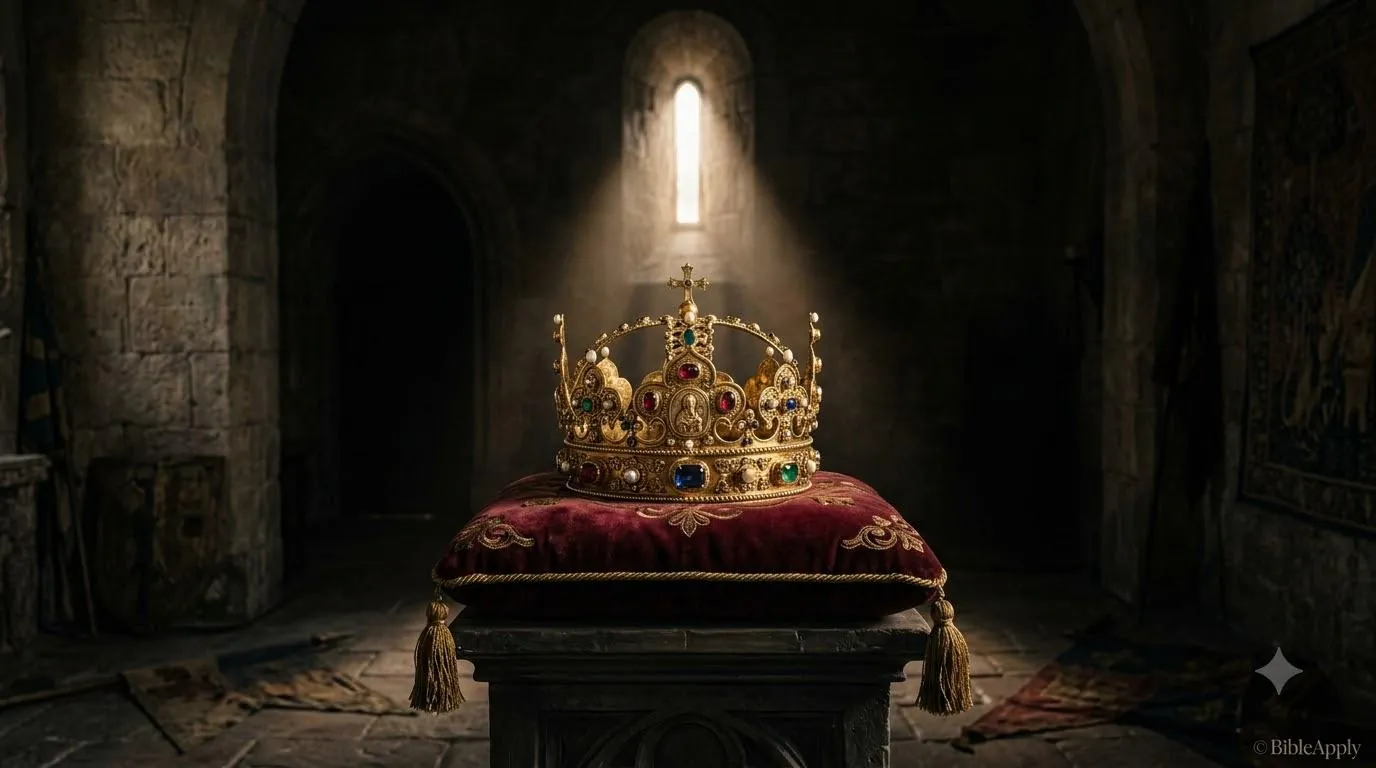
The book of 1 Kings opens at a critical juncture in the history of Israel, bridging the monumental era of King David’s reign with the coming golden age of his son, Solomon. Historically, this period represents the pinnacle of Israelite unity and geographical expansion, yet the narrative begins not with a display of triumph, but with an intimate and stark portrayal of vulnerability. King David, the giant-slayer, the sweet psalmist of Israel, and the man after God’s own heart, is now old, bedridden, and physically fading. The monarchy, still relatively young in its institutional history, faces its first major transitional crisis: the transfer of power.
Chapter 1 sets the stage for the entire narrative trajectory of the books of Kings, which will document the eventual fracturing, decline, and exile of God’s chosen people. The tension in this opening chapter revolves around the Davidic Covenant—the promise God made in 2 Samuel 7 that David’s throne would be established forever. The immediate question is not merely who will wear the crown, but whether human ambition will subvert divine election. As David’s life ebbs away, a power vacuum emerges, revealing the fractured state of his family and the political maneuvering that threatens the stability of the kingdom.
The theological heartbeat of 1 Kings 1 is the interplay between human scheming and divine providence. God’s name is rarely invoked in the political machinations of the chapter, yet His sovereign will silently orchestrates the outcome. The chapter serves as a profound meditation on the illusion of human control, the disruptive nature of ambition unchecked by divine calling, and the faithfulness of God to ensure that His redemptive purposes are accomplished despite the frailties and failures of His servants.
The Waning of King David (1 Kings 1:1-4)
The narrative begins with a stark, almost clinical description of David’s physical decline.
“Now King David was old and advanced in years. And although they covered him with clothes, he could not get warm.” (1 Kings 1:1, ESV)
This is a poignant and humbling portrait. The virile warrior who once danced with all his might before the Ark of the Covenant cannot even generate body heat. The theological implication is significant: David’s fading vitality mirrors the perilous state of the kingdom. The king is the representative head of the people; if the king is weak, the nation is vulnerable. The physical impotence of David sets the stage for the political crisis that follows.
His servants propose a solution: finding a young virgin to care for him and lie in his arms to keep him warm. Abishag the Shunammite is chosen. The text explicitly notes that David “knew her not” (v. 4), emphasizing his diminished physical state and establishing that Abishag’s role was functional and symbolic, not sexual. However, in the ancient Near East, a king’s harem was deeply connected to his royal authority. Abishag, by virtue of her proximity to the king, becomes a symbol of the throne itself—a detail that will become crucially important in the subsequent chapter. David’s passivity in these opening verses is a glaring contrast to his former decisive leadership, highlighting the urgent need for a successor.
Adonijah’s Presumptuous Grab for Power (1 Kings 1:5-10)
Nature abhors a vacuum, and so does political power. With David incapacitated, his oldest surviving son, Adonijah, seizes the moment.
This topic connects with Jeremiah 29:11 Meaning: For I Know the Plans I Have for You, one of the most-searched biblical questions today.
If you want to explore this further, our in-depth guide on isaiah 41 10 breaks this down verse by verse.
“Now Adonijah the son of Haggith exalted himself, saying, ‘I will be king.’ And he prepared for himself chariots and horsemen, and fifty men to run before him.” (1 Kings 1:5, ESV)
Adonijah’s actions are deeply telling. He “exalts himself,” a dangerous posture in a theocratic kingdom where God alone appoints the king. His method mirrors exactly the rebellion of his older brother Absalom years prior (2 Samuel 15:1). He relies on pageantry—chariots and runners—to project an illusion of authority. Furthermore, the text provides a subtle critique of David’s parenting: “His father had never at any time displeased him by asking, ‘Why have you done thus and so?’” (v. 6). David’s failure to discipline his sons has directly cultivated the arrogance that now threatens his kingdom.
Adonijah is politically savvy. He recruits Joab, the ruthless commander of the army, and Abiathar, the priest. This gives his usurpation the backing of military might and religious sanction. However, the narrative carefully lists those who were not with Adonijah: Zadok the priest, Benaiah the warrior, Nathan the prophet, and Shimei and Rei. Adonijah’s exclusion of these key figures, particularly Nathan (who delivered the Davidic Covenant) and Solomon (the promised heir), reveals that his power grab is inherently divisive and willfully ignorant of divine election. He sacrifices at the Serpent’s Stone (Zoheleth), a subtle but ominous geographical detail hinting at the deceptive and doomed nature of his enterprise.
The Counter-Plot of Nathan and Bathsheba (1 Kings 1:11-31)
While Adonijah feasts and declares himself king, a counter-movement is orchestrated by Nathan the prophet. Nathan understands that Adonijah’s kingship means death for Solomon and his mother Bathsheba.
Nathan approaches Bathsheba and instructs her to go to David and remind him of a previous oath: that Solomon would reign. The text does not record when David made this specific oath, but it aligns with God’s earlier declaration that Solomon would be the one to build the temple and succeed David (1 Chronicles 22:9-10).
Bathsheba’s entrance into the king’s bedchamber is dramatic. She bows, does obeisance, and forcefully lays out the crisis:
Also Read:
“My lord, you swore to your servant by the Lord your God, saying, ‘Solomon your son shall reign after me, and he shall sit on my throne.’ And now, behold, Adonijah is king, although you, my lord the king, do not know it.” (1 Kings 1:17-18, ESV)
She masterfully juxtaposes David’s divine oath with his current ignorance of the political reality. She places the burden of the nation’s future squarely on his frail shoulders: “And now, my lord the king, the eyes of all Israel are on you, to tell them who shall sit on the throne of my lord the king after him” (v. 20).
Just as Bathsheba finishes her plea, Nathan enters, precisely executing the plan. He corroborates her story, asking David rhetorically if he authorized Adonijah’s coronation. This dual testimony finally jolts the dying king out of his lethargy. The theological profundity here lies in how God uses human agency—the strategic planning of a prophet and a mother—to awaken the king to his duty and ensure the fulfillment of the divine promise. Providence does not negate human responsibility; it operates flawlessly through it.
David’s response is his final great act of kingship. He swears by “the Lord, who has redeemed my soul out of every adversity” (v. 29). Even in his diminished state, David remembers the covenantal God who has sustained him. He decisively decrees that Solomon will sit on the throne that very day.
Solomon’s Coronation and the Fulfillment of the Promise (1 Kings 1:32-40)
David’s instructions are swift and highly symbolic, designed to leave no doubt about the legitimacy of Solomon’s succession.
“King David said, ‘Call to me Zadok the priest, Nathan the prophet, and Benaiah the son of Jehoiada.’ So they came before the king. And the king said to them, ‘Take with you the servants of your lord and have Solomon my son ride on my own mule, and bring him down to Gihon.’” (1 Kings 1:32-33, ESV)
Every detail here is saturated with meaning. Solomon is to ride on David’s own mule, a visible, undeniable transfer of royal authority. He is brought to Gihon, a prominent spring in Jerusalem, contrasting with Adonijah’s secretive gathering at the Serpent’s Stone. The anointing is performed jointly by Zadok (the religious authority) and Nathan (the prophetic voice), signifying that Solomon is chosen by God, not merely elevated by men.
The blowing of the ram’s horn and the shout of “Long live King Solomon!” publicly cement his reign. The resulting celebration is so tumultuous that the text hyperbole states, “the earth split with their noise” (v. 40). This seismic shift in power reflects the momentous theological reality: the Davidic line has successfully passed to the next generation, preserving the messianic lineage that will ultimately culminate in Jesus Christ, the eternal Son of David.
Believers seeking more clarity will appreciate our full study on Psalm 91 Meaning: He Who Dwells in the Shelter.
The Collapse of Adonijah’s Rebellion and Solomon’s Clemency (1 Kings 1:41-53)
The contrast between the two gatherings is stark. Adonijah’s feast is interrupted by the deafening sound of Solomon’s legitimate coronation. Jonathan, the son of Abiathar, brings the devastating news: “Our lord King David has made Solomon king!” (v. 43).
In a matter of seconds, the illusion of Adonijah’s power shatters. The guests, realizing they have committed treason, flee in terror. Adonijah’s self-exaltation dissolves into desperate self-preservation. He runs to the tabernacle and takes hold of the horns of the altar—a gesture seeking sanctuary and asylum.
“And Adonijah feared Solomon. So he arose and went and took hold of the horns of the altar. Then it was told Solomon, ‘Behold, Adonijah fears King Solomon, for behold, he has laid hold of the horns of the altar, saying, ‘Let King Solomon swear to me first that he will not put his servant to death with the sword.’” (1 Kings 1:50-51, ESV)
Solomon’s first act as king is one of conditional clemency. He states that if Adonijah proves to be a “worthy man,” not a hair on his head will fall; but if wickedness is found in him, he shall die. Solomon extends grace, but it is a grace that demands submission to the new reality of his reign. Adonijah bows before King Solomon, effectively conceding his defeat and acknowledging Solomon’s supreme authority.
This concluding scene foreshadows the righteous but firm justice that will characterize the early part of Solomon’s reign, while serving as a sobering reminder that those who exalt themselves will ultimately be brought low, and those whom God appoints will stand.
3 Practical Applications from 1 Kings 1
The political drama of 1 Kings 1 offers profound enduring lessons for the contemporary believer, illustrating how God’s sovereignty intersects with human ambition and responsibility.
If you want to explore this further, our in-depth guide on psalm 23 kjv breaks this down verse by verse.
1. The Danger of Unchecked Ambition and Self-Exaltation
Adonijah’s fundamental flaw was declaring, “I will be king,” without seeking God’s will or honoring the appointed processes. When we attempt to force our way into positions of power, influence, or leadership relying on our own manipulation or “chariots and horses,” we place ourselves in opposition to God’s order. True spiritual authority and lasting impact come from divine appointment and humble submission, not self-promotion. We must cultivate a heart that waits on the Lord rather than grasping for control.
2. The Necessity of Courageous Intervention for God’s Purposes
Nathan and Bathsheba did not passively assume that God’s will would magically occur without their involvement. They recognized a crisis that threatened the promised lineage and took bold, calculated, and courageous action to address it. God’s sovereignty does not excuse our apathy. Believers are called to be active participants in the unfolding of God’s redemptive work. When we see injustice, deception, or a deviation from God’s truth, we are called to speak up and act with wisdom, trusting that God uses human agency to accomplish His divine decrees.
3. The Inevitable Triumph of God’s Anointed King
Despite Adonijah’s head start, his military backing, and his royal blood, his kingdom collapsed in an instant at the sound of the true king’s anointing. This serves as a powerful eschatological reminder. Throughout history, various powers and ideologies exalt themselves, seemingly reigning unopposed. However, the ultimate fulfillment of the Davidic Covenant is found in Jesus Christ. His eternal reign cannot be thwarted by any human rebellion or worldly scheme. As believers, we can find immense comfort and security in knowing that the true King has been installed on the throne, and His kingdom will endure forever.
Also Read
- Jude 1 Summary & Meaning: Contending for the Faith
- Genesis 1 Summary & Meaning: In the Beginning
- Jeremiah 1 Summary & Meaning: The Call of the Weeping Prophet
Read 1 Kings 1
Dive into the full scripture text for deeper study.
Chapter 2: Securing the Throne
Following David's death and burial in the City of David, Solomon ruthlessly consolidates his power. When Adonijah asks for Abishag, David's final concubine, Solomon perceives it as a veiled claim to the throne and orders his execution. He banishes the priest Abiathar, fulfilling the ancient curse on Eli's house, and executes the treacherous military commander Joab at the altar. Finally, after Shimei violates his house arrest, Solomon orders his death, fully establishing the kingdom in his own hands.
Chapter 3: The Gift of Divine Wisdom
God is so pleased with this unselfish request that He grants Solomon unmatched wisdom, alongside unprecedented riches and honor. The immediate test of this divine wisdom comes when two prostitutes dispute the motherhood of a single living infant. By shockingly threatening to cut the child in two, Solomon exposes the true mother's self-sacrificing love, leaving all of Israel in awe of the divine justice operating through their new king.
Chapter 4: The Zenith of Israel's Glory
The nation prospers profoundly, with the people described as numerous as the sand on the seashore, eating, drinking, and rejoicing in unprecedented peace and security. Solomon's God-given wisdom becomes internationally renowned, surpassing the sages of Egypt and the East. He composes three thousand proverbs and over a thousand songs, demonstrating mastery over botany and zoology, drawing dignitaries from all nations to hear the wisdom of Israel's glorious king.
Chapter 5: Preparations for the Temple
Hiram rejoices at the wisdom of David's son and agrees to the treaty, floating massive logs down the coast in exchange for vast quantities of wheat and olive oil for his royal household. To accomplish the immense labor required, Solomon conscripts thirty thousand men from all of Israel, sending them in shifts to Lebanon, along with tens of thousands of stonecutters and carriers who quarry massive, high-grade stones to lay the foundation of the magnificent temple.
Chapter 6: Building the House of the Lord
God promises Solomon that if he walks in His statutes, He will dwell among the Israelites and not abandon them. The innermost sanctuary, the Holy of Holies, is prepared to house the Ark of the Covenant, flanked by two towering, gold-overlaid cherubim made of olive wood. After seven years of meticulous labor and exquisite craftsmanship, the magnificent house of the Lord is completed in all its details.
Chapter 7: The Palace and the Bronze Masterpieces
For the temple's furnishings, Solomon hires a skilled bronzesmith named Hiram from Tyre. This master artisan casts two massive bronze pillars named Jakin and Boaz for the temple portico, alongside a colossal bronze basin known as the Sea, supported by twelve bronze oxen. He also creates intricate bronze water carts, basins, shovels, and bowls. Every vessel and architectural detail is crafted with astonishing precision, finalizing the grand outfitting of the Lord's house.
Chapter 8: The Dedication of the Temple
Before the entire assembly, Solomon offers a profound prayer of dedication, acknowledging that the highest heavens cannot contain God, much less an earthly temple. He petitions the Lord to hear the prayers directed toward this place, whether for forgiveness, victory, or deliverance from famine and exile. Following this, he offers a staggering number of sacrifices—twenty-two thousand cattle and a hundred and twenty thousand sheep—initiating a massive fourteen-day festival of joyful celebration for all the goodness God has shown.
Chapter 9: The Covenant and the Kingdom's Expansion
The narrative then details Solomon’s aggressive expansion and administrative projects. He gives twenty towns in Galilee to King Hiram, though they displease the Tyrian king. Utilizing a massive conscripted labor force of non-Israelites, Solomon rebuilds cities like Hazor, Megiddo, and Gezer, expanding his military outposts and store cities. He also builds a fleet of ships at Ezion-geber, trading with Ophir for vast quantities of gold, further enriching his empire.
Chapter 10: The Queen of Sheba and Unrivaled Wealth
She blesses the Lord for placing Solomon on the throne to maintain justice and righteousness, gifting him an unprecedented amount of gold and spices. The chapter concludes by detailing the staggering zenith of Solomon’s wealth—his yearly revenue of 666 talents of gold, his gold shields, his ivory throne overlaid with fine gold, and his thriving international trade in horses and chariots, making silver as common as stones in Jerusalem.
Chapter 11: Solomon's Fall and the Kingdom Torn
Consequently, God raises up adversaries against Solomon: Hadad the Edomite, Rezon of Damascus, and most crucially, Jeroboam, one of Solomon's own officials. The prophet Ahijah tears a new cloak into twelve pieces, giving ten to Jeroboam to signify God's impending division of the nation. Solomon attempts to kill Jeroboam, who flees to Egypt until Solomon's death, bringing a tragic close to an initially glorious forty-year reign.
Chapter 12: The Kingdom Divided
In outrage, the ten northern tribes secede, shouting, "To your tents, O Israel!" and make Jeroboam their king, leaving Rehoboam with only Judah. Fearing that pilgrimages to Jerusalem will turn his subjects' hearts back to Rehoboam, Jeroboam commits a catastrophic sin. He establishes two golden calves in Bethel and Dan, telling the people, "Here are your gods, Israel, who brought you up out of Egypt," and establishes his own illegitimate priesthood and festivals.
Chapter 13: The Prophet from Judah and the Altar
However, an older prophet from Bethel pursues the Judean prophet and deceptively invites him back, lying about an angelic command. Tragically, because the man of God disobeys the Lord's strict instructions, he is struck down by a lion on his journey home. The lion miraculously stands beside the body without mauling it or the donkey, serving as a solemn testament to the strict demands of divine obedience.
Chapter 14: The Doom of Jeroboam and Rehoboam's Decline
Meanwhile, in the southern kingdom of Judah, Rehoboam leads the people into deep apostasy, setting up sacred stones and Asherah poles. In his fifth year, King Shishak of Egypt attacks Jerusalem, plundering the massive treasures of the temple and the royal palace, including Solomon’s golden shields. Rehoboam replaces them with bronze shields, a tragic metaphor for the faded glory of the once-golden empire.
Chapter 15: Kings of Judah and the Fall of Jeroboam's House
In the north, Jeroboam’s son Nadab reigns briefly before Baasha assassinates him, brutally executing every living member of Jeroboam's family. This fulfills Ahijah's prophecy but fails to bring spiritual reform, as Baasha continues the wicked practices of the golden calves, locking Israel in a relentless cycle of idolatry and violence.
Chapter 16: Assassinations and the Rise of Ahab
After a brief civil war, Omri secures the throne, establishing a powerful new dynasty and moving the capital to the newly built city of Samaria. Despite his political success, he is deemed worse than his predecessors. His son Ahab succeeds him, marrying the notorious Jezebel of Sidon. Ahab builds a temple to Baal in Samaria, doing more to provoke the wrath of Yahweh than all the kings before him.
Chapter 17: Elijah the Tishbite and the Widow's Oil
When the brook dries up, God sends Elijah to Zarephath, deep in Baal territory. There, he meets a desperate widow gathering sticks for a final meal. Elijah promises that her jar of flour and jug of oil will not run dry until the rain returns. Later, when the widow's son falls severely ill and dies, Elijah passionately cries out to God, stretching himself over the boy three times. The boy's life is miraculously restored, solidifying the widow's faith in the true God of Israel.
Chapter 18: Showdown on Mount Carmel
The test is simple: the true God will answer by fire. The prophets of Baal shout, dance, and slash themselves all day, but face only deafening silence. In stark contrast, Elijah rebuilds the Lord's altar, drenches it in water three times, and offers a simple prayer. Instantly, the fire of the Lord falls, consuming the sacrifice, the wood, the stones, and the water. The people fall on their faces, the false prophets are executed, and Elijah dramatically outruns Ahab’s chariot as a massive rainstorm finally breaks the drought.
Chapter 19: The Whisper of God at Horeb
The Lord demonstrates His presence not in a mighty wind, an earthquake, or a fire, but in a gentle, low whisper. God gently corrects Elijah's despairing belief that he is the only faithful believer left, assuring him there is a remnant of seven thousand who have not bowed to Baal. God then gives Elijah new marching orders: anoint Hazael king of Aram, Jehu king of Israel, and Elisha as his prophetic successor, ensuring that God's work will continue.
Chapter 20: War with Aram and Ahab's Folly
The Arameans return the following spring, foolishly believing Yahweh is only a "god of the hills." Once again, God grants Israel a spectacular victory to vindicate His name. However, instead of executing the defeated Ben-Hadad as God required, Ahab calls him "brother" and makes a lenient trade treaty. A prophet brilliantly disguises himself to trap Ahab into pronouncing his own judgment, declaring that because Ahab spared a man destined for destruction, Ahab's own life will be forfeit.
Chapter 21: Naboth's Vineyard and Ahab's Repentance
She writes letters in Ahab's name, arranging a fast where false witnesses accuse Naboth of cursing God and the king. Naboth is brutally stoned to death, allowing Ahab to confiscate the property. God immediately sends Elijah to confront Ahab with a horrific curse: dogs will lick his blood in the same place they licked Naboth's, and his entire dynasty will be utterly consumed. Shockingly, upon hearing this, the wicked Ahab tears his clothes and fasts in genuine repentance, prompting God to delay the total destruction of his house until his son's reign.
Chapter 22: The Fall of Ahab
Despite the warning, Ahab arrogantly goes into battle disguised, hoping to cheat fate while placing Jehoshaphat in royal robes as a target. However, divine justice cannot be outsmarted; a random arrow shot into the air strikes Ahab precisely between the joints of his armor. He bleeds to death in his chariot, and true to Elijah's prophecy, dogs lick up his blood when the chariot is washed at the pool of Samaria, ending his catastrophic reign.
Conclusion
We hope this chapter-by-chapter summary of 1 Kings has helped you better understand God's Word. To continue your study, explore our other Bible Chapter Summaries or read our detailed Verse Meanings.